Licensed Electrician in Phoenix, AZ | Locally Owned and Operated
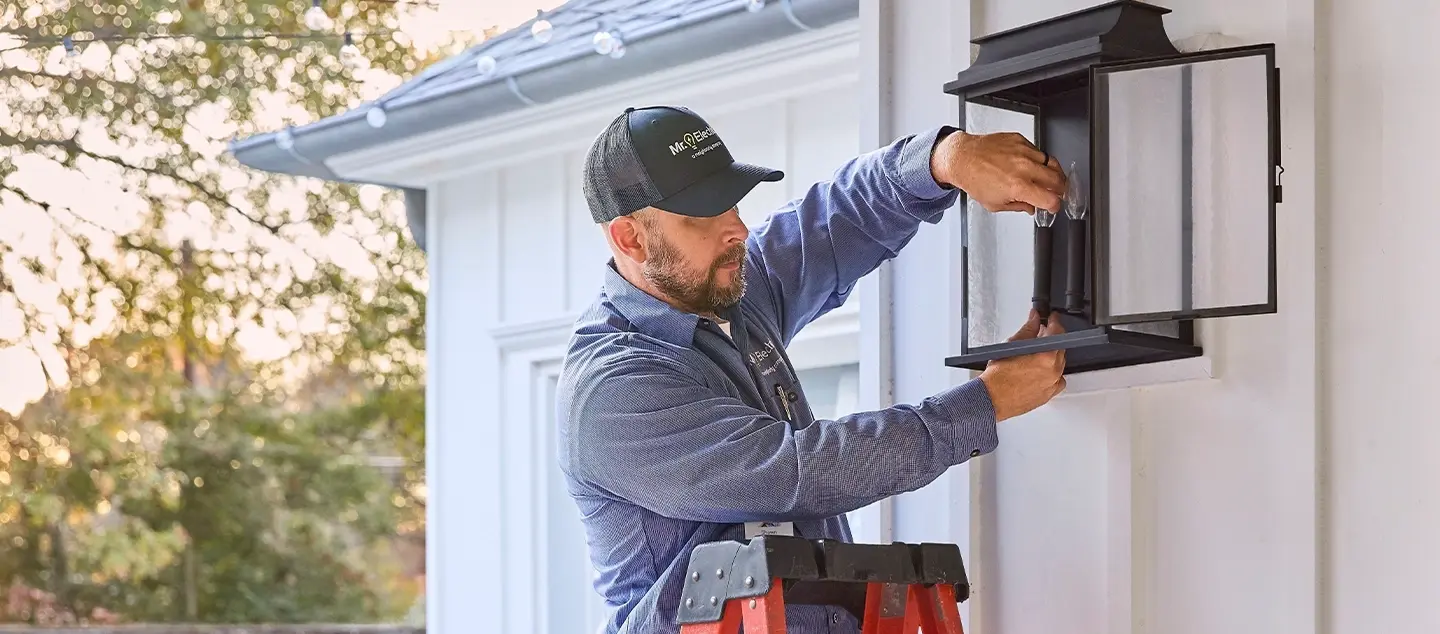
Your electrical system works harder in the Phoenix Metropolitan area than almost anywhere else. Dual AC systems running through 115-degree summers, plus EV chargers and modern devices, create loads that older panels were never designed to handle. Our locally owned Mr. Electric® of Phoenix Metro provides licensed electrical services with upfront pricing and the Neighborly Done Right Promise®. Contact us today for panel upgrades, repairs, and emergency service across the Valley.

Book Online

A representative from our office will get back to you shortly to schedule service.
Due to a system error, we did not get your request. Please call us for immediate assistance.
We don't currently provide service to this ZIP/Postal code.
Yes! You can email me service reminders and other messages.
Mr. Electric, a Neighbourly Company on its own behalf and on behalf of and its affiliates and franchisees requests your consent to send promotional and other electronic messages to you concerning products and services they believe are of interest to you. By checking this box, you agree to receive these messages. You can unsubscribe at any time.
Text opt-in does not apply for Canadian residents.
Customer Reviews
View All Testimonials
The Neighborly Done Right Promise® delivered by Mr. Electric®, a proud Neighborly company.
Easy Online BookingResidential and Commercial Electrical Services in Phoenix, AZ
From ceiling fan installation and landscape lighting to outlet repair and electric panel upgrades, our licensed electricians handle residential electrical problems throughout the Phoenix Metropolitan area. We serve Phoenix, Scottsdale, Paradise Valley, Cave Creek, Tempe, Mesa, and surrounding communities, with deep knowledge of the circuitry challenges in older Valley homes and the code requirements enforced by Phoenix Development Services.
-
Installations
Compliment your air conditioner with ceiling fan installation throughout your home or business from Mr. Electric.Learn more Installations -

Lighting
Add sophistication and style to your home or business with Mr. Electric’s recessed lighting services.Learn more Lighting -
-
Repairs
We have the power to make things better and want to be your Phoenix and Tempe area electrician.Learn more Repairs
Let us know how we can help you today.
Why Phoenix Homeowners and Businesses Choose Our Electrical Services
-
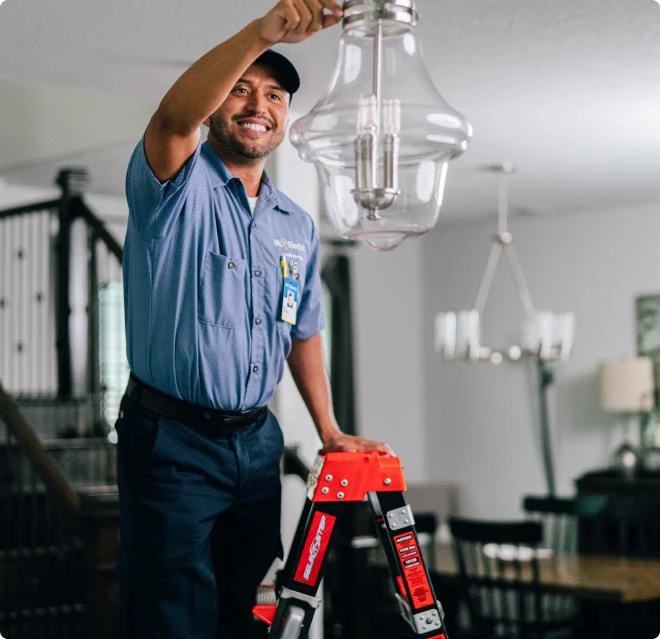
Mr. Electric of Phoenix Metro is a locally owned and operated franchise within the Neighborly family of home service brands, established in 1994. Our licensed technicians are bonded and insured, hold an Arizona electrical license, and are trained to meet National Electrical Code standards and Phoenix permit requirements. You get local accountability backed by more than 30 years of national training, systems, and standards. Call us or schedule an online appointment today.
-
You receive a clear quote before any work begins. We price by the job, not the hour, so there are no hidden fees, no billing surprises, and no cost shifting once work is underway. You know exactly what you are paying before we start. Our commitment to transparent pricing is part of the customer service standard we hold ourselves to on every call, every visit, and every completed job.
-
Every job we complete is backed by our Neighborly Done Right Promise® and a parts-and-labor warranty. If the work is not done right, we make it right. We also provide diagnostic services and preventive maintenance inspections, so you are not waiting for a problem to find you. We stand behind our work because we are part of your community, and your satisfaction is what keeps us in business.
9831 S 51st Street #C115 Phoenix, AZ 85044, USA
Areas We Serve
- Ahwatukee
- Arizona City
- Avondale
- Buckeye
- Carefree
- Casa Grande
- Cave Creek
- Chandler Heights
- Coolidge
- El Mirage
- Eloy
- Florence
- Fort Mcdowell
- Fountain Hills
- Glendale
- Goodyear
- Higley
- Laveen
- Litchfield Park
- Luke Air Force Base
- Maricopa
- New River
- Paradise Valley
- Peoria
- Phoenix
- Phoenix Metro
- Rio Verde
- Scottsdale
- Sun City
- Sun City West
- Surprise
- Tolleson
- Waddell
- West Valley
- Youngtown
Frequently Asked Questions About Electrical Services in Phoenix
-
Yes. When you hire an electrician in Phoenix, the City of Phoenix requires electrical permits for most installations and alterations to ensure compliance with the 2020 National Electrical Code and local electrical standards. You need a permit for panel upgrades, new circuits, service changes, generator installations, EV charger installations, and major repairs. Permits are not required for like-for-like replacements, such as swapping out a light fixture, switch, or outlet on an existing circuit.
The permit process typically takes three to five business days through Phoenix Development Services, and an electrical inspection is required before final approval. Our electricians handle the entire permit and inspection process for you, so you do not have to manage the paperwork or coordinate with city inspectors. This ensures your electrical work is code-compliant, safe, and documented for future home sales or insurance claims.
-
You should upgrade your electrical panel when it is more than 30 to 40 years old, when you have no available circuit spaces, when you plan to add high-demand loads like an EV charger or car charging station, or when you have obsolete equipment like Federal Pacific or Zinsco panels. Homes with a fuse box instead of a modern breaker panel should be prioritized for electric panel upgrades, as fuse boxes were not designed for today's electrical loads and pose a documented fire risk.
Most Phoenix homes built before 1990 have 100-amp service, which is inadequate for modern electrical demands. According to U.S. Census data, approximately 32 percent of Phoenix homes were built before 1980, and these older homes often struggle to support dual air-conditioning systems, home offices, modern kitchen appliances, and electric-vehicle charging simultaneously. A 200-amp panel installation gives you the capacity to handle current and future needs without overloading your system. If your breakers trip frequently during Phoenix summers when your AC systems run continuously, your panel is telling you it is time for an upgrade.
-
A typical residential panel upgrade in Phoenix takes one to two days once the permit is approved. The permit application through Phoenix Development Services usually takes 3 to 5 business days for standard residential work. On installation day, expect four to six hours without power while our electricians disconnect the old panel, install the new one, reconnect your circuits, and properly label everything.
A city inspector must approve the work before your utility company reconnects permanent power, which typically happens within 24 to 48 hours of passing inspection. The plan for the full process, from permit application to final approval, is about one to two weeks. During the Phoenix summer months, when electrical contractors are busiest, scheduling often runs a few days longer. We coordinate every step with you, handle all permit submissions, and schedule the city inspection so you are never left guessing about the timeline or next steps.
-
Older Phoenix homes built between 1960 and 1979 frequently have several serious residential electrical problems: aluminum branch-circuit wiring, undersized 100-amp service panels or fuse boxes, faulty wiring at junction boxes, and a lack of GFCI and AFCI protection in areas where modern code requires it. Decades of Sonoran Desert heat stress compound these circuitry challenges in ways that cooler climates never produce.
According to the U.S. Consumer Product Safety Commission, homes with aluminum wiring installed between 1965 and 1973 are 55 times more likely to have fire hazard conditions at wire connections due to oxidation and the different expansion rates of aluminum compared to copper. Approximately 26 percent of Phoenix homes were built during this period, particularly in neighborhoods like Maryvale, Central Phoenix, and Arcadia. If your home was built during the 1960s or 1970s, schedule a professional electrical safety inspection to identify faulty wiring, evaluate your panel capacity, and check for outdated or damaged components before a small problem becomes a safety hazard.
-
Phoenix's extreme heat places extraordinary stress on your electrical system in ways that do not happen in most other climates. Living in the Sonoran Desert means your wiring, panels, and breakers endure sustained high temperatures that accelerate wear in ways that cooler climates never produce. When outdoor temperatures exceed 115 degrees, attic temperatures reach 150 degrees or higher, which breaks down wire insulation and increases resistance in electrical connections.
According to Arizona Public Service, air conditioning represents 50 to 70 percent of residential electrical consumption during Phoenix summer months, creating sustained high-amperage loads that keep your panel and circuits under continuous stress for three to four months straight. Loose connections generate heat, which damages insulation, creating a cycle that worsens over time and is one of the most common sources of residential electrical problems in the Valley. Before summer arrives each year, check for warm outlets or switch plates, listen for buzzing sounds from your panel, and pay attention to lights that dim when your AC kicks on. These are early warning signs that your system needs professional evaluation before the hottest months arrive.
-
Yes. Both Federal Pacific Electric (FPE) Stab-Lok panels and Zinsco panels have been documented to have high failure rates and require replacement. Independent testing cited by the U.S. Consumer Product Safety Commission found that FPE circuit breakers failed to trip during overcurrent conditions in up to 25 percent of tests, which means they do not reliably protect your home from electrical fires when you need them most. Zinsco panels, commonly installed in Southwest homes during the 1960s and 1970s, have been documented to fail when breakers and bus bars deteriorate over time and lose their ability to interrupt current.
Many insurance companies now refuse coverage or charge higher premiums for homes with these panels because of the documented fire risk. If you have an FPE or Zinsco panel in your Phoenix home, particularly in older neighborhoods where these panels are common, replacing it with a modern 200-amp panel eliminates a serious safety risk and brings your electrical system up to current code standards. The upgrade also gives you the capacity to add modern loads, such as EV chargers, that your old panel was never designed to support.
-
The most common signs of an overloaded electrical system include breakers that trip frequently, dead outlets or outlets that feel warm to the touch, flickering or dimming lights when large appliances turn on, and buzzing or humming sounds coming from your electrical panel. Power outages that affect only part of your home, rather than the whole street, often point to an overloaded or tripped circuit rather than a utility problem.
In Phoenix, high-summer air-conditioning loads combined with other high-demand devices like electric vehicle chargers, pool equipment, and modern kitchen appliances push older 100-amp electrical systems beyond their safe capacity. Arizona Public Service reports that Phoenix homes use between 3,000 and 5,000 kilowatt-hours per month during the summer months, with the majority of that load coming from air conditioning. Overloaded circuits generate heat, and heat breaks down insulation and connections, which increases fire risk. If you notice any of these symptoms, especially during the summer when your AC runs continuously, contact us for a load capacity assessment before adding any new large appliances or charging equipment.
-
Installing a Level 2 EV charger or car charging station in your Phoenix home requires a dedicated 240-volt circuit with a 40 to 50-amp breaker, depending on your charger model. Most homes need either a panel upgrade or a subpanel installation to support this load, especially if your existing panel is already near capacity from running dual air conditioning systems during Phoenix summers. According to the Arizona Department of Transportation, EV registrations in Maricopa County increased by 40 percent year-over-year, and 75 percent of Arizona EV owners live in the Phoenix metro area, making EV charger installation one of the fastest-growing electrical services we provide.
The EV charger installation requires a permit from Phoenix Development Services and a final inspection before you begin using the charger. Our electricians evaluate your existing electrical capacity, determine whether your current panel can handle the additional load, install a dedicated circuit and outlet, mount the charger, and handle the permit and inspection process from start to finish. Most installations take one day once the permit is approved.
-
Yes. We provide emergency electrical service 24 hours a day for urgent situations where your safety or property is at risk. Electrical emergencies include sparking outlets or panels, burning smells from electrical components, complete power loss to part or all of your home, exposed wiring, water contact with electrical systems, or any situation where you suspect immediate fire or shock danger. Power outages caused by internal electrical failures rather than grid issues require immediate diagnostic services to identify the source before damage spreads.
During Phoenix summers, air conditioning failures due to electrical problems become life-safety issues, especially when indoor temperatures rise rapidly for anyone in the home. If you experience an electrical emergency, turn off the power at the breaker if you know how to do so safely, evacuate the area if you see sparks or smell burning, and contact us immediately. For non-emergency issues like a single tripped breaker or a malfunctioning light fixture, we offer same-day and next-day scheduling to address your needs promptly.
-
Yes. Phoenix monsoon season, which runs from June through September, brings lightning strikes, power surges, high winds, and sudden heavy rain that all pose serious risks to your electrical system. Lightning strikes near your home or hits power lines in your area, creating massive voltage spikes that travel through the electrical grid and damage sensitive electronics, appliances, and your electrical panel if you do not have proper surge protection. According to Salt River Project and Arizona Public Service, monsoon-related power outages and surges spike sharply during these months due to lightning, wind-damaged lines, and dust storms that interfere with electrical infrastructure.
Whole-home surge protection installed at your main panel provides the best defense against these voltage spikes and costs a fraction of replacing damaged appliances and electronics. After a severe storm, inspect your electrical system for signs of damage, such as tripped breakers that will not reset, dead outlets, flickering lights, or a burning smell near your panel. If you notice any of these symptoms, turn off affected circuits and call us for a post-storm electrical inspection to identify hidden damage before it creates a larger safety hazard.
-
Older Phoenix neighborhoods, including Maryvale, Central Phoenix, Arcadia, South Phoenix, and parts of Cave Creek and Paradise Valley's older estate properties, were built primarily during the 1950s through 1970s. Homes in these areas frequently have undersized 100-amp electrical panels, aluminum branch-circuit wiring, fuse boxes that have never been upgraded, and outdated components like Federal Pacific or Zinsco panels.
U.S. Census data shows that approximately 26 percent of Phoenix homes were built between 1960 and 1979, the exact period when aluminum wiring was common and 100-amp service was considered adequate. These homes were built for a time when air conditioning loads were lower, homes had fewer electronic devices, and electric vehicles did not exist. Maryvale homes from the late 1950s and 1960s often have original electrical panels with no history of upgrades. In comparison, Arcadia ranch homes from the 1960s and 1970s commonly contain aluminum wiring that requires professional evaluation. If you own a home in one of these neighborhoods and have never had an electrical safety inspection, schedule one soon to identify capacity issues, outdated wiring, and safety concerns before they lead to system failures during the high-demand summer months.
-
You are legally permitted to perform minor electrical tasks in your home, such as replacing a light bulb, resetting a tripped GFCI outlet, or changing a smoke detector battery. However, any work involving new wiring, circuit modifications, panel work, or electrical installations requires a permit from the City of Phoenix and must meet the 2020 National Electrical Code standards enforced locally. Improperly wired circuits, reversed hot and neutral wires, and ungrounded systems are among the most common results of DIY electrical work. None of these is visible without proper testing equipment.
A grounded system is not optional. It is a code requirement and a critical safety feature that prevents shock hazards under fault conditions. The National Fire Protection Association reports that electrical failures or malfunctions are involved in an estimated 44,880 home structure fires annually in the United States. Leave anything beyond the simplest tasks to licensed electricians who know the code requirements, pull the proper permits, and guarantee their work meets Phoenix safety standards.
-
A GFCI outlet, short for ground-fault circuit interrupter, is a safety device that monitors the flow of electricity between the hot and neutral wires in a circuit. When it detects even a small imbalance, which indicates current is leaking through an unintended path, such as a person, it trips in as little as one-thirtieth of a second to prevent a fatal shock. The 2020 National Electrical Code requires GFCI protection in kitchens, bathrooms, garages, outdoor areas, crawl spaces, and anywhere near water.
In Phoenix, outdoor GFCI outlets and pool equipment circuits are especially important because outdoor living spaces are used year-round, and exposure to irrigation water and monsoon rain creates persistent shock hazards. If your GFCI outlet trips repeatedly, does not reset, or shows no power, it needs professional GFCI repair or replacement rather than a simple reset. Our electricians test every outlet in the affected circuit to determine whether the problem is due to the device itself, a wiring fault, or moisture. Homes built before 1975 often lack GFCI protection, and bringing them up to current electrical standards is one of the most cost-effective safety upgrades you can make.
-
Yes. Ceiling fan installation, lighting repairs, lighting upgrades, and landscape lighting are among the most requested services we provide across the Phoenix Metropolitan area. A properly installed ceiling fan requires a fan-rated junction box, the correct wire gauge, and a secure mount, especially in Phoenix homes where fans run for months at a time and motor heat stress is significant. For lighting upgrades, we install LED retrofit kits, recessed lighting, dimmer switches, accent lighting, and outdoor fixtures rated for the extreme UV exposure and heat of the Sonoran Desert climate.
Landscape lighting in Phoenix requires low-voltage wiring, weatherproof connections, and fixtures designed for sustained exposure to heat and monsoon moisture. According to the U.S. Department of Energy, LED lighting uses up to 90 percent less energy than incandescent bulbs. It lasts up to 25 times longer, making an LED retrofit one of the fastest-payback electrical upgrades available. Whether you are replacing a single outdoor fixture, upgrading an entire home to LED, or installing a landscape lighting system across your property, our electricians handle the wiring, obtain any required permits, and perform final testing to ensure everything operates safely and correctly.
-
Yes. We install smart switches, dimmer switches, three-way switches, USB outlet ports, and a full range of modern electrical upgrades throughout the Phoenix area. Smart switches replace standard light switches and let you control lighting remotely, set schedules, and integrate with home-automation systems. Installing a smart switch or dimmer switch requires verifying that your existing wiring includes a neutral wire (older Phoenix homes often lack one) and that the circuit load is compatible with the dimmer's rating.
Three-way switches, which control a single light from two locations, require specific wiring configurations different from standard single-pole installations. Broken switches or switches that feel warm, spark, or make crackling sounds need immediate replacement, as these are signs of a failing connection that generates heat inside the wall. USB outlet ports are a popular upgrade for kitchens, home offices, and bedrooms, eliminating the need for bulky adapters while keeping outlets available for standard plugs. Our electricians assess your existing wiring before any upgrade to confirm compatibility and identify any faulty wiring that requires correction.
-
A BINSR, or Buyer's Inspection Notice and Seller's Response, is a standard document used in Arizona real estate transactions that lists deficiencies identified during a home inspection. Electrical issues are among the most common items flagged on a BINSR Report, including outdated panels, missing GFCI protection, aluminum wiring, ungrounded outlets, double-tapped breakers, and improper junction box covers. When a buyer submits a BINSR with electrical deficiencies, the seller typically has three options: repair the items, offer a price reduction, or decline and risk losing the sale.
Our electricians perform electrical inspections and repairs specifically designed to address BINSR items, providing a written scope of work and documentation acceptable to buyers, their agents, and title companies. According to the Arizona Department of Real Estate, undisclosed electrical defects are among the leading sources of post-sale disputes in the state. If you are preparing to sell your Phoenix home, a pre-listing electrical safety inspection identifies issues before they appear on a buyer's report, giving you time to address them on your schedule rather than under contract pressure. We provide written inspection reports that document the condition of your electrical system and the work completed.
-
Yes. Swimming pool and spa electrical work is a specialized service we provide throughout the Phoenix Metropolitan area. Pool and spa electrical systems require dedicated circuits, proper bonding and grounding of all metal components, GFCI protection for all outlets within 20 feet of the water's edge, and fixtures rated for wet and submerged applications under Article 680 of the National Electrical Code.
In Phoenix, where pools are used nearly year-round, these systems experience more operating hours and more UV and heat exposure than pools in other climates, which accelerates wear on pumps, lighting, and wiring. Common pool electrical services include pump motor circuit installation and repair, underwater LED lighting installation and replacement, outdoor fixture installation for pool deck areas, GFCI outlet installation near the pool, and additions to the electrical panel for new pool equipment. The Arizona Department of Health Services requires that pool electrical systems comply with both NEC standards and local Phoenix building codes, and permits are required for new installations and major modifications. Our electricians are trained in pool and spa electrical requirements and coordinate all permits and inspections so your system is safe, code-compliant, and ready for use.
-
A professional electrical safety inspection from Mr. Electric of Phoenix Metro covers every major component of your home's electrical system to identify existing problems, code violations, and conditions likely to cause failures or fire hazards. Our diagnostic services evaluate your electrical panel or fuse box for capacity, breaker condition, proper labeling, and signs of overheating or corrosion. We inspect all accessible wiring for faulty connections, aluminum branch-circuit wiring, improper junction box installations, and damaged insulation. We test GFCI and AFCI protection in all required locations, check outlet grounding and polarity, and assess your system's capacity against your current electrical load.
Preventive maintenance inspections are particularly valuable in Phoenix because the extreme heat accelerates wear on insulation, connections, and breaker components. According to the Electrical Safety Foundation International, electrical fires cause an estimated 1,000 deaths and 1,400 injuries annually in the United States, and most are preventable through regular inspection. We provide a written report of all findings with recommended electrical inspection repairs prioritized by urgency, so you know exactly what needs to be addressed now and what can be scheduled for later.
-
Yes. Circuit breaker repair, breaker replacement, electrical outlet repair, and light switch replacement are among the most common residential electrical services we perform across the Phoenix area. A circuit breaker that trips repeatedly, fails to reset, feels hot to the touch, or makes a burning smell is not functioning correctly and needs professional evaluation rather than repeated resets.
Dead outlets and faulty outlets are often caused by a tripped GFCI upstream in the circuit, a loose wire connection at the outlet or junction box, or a failed breaker. Before assuming an outlet is dead, check whether a GFCI outlet elsewhere in the same circuit has tripped. If resetting the GFCI does not restore power, the problem is likely a wiring fault or a failed device that needs professional electrical outlet repair. Broken switches and light switches that spark, feel warm, or make crackling sounds indicate a failing connection inside the wall. Our electricians diagnose the root cause of every outlet and breaker problem rather than replacing components without identifying the underlying issue, which is the only way to ensure the problem does not return or worsen.
-
Your home likely needs rewiring if it has aluminum branch-circuit wiring from the 1960s or 1970s, or if you have cloth-insulated or knob-and-tube wiring from earlier construction periods. Other warning signs include persistent circuitry challenges, such as repeated breaker trips and dead outlets without a clear cause, or if an electrical inspection has identified faulty wiring, improperly spliced junction boxes, or wiring that does not meet current National Electrical Code standards.
House rewiring is a major project, but in Phoenix's older neighborhoods, it is often the only way to fully address the combination of aging materials, heat-accelerated insulation breakdown, and capacity limitations that create ongoing safety risks. According to the U.S. Consumer Product Safety Commission, faulty electrical wiring is one of the leading causes of residential fires in the United States. A full rewire replaces all branch-circuit wiring, updates junction boxes, installs new outlets and switches, and brings your entire electrical system into compliance with current code. Partial rewiring is appropriate when specific circuits are affected. Our electricians assess your entire electrical system before recommending a scope of work, and we provide a written estimate that clearly explains the scope, permit requirements, and the inspection process.
-
A standby generator or portable generator transfer switch is an increasingly common upgrade in the Phoenix area, where a summer power outage during 115-degree heat is not just inconvenient but a health risk. Installing a whole-home standby generator requires a transfer switch or automatic transfer switch (ATS) connected to your main panel, a dedicated fuel source (natural gas or propane), and a City of Phoenix electrical permit. Portable generator hookups require a manual transfer switch and a dedicated inlet box mounted on the exterior of the home.
The National Electrical Code prohibits connecting a generator directly to household outlets ("backfeed"), which is dangerous for utility line workers and can destroy your appliances when grid power returns. According to the U.S. Consumer Product Safety Commission, improper generator use causes an average of 70 deaths annually from carbon monoxide poisoning and electrical hazards combined. In Phoenix, generators must comply with both NEC Article 702 and Phoenix Development Services permit requirements. Our electricians size the generator circuit to match your load, install the transfer switch, pull the required permit, and coordinate the city inspection so your system is safe, legal, and ready before the next heat event.
-
Attic wiring in Phoenix faces conditions that don't exist in most other U.S. climates. Attic temperatures regularly exceed 150 degrees Fahrenheit during summer months, which accelerates the breakdown of wire insulation, shrinks wire connectors, and dries out the materials in junction box splices. If your home was built before 1990, the insulation on attic wiring was not rated for the sustained heat loads that Phoenix attics now produce due to decades of urban heat island effect.
Warning signs that your attic wiring needs professional evaluation include breakers that trip repeatedly on circuits running through the attic, lights that flicker or dim on one side of the house, or any burning or plastic smell when your AC runs hard. According to the CPSC, heat-damaged wire insulation is a leading contributor to arc faults, which are the primary cause of electrical house fires. An arc-fault circuit interrupter (AFCI) breaker detects these arcing faults and shuts off the circuit before a fire starts. Homes built before 2002 generally lack AFCI protection on bedroom circuits, and Phoenix's attic heat environment makes adding AFCI protection more valuable here than in most other markets. Our electricians inspect attic wiring and junction box connections during a full electrical safety inspection.
-
Your main electrical panel, sometimes called a breaker box or service entrance panel, is where power from the utility enters your home and gets distributed to circuits. A subpanel is a secondary distribution panel fed by a circuit from the main panel, used to add capacity in a specific area, such as a detached garage, pool equipment area, workshop, or home addition, without upgrading the main service.
A main panel upgrade increases the total amperage coming into your home from the utility, typically from 100 to 200 amps. It requires coordination with APS or SRP for the new service connection. A subpanel does not increase your total service capacity; it reorganizes how existing capacity is distributed. In Phoenix, where adding an EV charger, a pool, and a home addition in the same year is common in newer Scottsdale and Paradise Valley homes, the right answer is often to upgrade the main panel first, followed by a subpanel for the specific new load. According to the American Society of Home Inspectors, undersized electrical service is one of the five most common defects found during Phoenix-area home inspections. Our electricians assess your current service capacity and load before recommending which upgrade your specific situation requires.
Our Blog
View All Blog PostsDangers of an Overloaded Circuit
Overloading an electrical circuit can cause some serious problems. While that may seem obvious, chances are that you’ve caused a circuit overload at least once in your life.
Read More
Is Your Electrical Outlet Not Working?
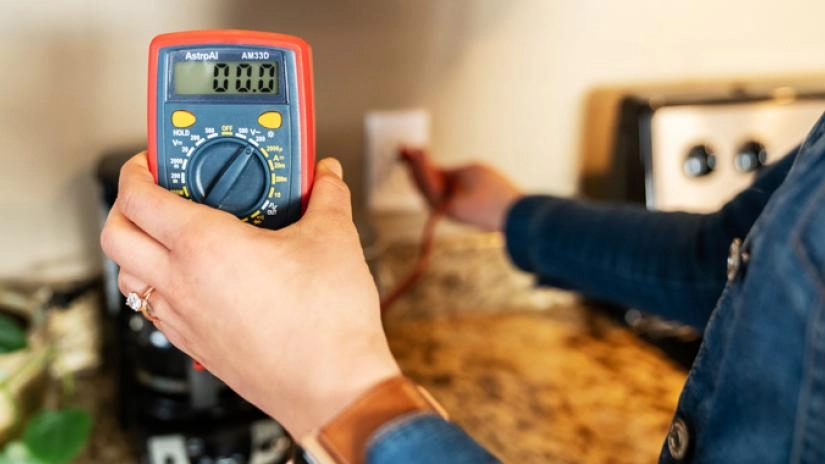
When the simple task of plugging your cell phone charger or hair dryer into the wall leaves you scratching your head and wondering why
Read MoreExpert Tips
View All Expert Tips

Top 8 Electrical Safety Essentials Your Home Needs
The cliche of "always be prepared" reigns true in most areas of life, but especially in homeownership. You never know when the next electrical storm will hit, when you'll suddenly notice mold and mildew in your basement, or when someone will attempt to break into your home. Even if you feel as though these things could never happen to you, it's better to be safe than sorry.
Read MoreSmart Devices: How Safe Are They?
The market for smart home products is worth an estimated $40 billion, with 65% of Americans already owning at least one device or system and a majority of those planning to purchase more in the future. People embrace this trend to increase security, improve energy efficiency, or gain more control over their home’s day-to-day functions.
Read MoreServices We Provide

-
Large Appliance Outlets
Outdoor Outlets
USB Outlets
Tamper Resistant Outlets
Outlet Installation
Outlet Repair
Safety Outlets
Panel Installation
Panel Upgrades and Repair
Circuit Breakers
Surge Protectors
Power Conditioners
Light Switches
Wall Switches
Knob and Tube Wiring Upgrades
Wiring Upgrades
Electrical Code Updates
Electrical Safety Check
Generators
Join Our Team
“We have the power to make things better.” That’s our mantra, not only for our customers' electrical issues, but also you, a future team member!

Your Source for Local Home Service Experts
Neighborly brands repair, maintain, and enhance properties — to make life easier and more enjoyable for homeowners. Our consistency and quality work are the basis for everything we do, and are what make us a leader in the home services space, as we constantly strive to "be so remarkable, we become a beloved household name."
Book Online
A representative from our office will get back to you shortly to schedule service.
Due to a system error, we did not get your request. Please call us for immediate assistance.
We don't currently provide service to this ZIP/postal code.
Yes! You can email me service reminders and other messages.
Mr. Electric, a Neighbourly Company on its own behalf and on behalf of and its affiliates and franchisees requests your consent to send promotional and other electronic messages to you concerning products and services they believe are of interest to you. By checking this box, you agree to receive these messages. You can unsubscribe at any time.
Text opt-in does not apply for Canadian residents.