Licensed Electrician in Lancaster, PA | Expert Electrical Services
Your electrical system powers everything in your home. When it shows warning signs, fails during a storm, or no longer handles your daily load, you need a licensed electrician who knows Lancaster County homes inside and out. Mr. Electric® of Lancaster County is a locally owned and operated electrical contractor. We deliver residential and commercial electrical service backed by more than 30 years of Mr. Electric experience and the Neighborly Done Right Promise®.
Book Online
A representative from our office will get back to you shortly to schedule service.
Due to a system error, we did not get your request. Please call us for immediate assistance.
We don't currently provide service to this ZIP/Postal code.
Yes! You can email me service reminders and other messages.
Mr. Electric, a Neighbourly Company on its own behalf and on behalf of and its affiliates and franchisees requests your consent to send promotional and other electronic messages to you concerning products and services they believe are of interest to you. By checking this box, you agree to receive these messages. You can unsubscribe at any time.
Text opt-in does not apply for Canadian residents.
Customer Reviews
View All Testimonials
The Neighborly Done Right Promise® delivered by Mr. Electric®, a proud Neighborly company.
Easy Online BookingResidential & Commercial Electrical Services in Lancaster County, PA
At Mr. Electric of Lancaster County, we deliver dependable electrical solutions for homes and businesses throughout the county. Our licensed, bonded, and insured electricians uphold the highest safety standards and undergo comprehensive background checks for your peace of mind.
We take the time to understand your specific needs and offer expert guidance and transparent, up-front pricing on every project. Every service includes a complimentary home safety inspection and is backed by a one-year workmanship warranty. Count on us to keep your property operating safely, efficiently, and in compliance with code.
-
Installations
Learn more InstallationsFrom installation to maintenance, Mr. Electric has it all under control.
-
Lighting
Learn more LightingYour lighting will be brighter and well-balanced, creating inviting spaces for family and friends!
-
Electrical Safety
Learn more Electrical SafetyCount on Mr. Electric to make fire safety a priority. We can help you meet the national standard.
-
Repairs
Learn more RepairsOur electricians will inspect, diagnose, and find the fix for the problem.
Let us know how we can help you today.
Why Choose Our Electrician in Lancaster, PA?
-
Every electrician on our team is fully licensed, insured, and background-checked. We are local electricians who work in Lancaster County every day. We know the housing stock, the common electrical problems in older homes, and the permit requirements for each municipality we serve. You get skilled electricians with real local knowledge, not a dispatch center sending whoever is available.
-
We provide a quote for every job before we start. You know exactly what the work will cost, with no hourly billing, no surprise charges, and no change orders unless you request additional work.
-
Mr. Electric is part of Neighborly, the world's largest home services company with more than 30 brands and 5,500 franchises. Our customer service standard is straightforward: the Neighborly Done Right Promise® backs every job. If the work does not meet your expectations, we make it right. Period.
-
The Mr. Electric brand was established in 1994 and has served homeowners for more than 30 years. Mr. Electric of Lancaster County is a locally owned and operated franchise. You get the accountability of a local business with the training, systems, and professional service standards of a national brand.
-
We schedule appointments in clear time windows and show up when we say we will. Our experienced team of electricians arrives in uniform, wears shoe covers, protects your floors, and cleans up before leaving. You get respectful, professional service from start to finish on every job.
Areas We Serve
131 Main Street Denver, PA 17517, USA
We are a local, family-owned business in operation since 1994. Whether it’s an emergency or installation, we proudly provide the community of Lancaster County with reliable electrical repair near you.
Frequently Asked Questions About Electrical Services in Lancaster, PA
-
Flickering lights in Lancaster County homes often signal loose electrical connections, overloaded circuits, or voltage drop issues. In older homes built before 1970, which represent nearly 40% of Lancaster County's housing stock according to U.S. Census data, deteriorating wire connections are common. When connections loosen over time, electrical resistance increases, causing lights to flicker. Overloaded circuits occur when too many devices draw power simultaneously, which is common in homes with older 100-amp panels that handle modern electrical demands.
One thing we see regularly: homeowners switch to LED bulbs but keep their old dimmer switches. Older dimmers are not compatible with LEDs and cause persistent flickering. If flickering occurs throughout your home or is accompanied by warm outlets or burning smells, shut off the breaker and call your licensed electrician immediately.
-
A circuit breaker that trips once is doing its job by protecting your home from overload or short circuits. Reset it once by switching it fully to the off position, then back to on. If the breaker trips immediately or trips again within hours, you have an electrical problem that needs professional diagnosis. Common causes in Lancaster County homes include overloaded circuits, short circuits caused by damaged wire insulation, ground faults, and failing breakers.
Older 100-amp panels in pre-1980 Lancaster homes trip frequently because the circuits were never designed for modern loads such as window AC units, space heaters, and multiple electronics. Do not bypass a tripped circuit breaker or replace it with a higher-amp rating without a professional assessment. Call a licensed electrician to diagnose the cause and recommend the right solution.
-
Your Lancaster home needs a panel replacement if you notice these warning signs: breakers trip frequently, you hear buzzing or crackling from the panel, you see rust or corrosion inside the panel box, outlets or switches feel warm, lights dim when large appliances start, or you smell burning near the panel. Age is another factor. Most Lancaster County homes built before 1980 have 60-amp or 100-amp panels that are insufficient for today's electrical demands.
A licensed electrician performs a load calculation to determine your actual and planned electrical demand. If your total load approaches or exceeds 80% of your panel capacity, an upgrade is necessary. Panel upgrades in Lancaster County require a permit and inspection under the Pennsylvania Uniform Construction Code. We handle the entire process, including permit application, installation, utility coordination with PPL Electric, and final inspection.
If you plan to add an electric vehicle charger, central air conditioning, or other high-draw equipment, your existing panel likely needs to be upgraded to 200-amp service. Federal Pacific Electric and Zinsco panels, common in Lancaster County homes from the 1960s and 1970s, have been documented to have safety failures and need replacement regardless of age. Our licensed electricians assess your electrical load and recommend electrical panel upgrades when safety or capacity issues exist
-
Warm outlets indicate a dangerous electrical problem that needs immediate attention. The most common cause is a loose wire connection inside the outlet box. When connections loosen, electrical resistance increases, which generates heat. Over time, heat damages wire insulation and outlet components, increasing the risk of an electrical fire. Overloaded circuits also cause outlets to warm up, particularly when you plug high-wattage appliances like space heaters or window air conditioners into standard 15-amp outlets.
In Lancaster County's older homes, outlets installed decades ago often have connections that have loosened from years of thermal expansion and contraction. If you notice a warm outlet, unplug everything from it immediately and turn off the circuit breaker that controls it.
Call your licensed electrician to inspect and repair the connection. Warm outlets require prompt professional outlet replacements and installations to avoid fire hazards.
-
A burning smell from your electrical panel is an emergency. The smell indicates overheating connections, failing circuit breakers, or damaged bus bars inside the panel. Heat is generated when electrical connections degrade, when breakers fail to trip properly under overload conditions, or when your panel carries more current than it was designed to handle. In Lancaster County, homes with Federal Pacific or Zinsco panels have well-documented breaker failures, and these panels often overheat under normal loads.
If you smell burning coming from your panel, shut off the main breaker if it is safe to reach. Do not touch the panel if you see smoke or sparks. Call a licensed electrician immediately. Overheating panels cause house fires. Our electricians respond to electrical emergencies and determine the right solution, repair, or full panel replacement, based on what they find.
-
Yes, electrical panel upgrades in Lancaster County require a permit. Pennsylvania enforces the Pennsylvania Uniform Construction Code, which adopts the National Electrical Code with state amendments. Any service change, panel replacement, or major electrical modification requires a permit from your local building code enforcement office. The permit process ensures your electrical work meets current code standards and includes an inspection after installation.
Licensed electrical contractors like Mr. Electric pull permits as part of the service. We submit the permit application, coordinate the inspection with the local authority, and make sure the work passes the first time. Unpermitted electrical work creates safety hazards, violates local law, and causes serious problems when you sell your home. Buyers, home inspectors, and insurance companies all check for proper permitting on major electrical work.
-
No, Federal Pacific Electric panels are not considered safe by modern electrical standards. FPE panels, common in Lancaster County homes built between 1950 and 1980, have well-documented circuit breaker failures. Independent testing and Consumer Product Safety Commission investigations found that FPE breakers often fail to trip under overload or short-circuit conditions, allowing dangerous current levels to flow through your wiring.
The breakers also have a high failure rate, where they appear to trip but fail to disconnect power. If your Lancaster home has a Federal Pacific panel, look for "FPE" or "Federal Pacific" on the panel door or breakers with red test buttons. Replacement is strongly recommended regardless of panel age or apparent condition. Many homeowners' insurance companies now require replacement of FPE panels as a condition of coverage. We replace FPE panels with modern, code-compliant panels and handle the permit and inspection process.
-
A typical electrical panel upgrade in Lancaster County takes between 4 and 8 hours for the installation. The timeline depends on several variables: meter base condition, service entrance cable adequacy, circuit count, and scope of work (100-amp to 200-amp upgrade vs. straight panel replacement). Your power will be off during installation, so plan accordingly.
Permit processing time adds a few days to a week in most Lancaster County municipalities. After installation, a local code inspector approves the work before PPL Electric reconnects permanent power. We coordinate all steps, including permit application, utility notification, installation, and final inspection. In most cases, your power is restored the same day. If major service entrance work is required, the timeline extends to two days.
-
Level 2 EV chargers require a 240-volt dedicated circuit, typically rated at 40 or 50 amps, depending on your vehicle and charger specifications. This is the same voltage used by electric dryers and ranges. National Electrical Code (NEC Article 625) governs EV charger installations and requires proper wire sizing (usually 6 AWG or 8 AWG copper wire), a dedicated circuit breaker in your main panel, proper grounding, and GFCI protection in most installations.
Most Level 2 chargers draw between 7.2 and 11.5 kilowatts continuously during charging sessions. If your Lancaster home has a 100-amp panel, you likely do not have enough capacity for electric vehicle charging plus your existing electrical loads, which means a panel upgrade to 200-amp service is often necessary. Our electricians assess your panel capacity, recommend the right charger circuit size, handle the permit, and complete the installation to code.
-
EV charger installation typically takes four to six hours if your electrical panel has adequate capacity and physical space for the new circuit. The work includes installing a dedicated 240-volt circuit breaker in your main panel, running wire from the panel to your garage or charging location, mounting the charger or outlet, making all connections, testing the circuit, and obtaining the required inspection.
Installation time increases if we need to upgrade your electrical panel first, run wire through finished walls, or install the charger far from your panel. In Lancaster County, EV charger installations require a permit and approval from a code inspector. We handle the permit application and coordinate the inspection. Most installations are complete in one day from start to final inspection. If a panel upgrade is required first, plan for two service visits.
-
An electrical emergency is any situation that creates immediate fire risk, shock hazard, or complete loss of power to critical systems. Call an electrician immediately if you see sparks from an outlet or switch, smell burning near electrical components, see smoke from your panel or outlets, find exposed live wires, hear loud buzzing or crackling from your panel, or experience electrical shock. For true emergencies, shut off power at the main breaker if it is safe to reach, and keep people away from the hazard.
If you experience complete power loss in Lancaster County, check with PPL Electric Utilities first to determine if the outage is utility-wide or isolated to your home. If your neighbors have power and you do not, the problem is with your service entrance or panel, and you need a licensed electrician. We respond to electrical emergencies and work to restore safe electrical service as quickly as possible.
-
Reset a tripped circuit breaker yourself the first time it happens. Switch it fully to the off position first, then back to on. If the breaker stays on and does not trip again, you likely overloaded the circuit temporarily. If the breaker trips immediately when you reset it or trips repeatedly, you have a problem that requires professional diagnosis.
Call a licensed electrician when a circuit breaker trips more than once, when you smell burning, when outlets on that circuit feel warm, or when you cannot identify what caused the trip. In older homes in Lancaster County with 100-amp panels, repeated breaker trips often indicate that your electrical systems no longer meet your current needs. Our electricians diagnose the cause, whether it is a short circuit, ground fault, failing breaker, or overloaded circuit, and recommend the right solution.
-
National Electrical Code Article 210.8 requires GFCI protection in any location where water and electricity come into contact. In Lancaster County homes, GFCI protection is required within six feet of all sinks, in all bathroom outlets, in kitchen countertop outlets, in garages, in unfinished basements, in crawl spaces, and at all outdoor outlets. GFCI devices detect current imbalances as small as 5 milliamps and shut off power within milliseconds, preventing electrical shock.
Older Lancaster County homes built before 1970 typically lack GFCI protection because code requirements were different then. When you sell your home, inspectors flag missing GFCI outlets as a safety concern. Retrofit GFCI outlets in all required locations to bring your home up to current code. Test them monthly by pressing the TEST button (power should shut off), then pressing RESET (power should restore). Replace any GFCI that fails the test immediately.
-
Warning signs of electrical fire risk include burning smells near outlets or panels, discolored or charred outlet and switch plates, buzzing or crackling sounds from electrical components, frequently tripping breakers, flickering lights throughout your home, outlets or switches that feel warm or hot, and visible sparks when you plug in devices. In Lancaster County's older homes, additional risk factors include Federal Pacific or Zinsco electrical panels with documented breaker failures, knob-and-tube wiring common in pre-1950 homes, aluminum wiring common in 1960s and 1970s homes, and 60-amp or 100-amp panels carrying modern electrical loads.
According to the National Fire Protection Association (NFPA 72) and fire incident data, electrical failures or malfunctions account for approximately 13% of home structure fires. If you notice any warning signs, schedule an electrical safety inspection immediately. You receive a written report with prioritized recommendations and upfront pricing for any work needed.
-
Older Lancaster County homes share a predictable set of electrical problems rooted in their age and construction era. Approximately 40% of homes in Lancaster County were built before 1970, according to U.S. Census Bureau data.
Common electrical problems in these homes include: undersized electrical service (60-amp or 100-amp panels insufficient for modern loads), knob-and-tube wiring in homes built before 1950 (lacks grounding, insulation deteriorates over time), aluminum wiring in homes built during the 1960s and 1970s (creates loose connections and fire risk), Federal Pacific and Zinsco panels with documented breaker failures, insufficient grounding systems, missing GFCI protection in kitchens and bathrooms, missing AFCI protection in bedrooms and living areas, and inadequate circuit capacity for modern kitchens and home offices.
These electrical problems pose safety hazards and prevent you from adding modern loads, such as EV chargers or central air conditioning. We offer complimentary electrical safety inspections throughout Lancaster County and provide a written report with prioritized recommendations.
-
Yes. LED lighting upgrades reduce monthly electric bills across Lancaster County. According to the U.S. Department of Energy, LED bulbs use approximately 75% less energy than incandescent bulbs and last 25 times longer. A home with 30 incandescent bulbs, each averaging 60 watts, uses 1,800 watts when all lights are on. The same home with LED equivalents uses roughly 450 watts.
At average Pennsylvania electricity rates, that difference adds up to meaningful savings each month. Energy-efficient lighting upgrades also reduce heat output, which lowers cooling costs during Lancaster County summers. We install LED recessed lighting, LED fixture replacements, and smart lighting controls with occupancy sensors that turn off lights automatically in empty rooms. Schedule Service to get an assessment of your current lighting and an upfront quote for an upgrade.
-
A complimentary electrical safety inspection from Mr. Electric of Lancaster County covers your entire electrical system for safety hazards, code violations, and capacity issues. The inspection includes opening your electrical panel to check for rust, corrosion, burnt connections, proper wire sizing, correct breaker ratings, and the panel manufacturer (Federal Pacific or Zinsco).
We test outlets throughout your home for proper grounding, correct polarity, and GFCI function where required. We inspect visible wiring in your basement, attic, and garage for damage, improper connections, or outdated wiring types like knob-and-tube or aluminum. We check your service entrance, verify proper grounding, look for overloaded circuits, and test smoke detectors.
The inspection takes approximately one to two hours. You receive a written report with photos of any concerns, explanations of what we found, and prioritized recommendations separating immediate safety concerns from longer-term upgrades. We provide upfront pricing for any recommended work. There is no pressure and no obligation.
-
Lancaster County has a substantial older housing stock. Nearly 40% of homes here were built before 1970, which means many electrical systems were designed for a different era. A 100-amp panel made sense when homes had fewer appliances, no home offices, and no electric vehicle chargers. Today, those same systems are under stress. Breakers trip. Outlets fail. Panels overheat. Our experienced team sees these electrical problems every day across Lancaster, Ephrata, Lititz, and every community in between.
Our licensed electricians handle the full scope of residential and commercial electrical work. Every job meets the National Electrical Code (NEC) standards, the Pennsylvania Uniform Construction Code requirements, and local code compliance requirements. We pull permits when required, coordinate inspections, and make sure the work passes the first time. You get upfront pricing before we start, and our Done Right Promise® backs every job. If it is not done right, we make it right.
Electrical repair services in Lancaster, PA
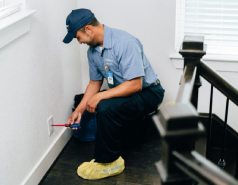
Electrical repair is the most common reason people across Lancaster County call us. Outlets stop working. Switches fail. Breakers trip repeatedly. Lights flicker without explanation. These are not minor inconveniences. They are signs of underlying electrical problems. Left unaddressed, they worsen.
Our local experts, all licensed electricians, diagnose the root cause before recommending any repair. A good electrician does not replace parts that do not need replacing. We trace the actual fault, whether that is a loose connection, a failing breaker, a damaged wire, or an overloaded circuit, and we fix it correctly. Common electrical repair services we provide include:
- Outlet repair and replacement (standard, GFCI, USB, tamper-resistant, 240-volt)
- Circuit breaker replacement and troubleshooting
- Light switch and wall switch repair
- Wiring diagnosis and repair for shorts, grounds, and open circuits
- Smoke detector and carbon monoxide detector installation and repair
- Whole-house wiring inspections following storm damage or unexpected outages
Schedule service online or call us directly. We provide an upfront quote before any work begins.
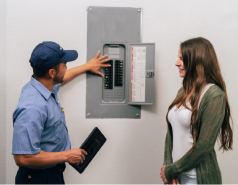
Electrical panel upgrades and replacements
Most older homes in Lancaster County have 100-amp electrical panels. Some still run on 60-amp service. Modern homes need 200-amp panels to handle HVAC systems, kitchen appliances, home office equipment, electric vehicle charging, and everything else you plug in daily.
Signs your panel needs an electrician include frequent breaker trips, buzzing from the panel box, dimming lights when large appliances start, warm spots near the panel, or plans to add a major new load. Our electricians perform a load calculation first. If your total electrical demand approaches 80% of your panel's rated capacity, an upgrade is necessary. Here is what the process involves:
- Load calculation to size the new panel correctly
- Permit application with your local Lancaster County municipality
- Scheduled installation with planned power outage (typically four to eight hours)
- Reconnection and labeling of all circuits
- Final inspection by a local code enforcement officer
- Utility reconnection through PPL Electric Utilities
We also replace outdated and unsafe panel brands. Federal Pacific and Zinsco panels have been documented to have circuit breaker failures and pose a fire risk. If your home has one, replacement is not optional. You get a modern panel built to code-compliance standards that will support your home for decades.
Electric vehicle charger installation
Electric vehicle charging at home requires more than a standard outlet. A Level 2 electric vehicle charger needs a 240-volt dedicated circuit, typically rated at 40 or 50 amps, with proper wire sizing and a panel that has both physical space and sufficient capacity for the additional load.
Understanding your options helps you choose the right setup:
- Level 1 charging uses a standard 120-volt outlet and adds roughly 3 to 5 miles of range per hour. Adequate for plug-in hybrids with small batteries.
- Level 2 charging uses a 240-volt dedicated circuit and adds 20 to 30 miles of range per hour. This is the standard for full battery-electric vehicles and the most practical home-charging solution.
- DC Fast Charging is a commercial-grade option not suited for residential installation.
Most homes in Lancaster County built before 1990 have 100-amp panels. Adding a Level 2 electric vehicle charger to an already-loaded 100-amp system often requires a panel upgrade to 200-amp service first. Here is what the EV charger installation process involves:
- Electrical system assessment and load calculation
- Panel capacity verification (upgrade to 200-amp if needed)
- Permit application with your Lancaster County municipality
- Dedicated 240-volt circuit installation from panel to charging location
- Charger mounting and connection
- Circuit testing and inspection approval
We handle all of it from assessment through final inspection.
Wiring upgrades and electrical repairs
Wiring upgrades address the most serious electrical problems in older Lancaster County homes. Knob-and-tube wiring was standard before 1950. Aluminum wiring appeared in homes built during the 1960s and 1970s. Both create safety concerns that worsen with age.
Knob-and-tube wiring lacks a grounding conductor, and its insulation degrades over decades of thermal cycling. Aluminum wiring expands and contracts with temperature changes. Over time, those repeated movements loosen connections at outlets, switches, and breaker terminals. Loose connections generate heat. Heat damages insulation. That sequence is how electrical fires start.
Our electricians diagnose wiring problems, recommend repairs or full replacement based on the actual scope, and bring your home up to current code compliance standards. That includes:
- GFCI protection retrofits per NEC Article 210.8 in kitchens, bathrooms, garages, crawl spaces, and outdoor outlets
- AFCI protection in bedrooms and living areas where required by current NEC standards
- Aluminum wiring remediation through CO/ALR-rated devices or copper pigtailing
- Knob-and-tube replacement with properly grounded modern wiring
- Grounding system upgrades for homes with two-prong outlets
If your home has flickering lights, warm outlets, or frequent breaker trips, wiring is often the cause. These are not problems to monitor; these are problems to fix.
Outdoor lighting and landscape lighting installation
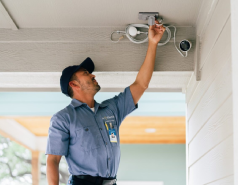
Outdoor lighting improves your home's safety, security, and curb appeal. Landscape lighting highlights architectural features, pathways, and plantings after dark. Both require weatherproof wiring, proper GFCI protection on outdoor circuits, and correct fixture ratings for exterior exposure.
We install a full range of outdoor electrical services across Lancaster County:
- Pathway and landscape lighting with low-voltage LED systems
- Porch, patio, and deck lighting with weatherproof fixtures
- Security lighting with motion sensors and occupancy controls
- Driveway and garage lighting
- Outdoor outlet installation with GFCI protection
- Post and bollard lighting for driveways and walkways
Every outdoor circuit our licensed electricians install meets NEC requirements for exterior wiring, including weatherproof enclosures and proper conduit where required. We also handle any home improvement project, adding outdoor living space, from new deck lighting to full outdoor kitchen electrical service.
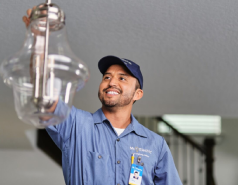
Lighting installation and energy-efficient lighting upgrades
Lighting upgrades are one of the most cost-effective home improvement projects available to Lancaster County homeowners. According to the U.S. Department of Energy, LED bulbs use approximately 75% less energy than incandescent bulbs and last 25 times longer. For a Lancaster County home with older incandescent or CFL fixtures throughout, switching to LED reduces your monthly electric bills.
Energy-efficient lighting upgrades we install include:
- Recessed LED lighting in kitchens, living areas, and hallways
- Under-cabinet LED strips for kitchen task lighting
- LED ceiling fan and fixture replacements
- Dimmer controls compatible with LED bulbs (not all dimmers work with all LEDs)
- Smart lighting systems with app control, schedules, and occupancy sensors
- Pendant and accent lighting for kitchens, dining areas, and staircases
One practical note from our work in Lancaster County homes: older dimmer switches are often incompatible with LED bulbs and cause flickering. If you have switched to LEDs and your lights flicker, the dimmer is usually the problem, not the bulbs. Our electricians replace outdated dimmers with LED-compatible controls as part of any lighting upgrade.
Whole-house surge protection
A surge protector power strip protects the devices plugged into it. It does not protect your appliances, HVAC system, water heater, or anything else wired directly into your home. When lightning strikes near your home or PPL Electric Utilities restores power after an outage, the resulting voltage spike travels through your entire electrical system. A power strip offers no defense against that.
Whole-house surge protection is installed at your electrical panel and intercepts voltage spikes before they reach your wiring. This protects every device and appliance in your home simultaneously. For homes across Lancaster County that experience summer thunderstorms, winter outages, and the occasional unexpected outage from grid-switching events, whole-house surge protection is a practical investment.
Our electricians install panel-mounted surge protection devices rated to handle utility-side surges. For complete protection, we recommend pairing whole-house surge protection with quality point-of-use surge protectors for sensitive electronics such as televisions, computers, and home theater systems. The two layers together provide protection that neither provides alone.
Generator installation and backup power
Generator installation gives your Lancaster County home reliable power when PPL Electric goes down. A whole-house standby generator starts automatically within seconds of an outage. Your lights stay on, your refrigerator keeps running, and your heating or cooling system continues to operate.
Choosing the right generator size matters. Here is a practical guide based on what we install across Lancaster County:
- 10 kW to 12 kW: Powers essential circuits, including lights, refrigerator, sump pump, and a few outlets. Does not run central air conditioning.
- 14 kW to 18 kW: Powers most of your home, including central air conditioning on moderate-demand days. Suitable for most Lancaster County homes under 2,500 square feet.
- 20 kW and above: Powers your entire home, including central air, electric range, and multiple high-draw appliances simultaneously. Recommended for larger homes or homes with electric heat.
Standby generators connect to your home through a transfer switch. An automatic transfer switch detects an outage and switches your home to generator power without any action on your part. A manual transfer switch requires you to start the generator and flip the switch yourself. Our electricians install both types, and we help you choose based on your priorities and budget.
We install Briggs and Stratton Fortress Generators, which carry a six-year limited warranty covering parts, labor, and travel. Each unit includes a built-in block heater for reliable cold-weather starts during Lancaster County winters. As an authorized dealer, we also service and maintain the generators we install. Request a complimentary quote to get sized and scheduled before the next unexpected outage.
Smart home electrical services
Smart thermostats, smart lighting, video doorbells, and connected outlets give you control and measurable energy savings. Smart lighting systems with occupancy sensors automatically turn off lights in empty rooms, reducing electric bills without any change in your habits.
Our electricians install and integrate smart home devices so they work reliably with your existing electrical systems. That includes verifying your wiring supports the devices, installing proper connections, and confirming everything communicates correctly with your home network. Smart home upgrades improve convenience, security, and energy efficiency without requiring a full rewire in most Lancaster County home electrical systems.
Emergency electrical services
Electrical emergencies require immediate action. Call us right away if you experience any of the following:
- Sparks from an outlet, switch, or panel
- Burning smell near any electrical component
- Smoke from your panel or outlets
- Exposed or damaged live wires
- Loud buzzing or crackling from your panel
- Electrical shock from an outlet or appliance
For any of these situations, shut off power at the main breaker if it is safe to reach. Do not touch the panel if you see smoke or sparks. Keep people and pets away from the area and call us immediately.
If you experience a complete power loss, check with PPL Electric Utilities (Lancaster County's primary electric provider) first. Confirm with them if the outage is utility-wide or isolated to your home. If your neighbors have power and you do not, the problem is with your service entrance, main breaker, or panel. That requires a licensed electrician, not a utility crew. We respond to electrical emergencies and work to restore safe electrical service as quickly as possible.
For non-emergencies, such as a single tripped circuit breaker or a failed outlet, try resetting the breaker or testing your GFCI outlets first. If the problem persists, schedule a service, and we will diagnose it at your next available appointment.
Dedicated circuits for high-demand appliances
A dedicated circuit runs directly from your electrical panel to a single outlet or appliance with no other devices sharing that circuit. High-demand appliances require dedicated circuits to operate safely and reliably. Sharing a circuit between a refrigerator and a microwave, for example, creates an overload risk and repeatedly trips breakers.
We install dedicated circuits for:
- Electric ranges and ovens (typically 50-amp, 240-volt)
- Electric dryers (30-amp, 240-volt)
- Refrigerators and freezers (20-amp, 120-volt)
- Dishwashers (20-amp, 120-volt)
- Tankless water heaters (varies by unit, typically 40 to 60 amps)
- Hot tubs and pool pumps (50-amp, 240-volt)
- Home office equipment and workstations (20-amp, 120-volt)
- Electric vehicle chargers (40 to 50-amp, 240-volt)
If you are planning a kitchen renovation, bathroom addition, garage conversion, or any home improvement project that adds new appliances or equipment, contact us before construction begins. We identify what circuits you need, confirm your panel has capacity, and install everything to code before your contractors need it.
-
Your home's electrical service deserves attention from licensed professionals who know Lancaster County electrical systems. Need electrical repair services, a panel upgrade, an electric vehicle charger installation, energy-efficient lighting upgrades, or a complimentary safety inspection?
Contact us online or call to get started. We provide an upfront quote, complete the work to code, and back every job with the Neighborly Done Right Promise®.
Our Blog
View All Blog PostsDangers of an Overloaded Circuit
Overloading an electrical circuit can cause some serious problems. While that may seem obvious, chances are that you’ve caused a circuit overload at least once in your life.
Read More
Is Your Electrical Outlet Not Working?
When the simple task of plugging your cell phone charger or hair dryer into the wall leaves you scratching your head and wondering why
Read MoreExpert Tips
View All Expert Tips
Top 8 Electrical Safety Essentials Your Home Needs
The cliche of "always be prepared" reigns true in most areas of life, but especially in homeownership. You never know when the next electrical storm will hit, when you'll suddenly notice mold and mildew in your basement, or when someone will attempt to break into your home. Even if you feel as though these things could never happen to you, it's better to be safe than sorry.
Read MoreSmart Devices: How Safe Are They?
The market for smart home products is worth an estimated $40 billion, with 65% of Americans already owning at least one device or system and a majority of those planning to purchase more in the future. People embrace this trend to increase security, improve energy efficiency, or gain more control over their home’s day-to-day functions.
Read MoreServices We Provide
-
Large Appliance Outlets
Outdoor Outlets
USB Outlets
Tamper Resistant Outlets
Outlet Installation
Outlet Repair
Safety Outlets
Panel Installation
Panel Upgrades and Repair
Circuit Breakers
Surge Protectors
Power Conditioners
Light Switches
Wall Switches
Knob and Tube Wiring Upgrades
Wiring Upgrades
Electrical Code Updates
Electrical Safety Check
Generators
Join Our Team
“We have the power to make things better.” That’s our mantra, not only for our customers' electrical issues, but also you, a future team member!
Your Source for Local Home Service Experts
Neighborly brands repair, maintain, and enhance properties — to make life easier and more enjoyable for homeowners. Our consistency and quality work are the basis for everything we do, and are what make us a leader in the home services space, as we constantly strive to "be so remarkable, we become a beloved household name."
Book Online
A representative from our office will get back to you shortly to schedule service.
Due to a system error, we did not get your request. Please call us for immediate assistance.
We don't currently provide service to this ZIP/postal code.
Yes! You can email me service reminders and other messages.
Mr. Electric, a Neighbourly Company on its own behalf and on behalf of and its affiliates and franchisees requests your consent to send promotional and other electronic messages to you concerning products and services they believe are of interest to you. By checking this box, you agree to receive these messages. You can unsubscribe at any time.
Text opt-in does not apply for Canadian residents.