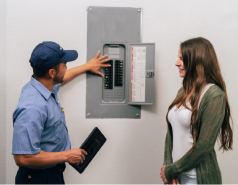
Your electrical panel is the backbone of your home's wiring. Every circuit in the house runs through it, and when it starts to fail or fall short of modern demand, the problems don't stay small for long. If you're seeing tripped breakers weekly, have a 60-amp or 100-amp panel in an older Lancaster-area home, or plan to add an EV charger, a hot tub, or a whole-home generator, your current panel likely isn't built for what you're asking it to do. Mr. Electric of Lancaster County has been upgrading panels since 2009, and our licensed Lancaster electricians carry the training and tools to assess your current service, pull the proper permits with the Lancaster County building office, and install the right panel for your home's load. We price by the job, not by the hour, so you'll know the total cost before we touch a single breaker.
Electrical Panel Upgrades in Lancaster, PA
Book Online
What Drives the Need for a Panel Upgrade in Lancaster
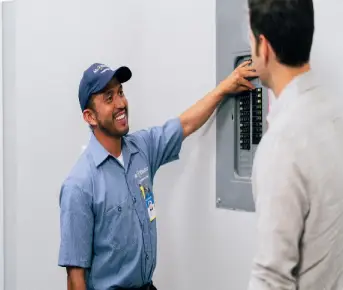

Let us know how we can help you today.
Why Choose Mr. Electric of Lancaster County for Your Panel Upgrade
Mr. Electric of Lancaster County’s team has an average of more than 15 years of hands-on electrical experience per electrician. Since opening in Lancaster County in 2009, we've completed panel upgrades across hundreds of homes, from older brick row homes in the surrounding boroughs of Lancaster City to newer builds in Landisville and Mountville. That history matters because panel work is not a commodity job. Load calculations, proper breaker sizing, and code-compliant wiring methods all require judgment built over years of field experience.
We quote every panel upgrade as a flat job price before work begins. No hourly rate that climbs when the job takes longer. You'll receive a line-item estimate covering materials, labor, permit fees, and inspection costs. Every job is backed by the Neighborly Done Right Promise®: if it's not done right, we make it right.
Lancaster County requires permits for electrical panel replacements, and our team handles that paperwork from start to finish. We coordinate with PPL Electric for the utility disconnect when needed and schedule the final inspection with the county. When the inspector signs off, you have documentation that protects your home's value and satisfies your homeowner's insurance requirements.
Frequently Asked Questions About Electrical Panel Upgrades in Lancaster, PA
Residential & Commercial Services