Electricity powers nearly every part of daily life, from making your morning coffee to charging your phone before bed. Because it works quietly in the background, it's easy to forget about the electrical system behind all those everyday conveniences.
October's Fire Prevention Month is a good reminder to pay attention to it.
You don't need to understand the wiring behind your walls to recognize when something isn't behaving normally. A strange smell, a warm outlet, or a breaker that suddenly starts tripping may be your first clue that an electrical problem needs attention.
Knowing the warning signs and what to do when you notice them can help you address potential electrical hazards before they become more serious.
What Are the Warning Signs of an Electrical Fire?
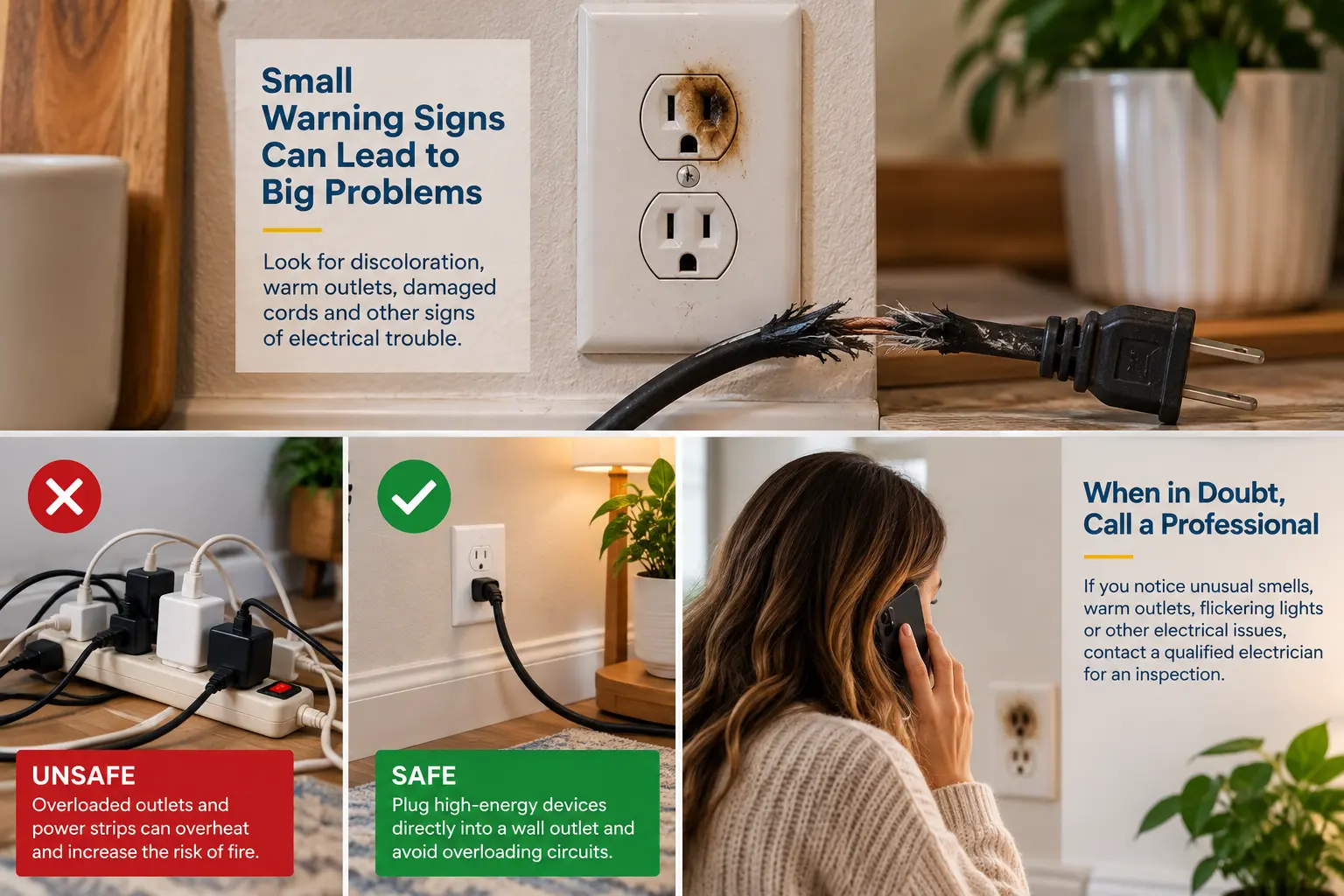
Electrical problems aren't always obvious. In many cases, homeowners notice a change in how an outlet, switch, light, or circuit behaves before they know what's causing it.
Eight electrical fire warning signs to watch for include:
- Burning or unusual electrical odors
- Warm or discolored outlets and switches
- Frequently tripping circuit breakers
- Flickering or dimming lights
- Buzzing, crackling, or sizzling sounds
- Sparks from outlets or switches
- Loose, damaged, or frayed electrical components
- Smoke coming from an electrical source
One warning sign doesn't tell you exactly what is wrong. The important thing is recognizing when something has changed and knowing when it's time to stop using the affected equipment and seek professional help.
8 Electrical Fire Warning Signs You Shouldn't Ignore
1. Burning or Unusual Electrical Odors
A persistent burning, hot-plastic, or rubber-like smell near an outlet, switch, appliance, or other electrical equipment can indicate overheating or another electrical problem.
Don't keep using the equipment to see whether the smell goes away. Stop using the affected electrical source and have the cause evaluated.
If you see smoke or flames, leave the home and call 911 or your local emergency services from a safe location.
2. Warm or Discolored Outlets and Switches
Outlets and switches shouldn't become noticeably hot during normal use.
Discoloration, scorch marks, unusual warmth, or melting around an outlet or switch can indicate excessive heat. Stop using the affected component rather than assuming it's safe simply because it still provides power.
3. Frequently Tripping Circuit Breakers
Circuit breakers are designed to interrupt electrical current when certain unsafe conditions occur. If the same breaker repeatedly trips, resetting it over and over doesn't address the reason it's happening.
Learn what to do when your circuit breaker trips and when the problem may require professional attention.
Mr. Electric® Pro Tip: Never replace a frequently tripping breaker with one that has a higher amperage simply to stop the trips. Breakers and wiring must be appropriately matched for the circuit.
4. Flickering or dimming lights
A single flickering light may have a simple explanation, such as a loose bulb. Frequent, widespread, or unexplained flickering deserves more attention.
If lights consistently dim when an appliance starts or flickering occurs alongside breaker trips, buzzing, heat, or burning odors, have the electrical system professionally evaluated.
5. Buzzing, crackling, or sizzling sounds
Electricity is something you use every day, but it isn't something you should regularly hear coming from your outlets and switches.
Buzzing, crackling, or sizzling may indicate a loose connection, electrical arcing, or another problem. Stop using the affected outlet, switch, or equipment and have it evaluated rather than attempting to access the wiring yourself.
6. Sparks from outlets or switches
A spark from an electrical component shouldn't be dismissed as normal.
Sparking can have several possible causes, including loose connections, damaged components, or other electrical faults. If an outlet or switch sparks during normal use, stop using it until a qualified service professional can determine the cause.
7. Loose, damaged, or frayed electrical components
Electrical problems aren't always hidden behind a wall. Sometimes the hazard is right in front of you.
Check cords and plugs for:
- Fraying or cracking
- Exposed or damaged wiring
- Loose connections
- Pinched or crushed areas
- Signs of overheating
Plugs should also fit securely into outlets. If plugs regularly fall out or the outlet itself moves during use, stop using it until the issue can be addressed.
8. Smoke coming from an electrical source
Smoke from an outlet, switch, electrical panel, appliance, or other electrical source is an emergency warning sign.
Don't remove covers, open electrical equipment, or touch exposed wiring to investigate.
If there is active smoke or fire, leave the home and call 911 or your local emergency services from a safe location. Never use water on an electrical fire.
What Causes Electrical Fires in Homes?
Understanding what causes electrical fires can also help homeowners recognize potential problems before they become more serious. Recognizing the warning signs is important, but understanding what can contribute to them can help you reduce risk in the first place.
Overloaded circuits
Today's homes can have a lot competing for electricity: computers, televisions, chargers, kitchen appliances, gaming systems, space heaters, and more.
Frequent breaker trips, dimming lights, warm outlets, or buzzing deserve attention. Depending on the cause and your home's electrical demand, a service professional may recommend options such as a dedicated circuit, electrical repairs, or an electrical panel upgrade.
Damaged or aging wiring
Older wiring isn't automatically unsafe because of its age. However, wiring and other electrical components can deteriorate or become damaged over time. Learn more about when electrical wiring updates and upgrades may be appropriate for your home.
Changes to a home also matter. Renovations, new appliances, and increasing electrical demand can affect whether an existing system remains appropriate for how the household uses electricity.
Improper use of extension cords and power strips
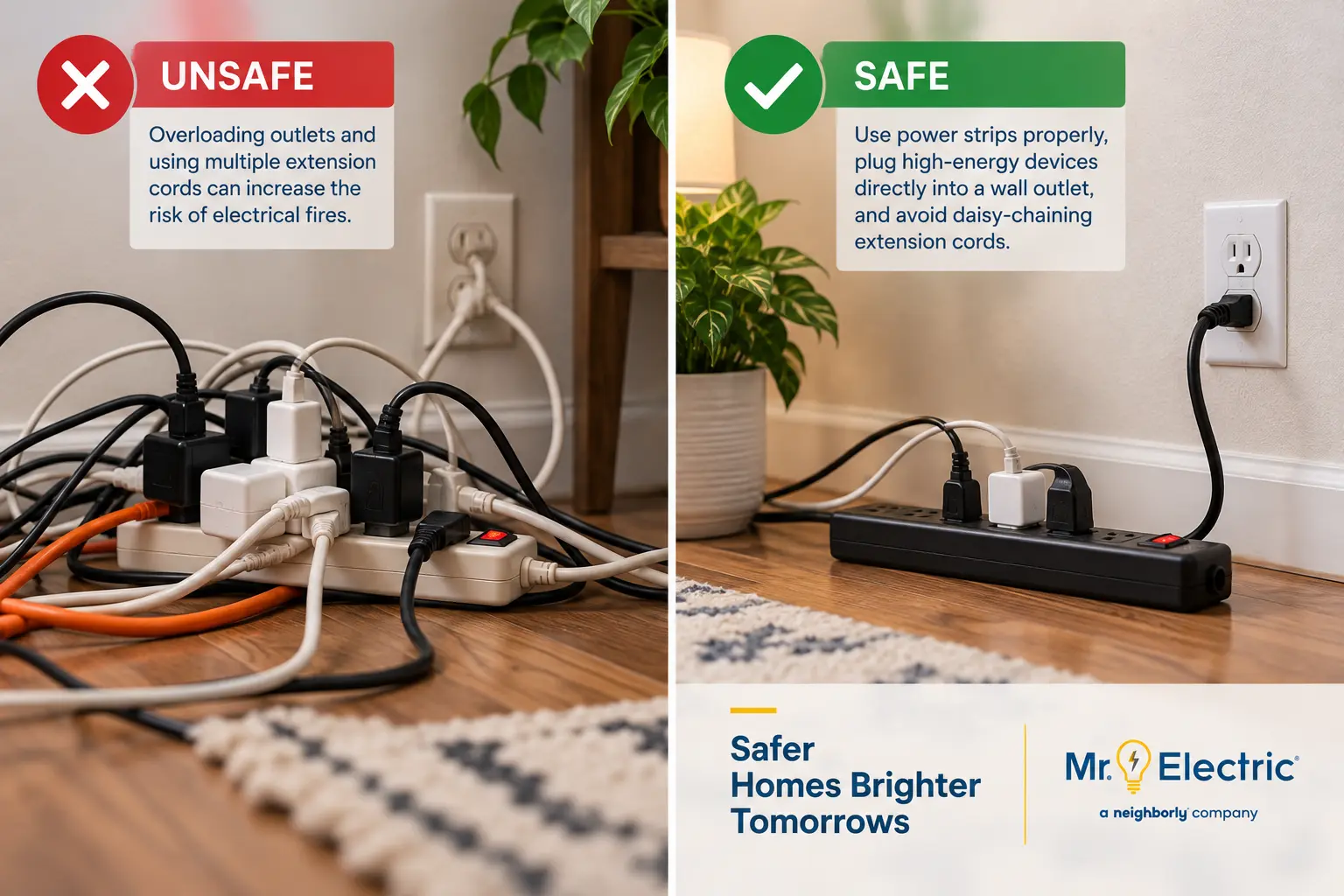
We've all had an outlet that's just a little too far from where we need electricity. An extension cord is an easy fix, which is why a temporary solution can quietly become permanent.
Extension cords should be used as temporary power solutions rather than substitutes for permanent wiring. If you regularly rely on an extension cord in the same location, installing an additional outlet may provide a more practical long-term solution.
Remember: a power strip gives you additional places to plug things in. It doesn't increase the amount of electricity the circuit can safely provide.
Improper electrical work
DIY renovations or previous electrical work may leave behind problems that aren't immediately obvious.
Oddly placed switches, uncovered electrical boxes, inconsistent outlets, recurring breaker problems, or unexplained wiring may warrant professional evaluation.
Electrical codes and permit requirements vary by jurisdiction, so electrical work should comply with applicable local requirements.
High-demand appliances and changing electrical needs
Your home may not have changed much, but the way you use electricity probably has.
A home office, workshop equipment, new kitchen appliances, or other high-demand devices can increase the electrical load placed on existing circuits. If adding equipment leads to repeated breaker trips, dimming lights, overheated connections, or other electrical changes, have the affected circuit professionally evaluated.
Mr. Electric Pro Tip: Major appliances should generally be plugged directly into appropriate wall receptacles rather than powered through extension cords. Some high-demand appliances may also require a dedicated circuit, depending on the appliance and applicable electrical code requirements.
How Can You Help Prevent Electrical Fires at Home?
Electrical fire prevention doesn't require becoming an expert in electrical wiring. It starts with everyday habits and paying attention when something changes.
You can help reduce electrical fire risks by:
- Replacing damaged cords rather than repairing them with makeshift fixes
- Avoiding overloaded outlets and power strips
- Using extension cords as temporary solutions
- Following manufacturer instructions for appliances and electrical equipment
- Keeping cords from being pinched beneath furniture, rugs, or doors
- Addressing recurring breaker trips, flickering, heat, or unusual odors
- Having electrical concerns evaluated rather than attempting potentially hazardous DIY repairs
Arc-fault circuit interrupters (AFCIs) provide another layer of electrical protection by detecting certain dangerous arcing conditions and interrupting the circuit. A qualified service professional can evaluate your home's electrical system and help determine whether additional AFCI protection may be appropriate.
Mr. Electric Pro Tip: Major appliances should be plugged directly into appropriate wall receptacles rather than powered through extension cords. Some high-demand appliances may also require a dedicated circuit, depending on the appliance and applicable electrical code requirements.
Your Fire Prevention Month Home Safety Checklist
October is a good time to take a quick walk through your home and look at the bigger fire-safety picture.
- Test smoke alarms according to manufacturer recommendations.
- Review your household fire escape plan and designated meeting place.
- Make sure fire extinguishers are accessible and appropriate for their intended locations.
- Keep combustible materials away from space heaters and other heat-producing equipment.
Most homes have at least one: the outlet that hasn't worked in months, the breaker that "just does that sometimes," or the extension cord that somehow became part of the room.
Fire Prevention Month is a good excuse to finally move it off the someday list.
When Should You Call an Electrical Service Professional?
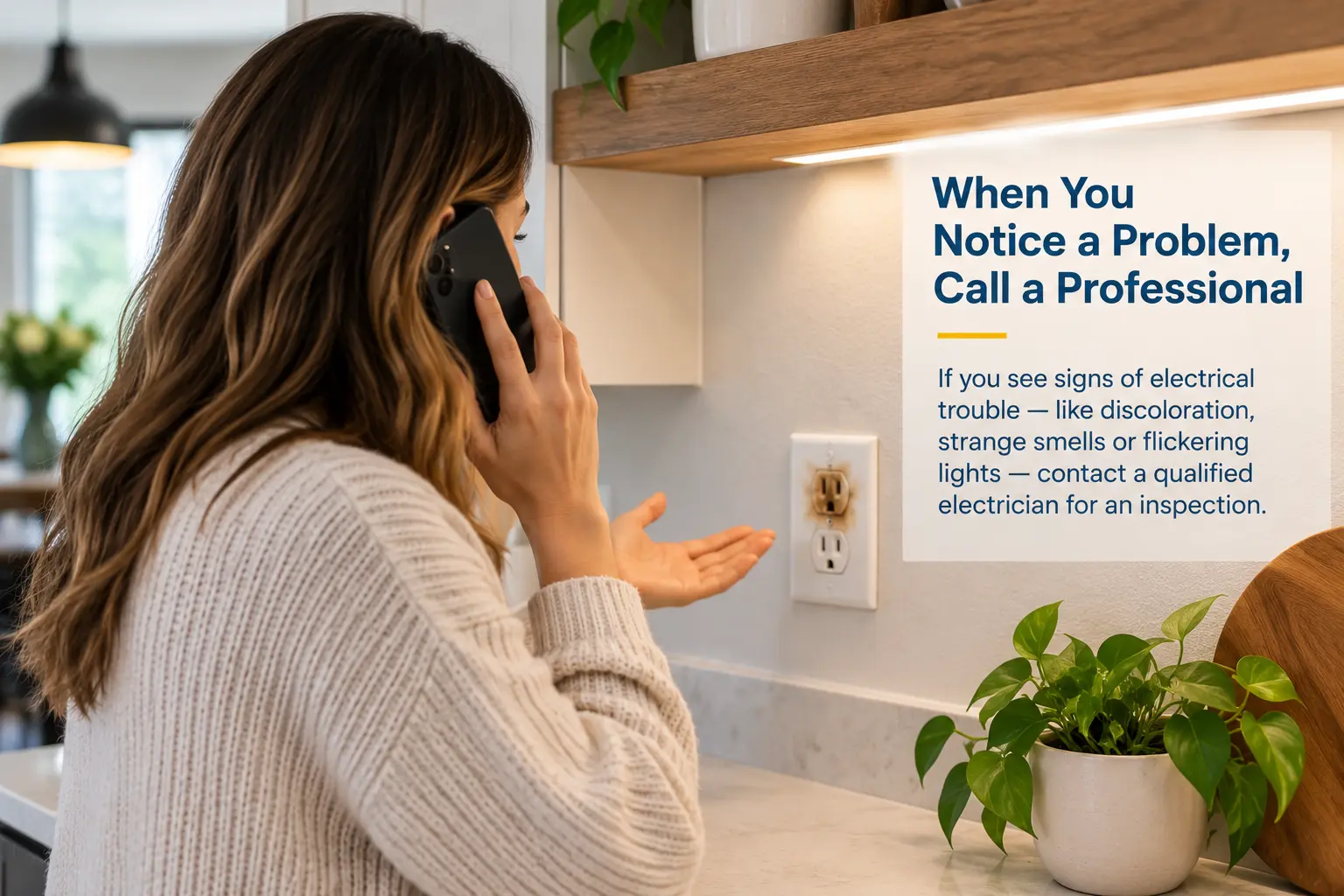
Some electrical concerns go beyond what a homeowner can safely evaluate.
Consider contacting a qualified service professional if:
- A breaker repeatedly trips.
- Lights frequently flicker or dim without an obvious cause.
- An outlet or switch buzzes, feels warm, or appears discolored.
- You notice persistent burning or electrical odors.
- An outlet or switch sparks.
- Plugs don't fit securely in outlets.
- You rely heavily on extension cords because you don't have enough accessible outlets.
- You suspect previous electrical work wasn't completed properly.
These symptoms can have different causes, so professional troubleshooting is often necessary to identify the underlying problem. Depending on the symptoms, a service professional may evaluate the affected circuit, outlet or switch, electrical connections, breaker, panel, or electrical load before recommending an appropriate repair or upgrade.
Make Electrical Fire Prevention Part of Your Home Safety Routine
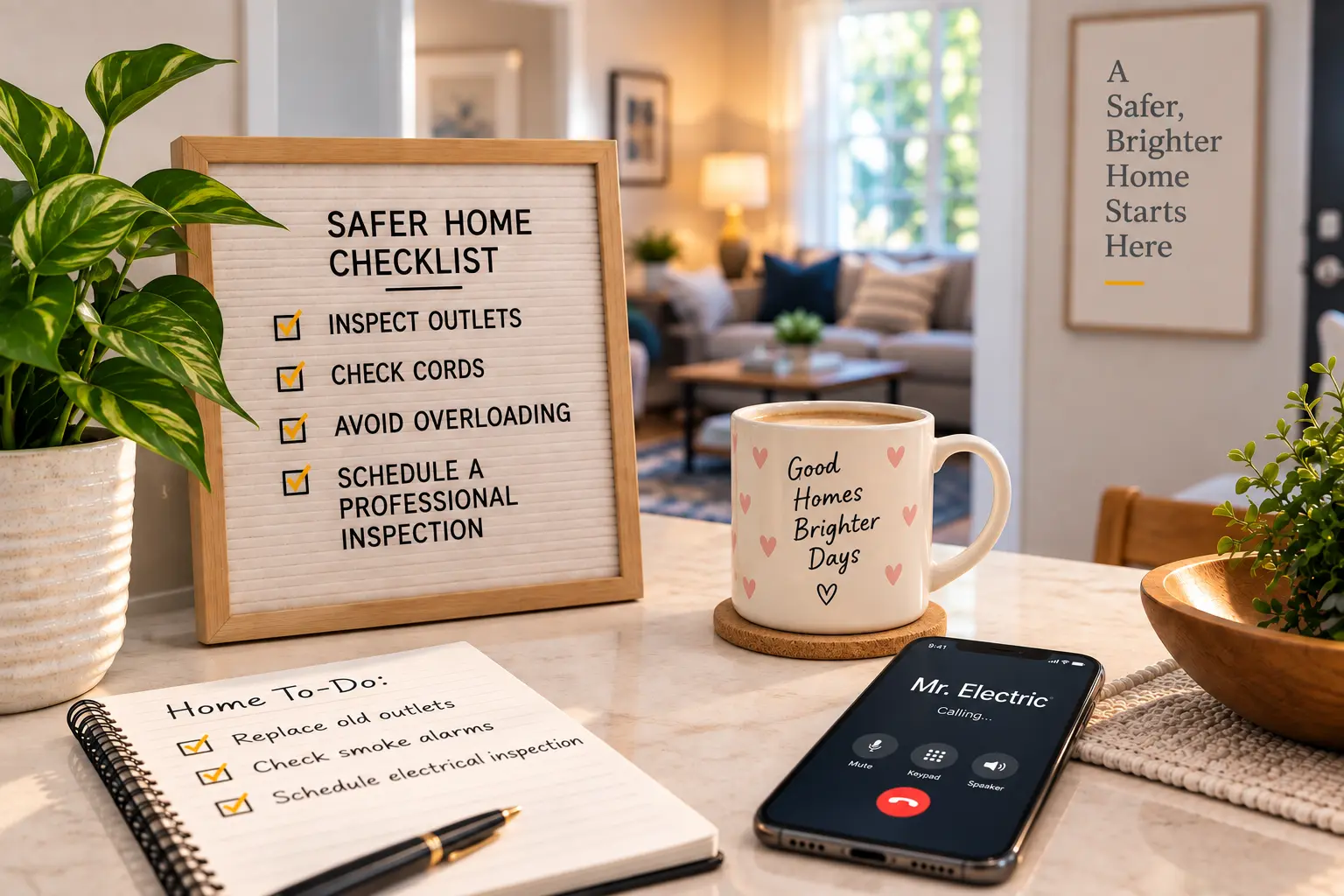
You don't need to become an electrical expert to make your home safer. Start by noticing changes. Replace the damaged cord instead of putting it back in the drawer. Don't ignore an outlet that suddenly feels warm. If a breaker keeps tripping, find out why instead of automatically resetting it again.
When recurring electrical warning signs point to a problem you can't safely identify yourself, professional troubleshooting can help determine what's causing it. Contact your local Mr. Electric team to have an electrical concern evaluated and learn which repair or upgrade options may be appropriate for your home.
This article is intended for general guidance only and may not be applicable to every situation. You are responsible for determining the proper course of action for your property and situation. Mr. Electric is not responsible for any damages that occur as a result of advice and/or guidance derived from its blog content. Mr. Electric services may vary by location. Contact the Mr. Electric franchise nearest you for more information.
FAQs About Fire Safety
This blog post may contain content, images, and/or multimedia generated with the assistance of artificial intelligence (AI). While every effort has been made to review, edit, and ensure accuracy, completeness, and alignment with our brand standards, we encourage readers to verify facts, consult trusted professionals, and use their own judgment when making decisions based on their situation.
The safety of you, your family, and home is the top priority of every Mr. Electric service professional. Our safety-first commitment to solving your electrical issues includes a meticulous attention to detail on every job. Our commitment also includes using our years of experience to answer your questions. Below are answers to some of the most frequently asked questions about fire safety.