
|
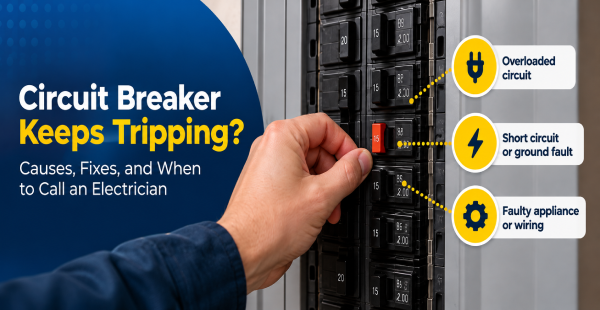
A circuit breaker that keeps tripping typically indicates an overloaded circuit, short circuit, ground fault, faulty appliance, or electrical wiring problem. While reducing electrical demand may resolve an occasional overload, repeated trips can signal an underlying safety concern that requires professional diagnosis. Identifying when and how the breaker trips can help determine the next steps and whether an electrician is needed.
|
You're preparing dinner, running the dishwasher, or working from home when suddenly, the power goes out. Again. If you've made more than one trip to your electrical panel lately, you're probably wondering why your circuit breaker keeps tripping.
A circuit breaker typically trips because of an overloaded circuit, short circuit, ground fault, or electrical equipment problem. While some overloads can be resolved by reducing electrical demand, repeated trips may signal a problem requiring professional attention.
What to Know When Your Circuit Breaker Keeps Tripping
- Trips when several appliances are running? An overloaded circuit may be responsible.
- Trips immediately after resetting? A short circuit or another electrical fault may be present.
- Trips when one appliance turns on? That appliance or its electrical circuit may have a problem.
- Trips without an obvious cause? Damaged wiring, moisture, or a malfunctioning protective device could be involved.
- Won't stay reset? Leave the breaker off and contact a qualified electrician.
If your breaker keeps shutting off, Mr. Electric®'s electrical repair services can help identify the cause and recommend an appropriate solution.
Why Does My Circuit Breaker Keep Tripping?
Your circuit breaker is designed to interrupt electricity when certain unsafe conditions occur. A tripped breaker isn't necessarily defective. In many cases, it's doing exactly what it's supposed to do.
Understanding the most common causes can help you recognize when a simple adjustment may resolve the issue and when professional troubleshooting is necessary.
1. Overloaded circuits
An overloaded circuit occurs when connected devices draw more electricity than the circuit can safely handle.
For example, running a space heater and vacuum cleaner on the same circuit could exceed its capacity, causing the breaker to trip.
What helps: Reduce the number of high-wattage devices operating simultaneously. If overloads happen frequently, an electrician can assess whether additional or dedicated circuits are needed.
2. Short circuits
A short circuit occurs when electricity follows an unintended, low-resistance path, potentially creating excessive current.
A breaker that trips immediately may indicate a short circuit, although other electrical faults can produce similar symptoms.
What helps: Leave the affected circuit off and contact a qualified electrician. Diagnosing damaged wiring and electrical connections requires specialized tools and expertise.
3. Ground faults
A ground fault happens when electrical current takes an unintended path to ground. Moisture, damaged insulation, and faulty electrical equipment can contribute to these conditions.
Ground-fault circuit interrupters (GFCIs) help protect against electrical shock, particularly in areas where water may be present.
What helps: Stop using potentially faulty equipment and have recurring trips professionally investigated.
4. Faulty appliances or damaged wiring
If your breaker trips whenever you use the same appliance, that pattern may provide an important troubleshooting clue.
Damaged appliance components, deteriorating wiring, or loose electrical connections could be responsible.
Electrical insight: Pay attention to when the breaker trips. An immediate trip when equipment starts may point to a different issue than a trip occurring after several high-wattage devices have been operating.
Timing alone can't confirm the cause, but sharing these details with your electrician can help guide the diagnosis.
5. Aging or damaged circuit breakers
Circuit breakers can deteriorate over time, particularly if they've experienced damage or other electrical problems.
However, repeated trips don't automatically mean the breaker needs replacing. The connected circuit, electrical load, wiring, and protective device should be evaluated before assuming the breaker itself is the problem.
Important: Never install a higher-amperage breaker simply to prevent tripping. An improperly sized breaker can leave wiring vulnerable to overheating.
How to Safely Reset a Tripped Circuit Breaker
If a breaker trips once, there are no signs of electrical damage, and you suspect a temporary overload, you may be able to safely reset it after reducing the electrical load.
- Turn off or unplug connected devices. Reduce the electrical demand before resetting the circuit.
- Find the tripped breaker. It may be positioned between ON and OFF or fully OFF.
- Reset it once. Move the switch completely to OFF, then back to ON.
- Restore devices gradually. Avoid restarting several high-wattage appliances simultaneously.
If the breaker trips again, leave it off and contact an electrician. Repeated resets without identifying the cause can create unnecessary electrical hazards.
Important: Never remove the electrical panel's protective cover or touch exposed wiring. Do not approach or operate a panel that is wet, smoking, sparking, unusually hot, or producing a burning odor.
When Should You Call an Electrician for a Tripping Breaker?
An occasional trip from an identifiable overload may be resolved by reducing electrical demand. Recurring trips, however, deserve professional attention.
Contact an electrician if:
- The same breaker trips repeatedly or won't stay reset.
- Power shuts off even when accessible appliances are unplugged.
- Outlets or switches appear discolored or damaged.
- Lights flicker alongside unexplained power interruptions.
- You suspect damaged wiring or faulty electrical connections.
Smoke, sparks, burning odors, or signs of overheating require urgent attention. Stay clear of the affected equipment and contact emergency services if there's an immediate fire risk.
Why professional diagnosis matters
A tripping breaker doesn't always need replacement. The underlying problem could involve a damaged appliance, a faulty connection, an overloaded circuit, or an electrical panel component.
Professional troubleshooting may include evaluating electrical loads, testing circuits, checking connections, and assessing protective devices.
Electrical insight: Replacing the breaker without identifying the actual problem may leave the original hazard unresolved.
Depending on the findings, an electrician may recommend a targeted repair, a dedicated circuit, or an electrical panel upgrade.
How to Prevent Frequent Circuit Breaker Trips
A few practical habits can help reduce electrical overloads and make developing problems easier to recognize.
- Distribute electrical loads. Avoid operating multiple high-wattage appliances on the same circuit.
- Use appliances correctly. Plug in electric space heaters directly into suitable wall outlets, never extension cords or power strips.
- Watch for warning signs. Flickering lights, unusual buzzing, or warm outlets shouldn't be ignored.
- Plan for new equipment. EV chargers and major appliances may require dedicated circuits or additional electrical capacity.
One often-overlooked consideration: Your home's electrical needs change over time. If you've added appliances, remodeled, or expanded your living space, your existing circuits may no longer suit how you use electricity.
A professional assessment can determine whether a dedicated circuit or a panel upgrade would better accommodate those demands.
Get to the Bottom of a Circuit Breaker That Keeps Tripping
You shouldn't have to wonder whether turning on another appliance will send you back to the breaker panel. Mr. Electric provides professional electrical troubleshooting, repairs, and panel upgrades to help homeowners identify problems and make informed decisions about their electrical systems.
Our experienced service professionals prioritize safety, provide guaranteed upfront pricing, and stand behind their work with the Neighborly Done Right Promise®.
Contact Mr. Electric today to schedule professional troubleshooting for a circuit breaker that keeps tripping.
FAQs About Circuit Breakers and Electrical Safety
The safety of you, your family, and home is the top priority of every Mr. Electric service professional. Our safety-first commitment to solving your electrical issues includes meticulous attention to detail on every job. Our commitment also includes using our years of experience to answer your questions. Below are answers to some of the most frequently asked questions about circuit breakers and electrical safety.
Can a circuit breaker trip when nothing is plugged in?
Yes. A circuit may also power hardwired appliances, lighting, or other equipment. Damaged wiring, moisture, or problems involving protective devices can cause trips even when accessible appliances are unplugged. If this happens, leave the breaker off and arrange professional troubleshooting.
Why does my circuit breaker keep tripping at night?
Nighttime trips may coincide with automatically operating equipment, such as heating systems, refrigerators, or appliances running on timers. Keep track of when the trips occur and which equipment is operating. These details may help an electrician narrow down potential causes.
Why does my AFCI breaker keep tripping?
Arc-fault circuit interrupters (AFCIs) are designed to detect certain electrical arcing conditions that can create a fire hazard. Damaged wiring, connected equipment, or other circuit problems may trigger them. Don't replace an AFCI with a standard breaker to bypass its protective function. Have recurring trips evaluated professionally.
Can I replace a 15-amp breaker with a 20-amp breaker?
Not simply to stop repeated trips. Breaker ratings must be compatible with the circuit's wiring and installation requirements. Installing a higher-rated breaker without verifying the circuit's capacity can create overheating and fire hazards. A qualified electrician should evaluate whether modifications are appropriate.
Can a power surge cause a circuit breaker to trip?
A power disturbance can sometimes coincide with a breaker trip, particularly if it results in an overcurrent condition. However, a standard circuit breaker is designed primarily to protect a circuit from excessive current and isn't a substitute for surge protection. If breakers trip during storms or after power restoration, an electrician can evaluate the cause and determine whether additional surge protection is appropriate.
Does one tripping breaker mean I need a new electrical panel?
Not necessarily. A single tripping breaker may indicate an overloaded circuit, faulty appliance, damaged wiring, or defective breaker rather than a problem with the entire panel. A professional evaluation can determine whether a targeted repair is sufficient or a larger upgrade is warranted.
AI Disclosure: This article may contain content, images, and/or multimedia generated with the assistance of artificial intelligence (AI). While we make every effort to review, edit, and ensure accuracy, completeness, and alignment with our content standards, we also encourage readers to verify facts, consult trusted professionals, and use their own judgment when making decisions based on their specific situation.
This article is intended for general informational purposes only and may not be applicable to every situation. You are responsible for determining the proper course of action for your home and property. Mr. Electric is not responsible for any damages that occur as a result of this blog content or your actions. For the most accurate guidance, contact the Mr. Electric location nearest you for a comprehensive, on-site assessment.