
What’s In This Article
- 7 Signs Your Home May Need an Electrical Safety Check
- When Should You Schedule an Electrical Safety Check Even Without Warning Signs?
- What Happens During a Professional Electrical Safety Check?
- What Should You Do If an Electrical Safety Check Finds a Problem?
- Not Sure If You Need an Electrical Safety Check? Call Mr. Electric
Schedule an electrical safety check if your circuit breakers trip repeatedly, lights flicker unexpectedly, outlets feel unusually warm, or you notice buzzing sounds or burning odors. Even without these warning signs, a professional evaluation may be worthwhile if your home has older wiring, you've added major appliances, or you're planning renovations.
A professional electrical safety check can help identify potential hazards before they become more serious. And you don't necessarily need to notice a problem to benefit from one.
Unsure whether your home needs an electrical safety check? Contact your local Mr. Electric® to discuss your concerns and determine the appropriate next step.
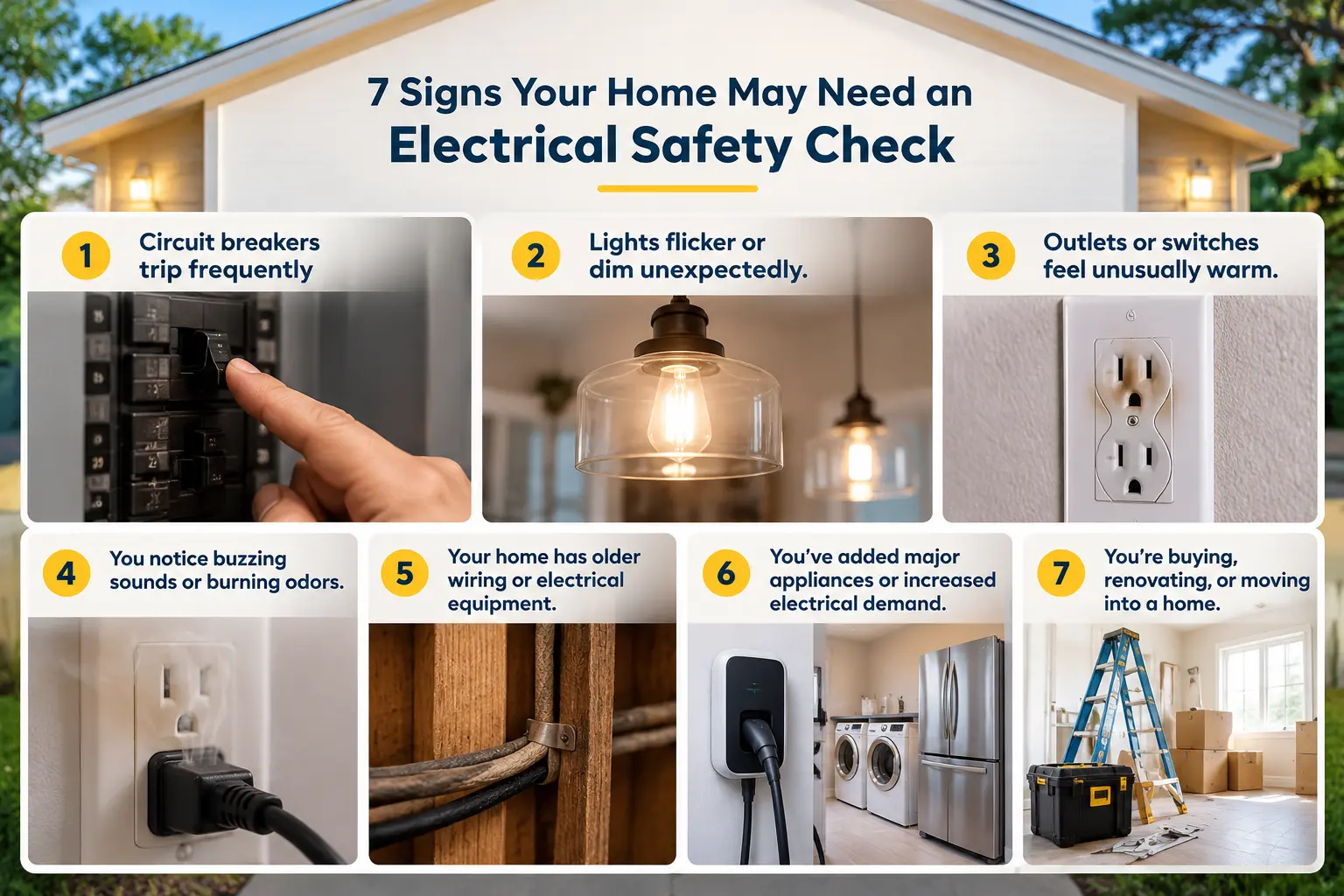
7 Signs Your Home May Need an Electrical Safety Check
Electrical problems can develop gradually, especially in homes with older wiring or increased power demands. Knowing what to watch for can help you recognize when it's time to call a professional.
1. Your circuit breakers trip frequently
Circuit breakers are designed to interrupt electricity when certain electrical problems occur, including overloads and short circuits.
An occasional trip may happen when too many devices share a circuit. However, repeated tripping can indicate an underlying issue.
What to watch for: A breaker that trips repeatedly, especially when using the same appliance or outlet.
Avoid repeatedly resetting the breaker without identifying the cause. An electrician can determine whether targeted troubleshooting or a broader electrical evaluation is appropriate.
2. Your lights flicker or dim unexpectedly
A brief change in brightness when a large appliance starts doesn't automatically mean there's a serious problem. However, persistent or widespread flickering deserves attention.
Possible causes include loose connections, overloaded circuits, or problems with electrical equipment.
What to watch for: Lights that flicker regularly, dim significantly, or change brightness in multiple rooms.
A professional can help determine whether the issue involves a specific fixture, circuit, or larger electrical concern.
3. Outlets or switches feel unusually warm
Outlets and switches shouldn't become excessively hot during normal use.
Heat, discoloration, or visible damage may indicate loose connections, excessive electrical demand, or deteriorating components.
What to watch for: Warm outlet covers, scorch marks, melted plastic, or crackling sounds.
Stop using affected outlets or switches and contact a qualified electrician. If you notice smoke, active sparking, or signs of fire, keep your distance and contact emergency services.
4. You notice buzzing sounds or burning odors
Electrical systems typically operate without noticeable buzzing or burning smells.
Unusual sounds from an electrical panel, outlet, or switch can indicate a problem requiring professional evaluation.
What to watch for: Persistent buzzing, sizzling noises, or a burning-plastic smell near electrical equipment.
These symptoms should never be ignored. Stop using the affected equipment and contact a qualified electrician promptly.
If you notice smoke, active sparking, or signs of a fire, move away from the affected area and call emergency services. Do not touch damaged equipment or attempt to investigate an active electrical hazard yourself.
5. Your home has older wiring or electrical equipment
Older homes may have electrical systems that weren't designed for today's appliances, electronics, and power demands.
Although age alone doesn't mean a system is unsafe, older wiring and electrical panels may warrant closer attention.
What to watch for: Outdated electrical components, limited outlet availability, previous wiring alterations, or an electrical system that hasn't been evaluated in years.
A professional electrical safety check can help identify potential concerns and determine whether additional testing or updates are advisable.
6. You've added major appliances or increased electrical demand
Modern homes often have greater electrical needs than they did a decade ago. EV chargers, HVAC equipment, kitchen appliances, and home office setups can change how electricity is distributed throughout your home.
What to watch for: Frequently overloaded circuits, increased reliance on extension cords, or electrical problems after installing new equipment.
Before adding high-demand equipment, ask an electrician whether your electrical system has sufficient capacity and whether dedicated circuits or other improvements may be necessary.
7. You're buying, renovating, or moving
Not every electrical concern comes with a visible warning sign.
Buying a property or beginning a major renovation creates an opportunity to understand the condition of its electrical system.
An electrical safety check can help identify potential issues involving older components, previous electrical modifications, and equipment that may require attention.
What to watch for: Missing documentation about past electrical work, older equipment, or renovations that introduce additional electrical demand.
A professional evaluation can help you plan improvements and understand potential safety concerns.
When Should You Schedule an Electrical Safety Check Even Without Warning Signs?
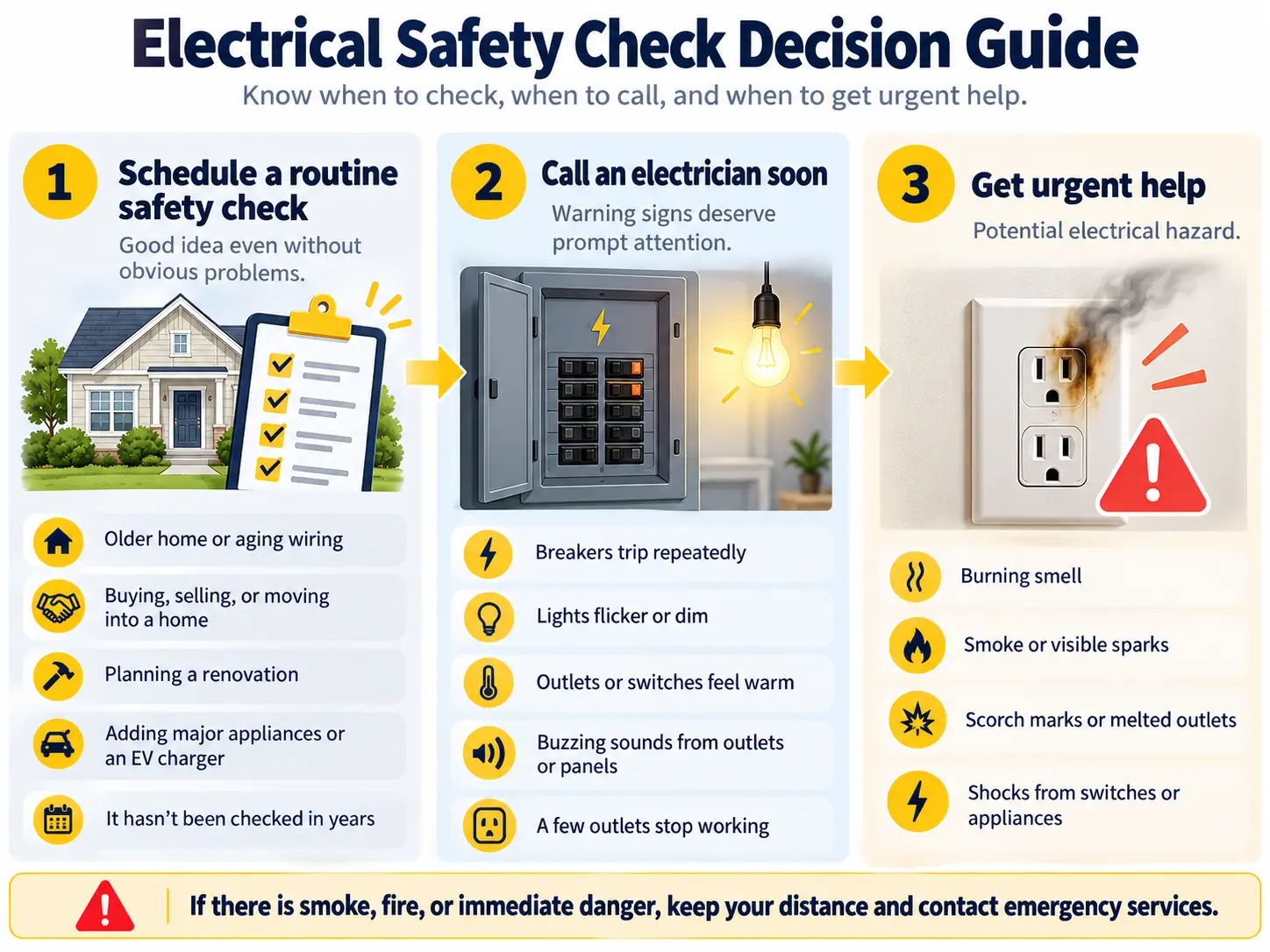
You don't have to wait for an electrical problem to schedule a safety check. Expert guidance calls for electrical safety check evaluation every one to three years.
Common situations include:
- Buying a home: Understand the condition of existing electrical equipment.
- Living in an older property: Identify components that may warrant closer evaluation.
- Planning renovations: Review electrical needs before adding equipment or changing layouts.
- Installing high-powered appliances: Determine whether existing circuits and electrical capacity are appropriate.
- After significant electrical work: Confirm whether follow-up evaluation is recommended.
The appropriate timing depends on your home's age, electrical condition, recent improvements, and any warning signs you've noticed.
Helpful insight: A home can appear to function normally while still having electrical concerns that aren't immediately visible. A professional assessment can provide a clearer understanding of your electrical system's condition.
What Happens During a Professional Electrical Safety Check?
A home electrical safety check is intended to identify potential hazards and assess aspects of your electrical system's condition.
Depending on your home's needs and the services available locally, an electrician may evaluate:
- Electrical panels and circuit breakers for visible concerns
- Outlets and switches for damage or deterioration
- Accessible wiring and electrical connections
- Ground-fault circuit interrupter (GFCI) protection
- Signs of overloaded circuits or outdated electrical components
After the evaluation, your electrician can review the findings, explain potential safety concerns, and discuss recommended next steps.
Mr. Electric's electrical safety check process includes a prioritized 32-point home safety checklist identifying concerns that need immediate attention, recommended improvements, and possible upgrades.
Mr. Electric's electrical safety check process identifies concerns that need immediate attention, recommended improvements, and possible upgrades.
Important: A routine safety check and diagnostic troubleshooting aren't necessarily the same service. If you're experiencing a specific electrical malfunction, mention it when scheduling so the team can help determine the appropriate service.
Contact us to learn more about Mr. Electric's electrical safety checks.
What Should You Do If an Electrical Safety Check Finds a Problem?
Discovering an electrical concern doesn't automatically mean your home needs extensive upgrades.
Depending on the findings, an electrician may recommend:
- Replacing damaged outlets or switches
- Investigating recurring breaker trips
- Addressing unsafe or deteriorating wiring
- Improving electrical protection
- Evaluating whether an electrical panel upgrade is appropriate
Some problems require prompt attention, while others may be addressed through planned improvements.
Before approving repairs, ask your electrician:
- Which findings require immediate attention, and which can be addressed later?
- What is causing the problem, and how was it identified?
- Is additional testing needed before recommending a repair?
- Are there multiple repair options, and what are the advantages of each?
- Will the recommended work require permits or follow-up inspections?
A clear explanation of the findings and recommended next steps can help you prioritize safety concerns and make informed decisions about repairs or improvements.
Not Sure If You Need an Electrical Safety Check? Call Mr. Electric
Electrical problems aren't always easy to identify, and guessing about electrical safety can put your home at risk.
At Mr. Electric, our experienced service professionals prioritize safety, explain their findings, and provide practical recommendations based on your home's needs. When you choose Mr. Electric, you benefit from:
- Safety-first service: Professional attention to potential electrical hazards.
- Experienced service professionals: Skilled electricians equipped to evaluate electrical concerns.
- Clear
FAQs About Electrical Safety Checks
The safety of you, your family, and home are the top priority of every Mr. Electric service professional. Our safety-first commitment to solving your electrical issues includes a meticulous attention to detail on every job. Our commitment also includes using our years of experience to answer your questions. Below are answers to some of the most frequently asked questions about electrical safety checks.