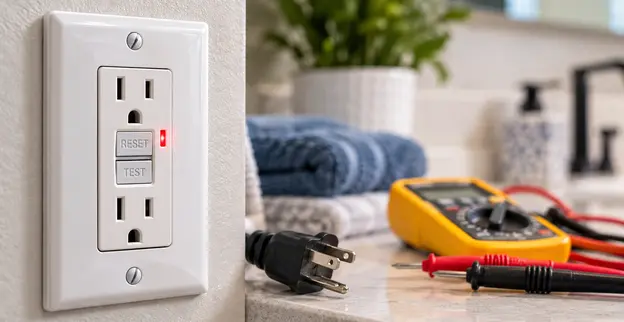
You press RESET on your bathroom outlet. Nothing happens. You try again, and it clicks, but your hair dryer still won't turn on. Or maybe the outlet works for a while before suddenly shutting off again. It's frustrating, especially when there's no obvious reason for the problem. Here's what matters: The way your GFCI outlet behaves can tell you something about what's going wrong. A button that won't stay in isn't necessarily the same problem as an outlet that keeps tripping. Even that tiny indicator light can offer a clue. Your GFCI (ground fault circuit interrupter) is designed to help protect you from electrical shock by interrupting power when it detects certain electrical imbalances. When it doesn't behave as expected, understanding the symptoms is a useful first step. Let's look at what those warning signs can mean, what an electrician checks, and when Mr. Electric® can help.
Learn moreMr. Electric Blog
Shared Resources for Your Home Needs
National Electrical Safety Month: Your Guide to Checking Electrical Hazards in Your Home
May is National Electrical Safety Month, making it the ideal time to check the systems that homeowners rely on every day. Electrical hazards often develop quietly through overloaded circuits, aging panels, or outdated outlets until they become costly or dangerous problems.
All Blogs
Schedule an electrical safety check if your circuit breakers trip repeatedly, lights flicker unexpectedly, outlets feel unusually warm, or you notice buzzing sounds or burning odors. Even without these warning signs, a professional evaluation may be worthwhile if your home has older wiring, you've added major appliances, or you're planning renovations. A professional electrical safety check can help identify potential hazards before they become more serious. And you don't necessarily need to notice a problem to benefit from one. Unsure whether your home needs an electrical safety check? Contact your local Mr. Electric® to discuss your concerns and determine the appropriate next step.
Learn moreMay is National Electrical Safety Month, making it the ideal time to check the systems that homeowners rely on every day. Electrical hazards often develop quietly through overloaded circuits, aging panels, or outdated outlets until they become costly or dangerous problems.
Learn moreThe standard voltage for your home’s lighting is 120v, but lower voltage lighting can save you money and works well for accent lighting or other non-primary lighting options.
Learn moreI remember high school like it was yesterday — even though it was 25 years ago. I remember the excitement of seeing what courses
Learn moreWhen a light in your home goes out, most of the time we have an idea of how to remedy the situation: double check the switch, take a look at the bulb, assess the breaker.
Learn moreBook Online
Categories
About Mr. Electric