You probably don't think much about your home's electrical grounding until something seems wrong. Maybe you've noticed a mild shock when touching an appliance, discovered that several outlets have only two prongs, or learned during a renovation that your electrical system has improper grounding connections. These concerns deserve attention because grounding and bonding are important parts of residential electrical safety.
Electrical Grounding & Bonding in Twin Cities West Metro, MN
Protecting Your Home with Proper Electrical Grounding
Electrical Grounding & Bonding in Twin Cities West Metro, MN
Protecting Your Home with Proper Electrical Grounding
Book Online
Mr. Electric of Twin Cities West Metro provides professional electrical services to help homeowners evaluate grounding and bonding concerns. Grounding connects an electrical system to the earth, while bonding connects conductive components to establish an effective path for fault current. Together, properly designed connections help electrical protection operate as intended and reduce the risk of dangerous voltage on exposed metal surfaces. Our electricians evaluate electrical panels, outlet wiring, grounding conductors, and associated connections to identify potential deficiencies. These concerns can arise in older homes as well as properties that have undergone renovations or electrical upgrades. From established neighborhoods in St. Louis Park and Hopkins to homes throughout Plymouth and Maple Grove, we help homeowners understand the condition of their electrical systems. Not every older electrical installation requires a complete replacement. We focus on evaluating the existing system and recommending improvements appropriate for its condition. Whether you're investigating an ungrounded outlet or planning electrical work during a remodel, our goal is to provide clear explanations and dependable workmanship that supports long-term electrical safety.
Electrical Grounding & Bonding Services for Your Home
Electrical Bonding for Panels and Metal Components
Grounding and bonding are closely related, but they perform different functions. Bonding connects conductive components so that an electrical fault has an effective path back to its source, allowing protective equipment to respond.
For example, if a damaged conductor contacts the metal enclosure of an appliance, the properly installed equipment grounding and bonding path helps fault current reach the source and allows a circuit breaker or fuse to interrupt the circuit.
Without an effective path, exposed metal components may remain energized and create a shock hazard.
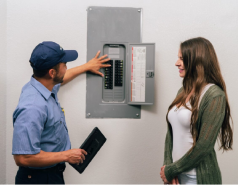
Our electricians evaluate bonding connections associated with electrical panels, equipment enclosures, and other components where bonding is required.
Metallic water piping systems may also require bonding. The appropriate connections depend on the plumbing materials and the electrical installation.
Panel configuration is particularly important. The neutral conductor and equipment grounding conductors are connected at the appropriate service bonding point. In downstream panels, these conductors generally must remain separated to avoid unwanted current flowing through grounding paths.
Our [electrical panel repair and upgrade services] can address related concerns when panel equipment or connections need attention.
Proper bonding isn't simply a matter of attaching an additional wire. The connections must be correctly located, sized, and installed according to the applicable electrical code.
Ungrounded Outlets and Older Home Wiring
Two-prong outlets are a familiar feature in some older homes. Unlike modern grounding-type receptacles, they don't provide a separate equipment grounding contact for appliances designed to use one.
However, a three-prong outlet doesn't automatically mean the underlying circuit is properly grounded. Previous renovations sometimes leave homeowners with receptacles that appear modern but lack an effective equipment grounding connection.
This is why the condition of the wiring matters more than the appearance of the outlet.
Our electricians evaluate outlet wiring and grounding connections to determine which improvements are appropriate. Depending on the existing circuit, a solution may involve providing an approved equipment grounding path or replacing wiring.
In certain situations, properly installed GFCI protection can be used for an existing ungrounded receptacle under applicable electrical code provisions. However, a GFCI does not create an equipment grounding conductor, and required labeling must identify that limitation.
A homeowner updating an older property in St. Louis Park or Edina may encounter different wiring configurations from those found in a newer home.
Our [home wiring and rewiring services] can help address circuits that require more extensive improvements.
The objective is to determine what protection the existing wiring provides and recommend an appropriate solution without automatically replacing unaffected circuits.

Service You Can Trust!
Let us know how we can help you today.
When Should You Have Your Home's Grounding and Bonding Checked?
Grounding and bonding problems aren't always obvious during everyday use. An appliance may operate normally even when an important safety connection is missing. Because these systems are intended to help protect against electrical faults, a professional evaluation can reveal concerns that routine appliance operation won't expose.
When you notice unusual electrical sensations: A tingling sensation or shock when touching an appliance, metal fixture, or other conductive surface should never be treated as normal. Stop using the affected equipment and arrange a professional evaluation. The problem could involve an equipment fault, damaged wiring, or an improper grounding or bonding connection.
When renovating an older home: Homes in established West Metro communities may have wiring from different periods of construction. A kitchen remodel or basement renovation can reveal missing equipment grounding conductors or connections that don't meet the requirements for the new work. Evaluating these conditions before finished surfaces are installed can help avoid additional disruption later.
When upgrading electrical panels: A panel replacement provides an opportunity to assess the grounding electrode system, main bonding connection, and the separation of neutral and equipment grounding conductors where required. These details are just as important as selecting a panel with appropriate electrical capacity.
When making changes to plumbing or detached structures: Alterations to metallic water piping can affect existing grounding and bonding arrangements. Detached garages and workshops may also have specific grounding and bonding requirements, especially when electrical feeders are modified or additional equipment is installed.
When replacing older outlets: A three-prong receptacle doesn't prove that an equipment grounding path is present. A professional can evaluate the circuit and explain whether grounding improvements, GFCI protection, or wiring replacement is appropriate.
Mr. Electric of Twin Cities West Metro helps homeowners understand these electrical safety concerns and identify suitable improvements. Our [residential electrical services] also support related wiring repairs and electrical upgrades when necessary.
Proper grounding and bonding should be evaluated as parts of the complete electrical system, not as isolated components.
Residential & Commercial Services





15400 28th Avenue N Suite 200 Plymouth, MN 55447, United States
- Albertville
- Blaine
- Bloomington
- Brooklyn Park
- Buffalo
- Coon Rapids
- Dayton
- Delano
- Eden Prairie
- Edina
- Excelsior
- Golden Valley
- Greenfield
- Hanover
- Hopkins
- Lake Minnetonka
- Maple Grove
- Minneapolis
- Minnetonka
- Monticello
- Mound
- New Hope
- Orono
- Osseo
- Otsego
- Plymouth
- Richfield
- Rockford
- South Minneapolis
- St Louis Park
- St Michael
- Twin Cities West Metro
- Wayzata
- West Bloomington

We have the power to make things better.®