Licensed Electrician in Rogers, AR | Locally Owned, Upfront Pricing
Your electrical panel wasn't built for today's home. Most Rogers homes built before 1990 have 100-amp service trying to power modern appliances, HVAC systems, and smart devices. We see this every week in Pleasant Grove, downtown Rogers, and the Railyard District. When breakers trip, lights flicker, or you need an EV charger installed, call a licensed electrician who knows Rogers homes inside out: Mr. Electric® of Rogers.

Book Online

A representative from our office will get back to you shortly to schedule service.
Due to a system error, we did not get your request. Please call us for immediate assistance.
We don't currently provide service to this ZIP/Postal code.
Yes! You can email me service reminders and other messages.
Mr. Electric, a Neighbourly Company on its own behalf and on behalf of and its affiliates and franchisees requests your consent to send promotional and other electronic messages to you concerning products and services they believe are of interest to you. By checking this box, you agree to receive these messages. You can unsubscribe at any time.
Text opt-in does not apply for Canadian residents.
Customer Reviews
View All Testimonials
The Neighborly Done Right Promise® delivered by Mr. Electric®, a proud Neighborly company.
Easy Online BookingComplete Electrical Services for Rogers Homes and Businesses
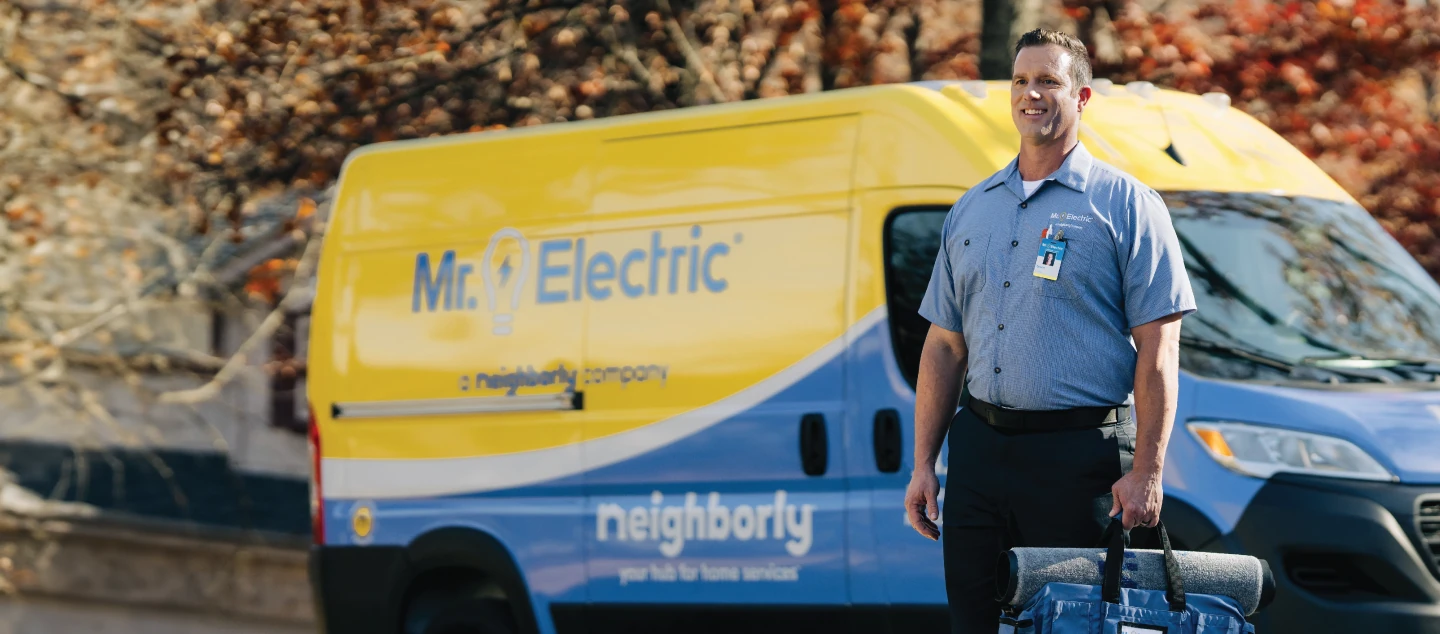
We're your locally owned and operated Mr. Electric franchise, proudly serving Rogers and surrounding communities with upfront pricing, licensed professionals, and backing every job with the Neighborly Done Right Promise®. We handle panel upgrades and EV charger installations. We install whole-home generators and surge protection. We take care of lighting upgrades, routine maintenance, and every electrical repair your Rogers home needs. Older homes in downtown Rogers routinely need panel upgrades and wiring repairs. Newer construction in Pinnacle Hills often include EV circuits and smart-home wiring. You get transparent pricing before work begins, licensed and insured electricians, and professional service from your neighbors who live and work here. Contact us today to book your appointment.
-
Installations
Make your home or business cooler and more comfortable by using less energy and electricity.Learn more Installations -
Lighting
We work on all types of projects, from specialty lighting to energy-efficient improvements.Learn more Lighting -
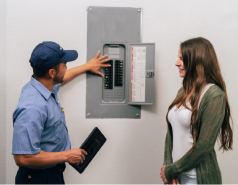
Electrical Safety
Trust Mr. Electric to keep you safe with free electric examinations and detailed checklists.Learn more Electrical Safety -
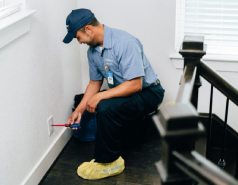
Repairs
Keep your electrical system in great working condition with help from our team.Learn more Repairs

Let us know how we can help you today.
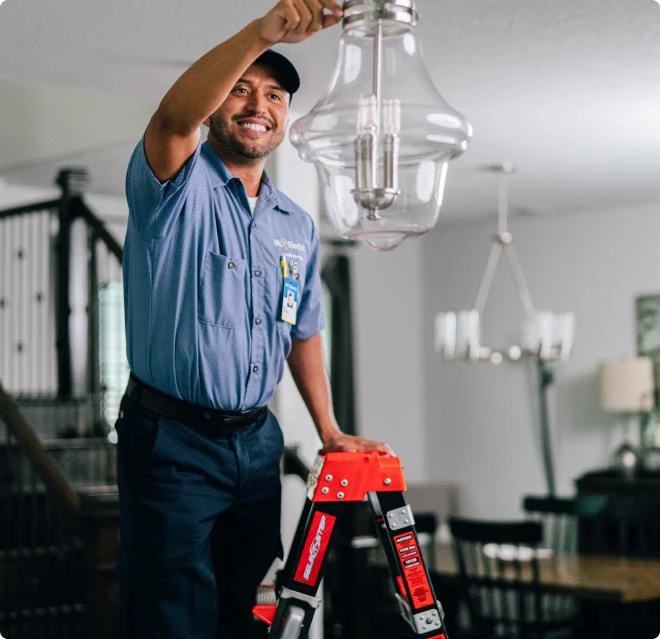
Why Rogers Homeowners Choose Mr. Electric
-
We're locally owned and operated, serving Rogers and surrounding Benton County communities, including Bentonville, Cave Springs, and Avoca. Our team holds Arkansas state electrical licenses and carries full general liability and workers' compensation insurance. We know which Rogers neighborhoods have knob-and-tube wiring, which streets still have Federal Pacific panels, and which areas have 1960s-era aluminum wiring. Your home gets the same attention we'd give our own.
-
You get a detailed quote before any work begins. No hourly billing that creeps up. No hidden fees. When you call us about a panel upgrade, we assess your load, pull the permit, and give you one number before we touch a wire. Our pricing is straightforward because we quote by the job, not by the hour. The Neighborly Done Right Promise® backs every installation and repair. If we don't get it right, we make it right.
-
Our electricians stay up to date with the National Electrical Code, Arkansas licensing requirements, and energy-efficient solutions for modern homes. From the first call to the final inspection, you get clear customer service at every step of your service. We communicate before, during, and after every electrical job, so you always know what is happening and what comes next. Every electrical job we complete is permitted, inspected, and backed by the Neighborly Done Right Promise®. Contact us to schedule your service.
6 N Halsted Cir Rogers, AR 72756, United States
Areas We Serve
FAQs About Electrical Services in Rogers, AR
Mr. Electric of Rogers is a locally owned franchise of the Neighborly network, founded in 1994, serving Rogers, Arkansas, and the surrounding Benton County area. Licensed Arkansas electricians complete every electrical job, priced upfront before work begins, and backed by the Neighborly Done Right Promise®.
-
Call an emergency electrician immediately if you smell burning near outlets or your panel, see sparks or smoke from electrical equipment, experience repeated shocks from appliances, or notice scorch marks on switches or outlets. Turn off power at the main breaker if safe to do so, then call us. According to the National Fire Protection Association, electrical failures or malfunctions account for an estimated 13 percent of home fires annually in the United States. Rogers homes built before 1980, particularly those in downtown and Pleasant Grove neighborhoods, have outdated wiring that substantially increases this risk. If a single breaker trips once, reset it. If it trips again immediately, that circuit has a problem. That is a job for a licensed electrician, not a reset.
-
A buzzing or humming panel typically indicates a loose connection, an overloaded circuit, or a failing breaker that needs immediate attention from a licensed electrician. A faint hum when heavy appliances run can be normal, but any loud or new buzzing sound requires inspection. Loose connections create heat and arc faults, damaging wiring insulation and increasing fire risk. In our experience working in Rogers, this issue is most common in homes with Federal Pacific or Zinsco panels, both manufactured between the 1950s and 1980s and found frequently in older Pleasant Grove and downtown Rogers properties. Gently touch your panel with the back of your hand. If it feels warm or hot, turn off the main breaker and call us immediately. Never ignore panel sounds.
-
Lights flickering when you start a large appliance usually means the circuit is undersized for the load, your panel is overloaded, or you have a loose connection somewhere in the circuit. Most Rogers homes built before 1990 have 100-amp panels designed for an 8,000- to 10,000-watt total load. A modern home with central air, kitchen appliances, and electronics draws 25,000 to 35,000 watts, exceeding that capacity by 30 to 50 percent. Article 220 of the National Electrical Code recommends load calculations when adding major appliances or experiencing performance issues. If you are planning to install an EV charger, flickering lights are a clear sign you need a 200-amp panel upgrade first. We perform load calculations to determine your exact needs before recommending any electrical job.
-
A circuit breaker that trips repeatedly protects your home from overload, short circuits, or ground faults. When it detects excessive current, the breaker shuts off power to prevent overheating and fire. If one specific breaker trips when you use a particular appliance, that circuit is overloaded. If it trips without an obvious cause, you have a wiring problem that requires professional diagnosis. Breakers are rated for a specific number of trips before they wear out, typically 20 to 30 full trips over their lifetime. Never replace a 15-amp breaker with a 20-amp breaker to stop tripping. The wire gauge determines safe amperage. Forcing more current through an undersized wire creates a serious fire risk. This is one of the most dangerous DIY mistakes we see in Rogers homes.
-
A burning smell from any outlet or switch is an electrical emergency requiring immediate action. It indicates overheating wires or failing connections, both of which can ignite surrounding materials. Unplug anything connected to that outlet, turn off the circuit breaker feeding it if you can identify which one, and call an emergency electrician right away. This problem is particularly common in Rogers homes built between 1965 and 1975 with aluminum wiring. It expands and contracts more than copper and develops loose connections over time. According to the U.S. Consumer Product Safety Commission, homes with aluminum wiring are 55 times more likely to have connections reach fire hazard conditions. Check your panel for scorch marks or discoloration around that circuit's breaker. This confirms the problem and helps us diagnose it faster when we arrive.
-
Warning signs of dangerous wiring include:
- Frequent breaker trips
- Flickering or dimming lights
- Outlets or switches warm to the touch
- Discolored or scorched outlet covers
- A burning smell near electrical components
- Buzzing from outlets or switches
If your Rogers home was built before 1975, you may have knob-and-tube wiring or aluminum wiring, both of which are considered outdated and potentially hazardous. The U.S. Census Bureau reports that approximately 35 percent of Rogers' housing stock was built before 1980, meaning thousands of homes have wiring systems more than 40 years old. In our experience working in the Railyard District and downtown Rogers, the most common problem is 1950s and 1960s cloth-insulated wiring that has become brittle over decades of heat cycling. We offer complimentary electrical safety inspections for Rogers homeowners. We check your panel, test outlets, examine visible wiring, and identify any safety concerns before they become emergencies.
-
Most modern Rogers homes need a 200-amp electrical panel to safely handle today's electrical demands. Older homes with 60-amp or 100-amp panels struggle to power central air conditioning, kitchen appliances, home office equipment, and electric vehicle chargers simultaneously. A 100-amp panel has a maximum capacity of 24,000 watts. The National Electrical Code limits continuous load to 80 percent of that, or 19,200 watts.
Your modern home's actual load often exceeds 30,000 watts when all systems run. We perform a load calculation in accordance with NEC Article 220 to determine your exact requirements based on your home's square footage, installed appliances, and planned additions. If you live in Pleasant Grove, downtown Rogers, or the Railyard District, your home likely has a 100-amp panel from the 1960s or 1970s. That panel is working harder than it was ever designed to work.
-
Your power will typically be off for four to six hours during the actual panel replacement work. When we open a panel in a 1960s Pleasant Grove home, we often find double-tapped breakers, undersized wire on the range circuit, and a main breaker rated for 100 amps running a home that needs 200. Correcting all of this on installation day is part of every electrical job we complete. The utility company disconnects your service at the meter, we remove the old panel and install the new 200-amp panel with all circuits properly connected and labeled, then the utility restores your power.
The complete project, from permit application to final inspection, typically takes one to two weeks, but only one day involves a power outage. Rogers Building Department requires an inspection after installation, which we schedule and coordinate. Plan for a full day without power. Move refrigerated food to coolers, charge devices the night before, and arrange an alternative workspace if you work from home.
-
Most Rogers homes with 100-amp panels need a panel upgrade before installing an EV charger. We determine this through a load calculation before recommending any electrical job. If your Rogers home has a 200-amp panel with room for an additional 40-amp or 50-amp circuit, we can install your EV charger circuit without upgrading the panel. If you have a 100-amp panel, you almost certainly need to upgrade to 200-amp service first. According to U.S. Census housing data, approximately 50 percent of Rogers homes were built before 1990, when 100-amp service was standard. A Level 2 EV charger requires a dedicated 240-volt circuit, typically 40 amps, which draws 9,600 watts continuously during charging. We include a load calculation with every EV charger consultation. This shows exactly what your panel can handle and whether an upgrade makes sense for your home's current and future needs.
-
Replace Federal Pacific Electric and Zinsco panels as soon as possible. FPE Stab-Lok breakers, manufactured from the 1950s through the 1980s, have a documented failure rate in which they do not trip under overload or short-circuit conditions. Zinsco breakers from the 1960s and 1970s have bus bar connection failures, where breakers melt to the bus bar and fail to disconnect power.
The Consumer Product Safety Commission investigated both brands following reports of house fires and injuries. These panels are common in Rogers homes built between 1950 and 1980, particularly in downtown, Pleasant Grove, and older Railyard District properties. Some insurance companies now require FPE and Zinsco panel replacement for policy renewal. Replacing these panels eliminates a known hazard and may reduce your homeowners' insurance premium. This is one electrical job that should not wait.
-
A load calculation is a mathematical assessment of your home's total electrical demand, performed in accordance with National Electrical Code Article 220. We calculate the wattage required for your heating and cooling systems, kitchen appliances, lighting, outlets, and any planned additions, such as EV chargers or generators. This information helps determine whether your existing panel has sufficient capacity or needs to be upgraded. Rogers Building Department requires load calculations for permit applications covering panel upgrades and major electrical work. Without proper load calculation, you risk an undersized panel or overspending on capacity. Load calculations are included in our panel upgrade quotes at no additional charge. This ensures your new panel is properly sized for your current home and provides capacity for future additions without oversizing or overpaying.
-
You can add circuits to your existing panel if it has open breaker slots and sufficient amperage capacity to handle the additional load. We check both factors during our assessment before quoting any electrical job. Many Rogers homes with 100-amp panels have physical space for more breakers but lack the amperage capacity to safely power additional circuits. Adding a circuit when your panel is already at or near capacity creates overload risk and fails inspection.
The National Electrical Code requires the total load not exceed 80 percent of the panel rating for continuous use. If your panel is full or you are adding a high-draw circuit, such as an EV charger, hot tub, or a home office with multiple computers and equipment, we typically recommend upgrading to a 200-amp panel. This gives you room for current needs plus future additions.
-
According to the U.S. Census Bureau housing data, approximately 35 percent of Rogers' housing stock was built before 1980, meaning thousands of homes have electrical systems designed for far lower power demands than modern homes require. These homes frequently experience overloaded circuits when homeowners add modern appliances, central air conditioning, and electronic devices. Some issues older Rogers homes, particularly those built before 1980 in downtown Rogers, Pleasant Grove, and the Railyard District, often have:
- Undersized 60-amp or 100-amp panels
- Insufficient outlets
- Outdated wiring methods like knob-and-tube or cloth-insulated wire
- Aluminum wiring from the 1960s and 1970s
- Lack of GFCI protection in bathrooms and kitchens
- Missing AFCI protection in bedrooms
If you are buying an older Rogers home, schedule an electrical inspection before closing. We identify safety issues, code violations, and needed updates so you can negotiate with the seller or budget accurately after purchase.
-
Most Level 2 residential EV chargers require a dedicated 40-amp or 50-amp, 240-volt circuit. Some lower-power models work on 30-amp circuits. The specific amperage will depend on your EV charger specifications, which we verify before starting. National Electrical Code Article 625 requires a dedicated circuit for EV charging equipment and proper GFCI protection.
A 40-amp circuit provides 9,600 watts of charging power, which adds about 25 to 30 miles of range per hour for most electric vehicles. The wire gauge must match the circuit amperage. 8 AWG copper wire for 40-amp circuits and 6 AWG for 50-amp circuits. Installation requires an electrical permit from the Rogers Building Department, which we handle as part of our service. We also install the proper disconnect switch and ensure weatherproof protection for outdoor charger installations.
-
EV charger installation costs vary based on whether your panel has available capacity or needs upgrading, the distance from your panel to the charging location, the type of charger, and Rogers Building Department permit fees. A straightforward circuit installation when you have a 200-amp panel with available capacity and the charger location is close to the panel costs less than a project requiring a panel upgrade from 100-amp to 200-amp service plus a long circuit run to a detached garage.
Rogers Building Department charges permit fees for the electrical work, which we include in your quote. We provide upfront pricing before any work begins, so you know the complete cost, including labor, materials, permit, and inspection coordination. Many utility companies and government programs offer rebates for EV charger installation. We can point you to current incentive programs that may offset your installation cost.
-
Arkansas law and Rogers city code require a licensed electrician to install EV chargers because the work involves 240-volt circuits and requires an electrical permit. Only a master electrician can pull the required electrical permit from the Rogers Building Department. DIY 240-volt circuit installation is dangerous, illegal without proper licensing, and creates liability if something goes wrong. The work must pass inspection to meet National Electrical Code requirements and local amendments. Most EV charger manufacturers void product warranties if a licensed electrician does not perform the installation. DIY electrical work creates problems when you sell your home. Home inspectors flag unpermitted electrical work, and buyers may require you to bring it up to code or reduce the purchase price to cover professional reinstallation and permitting.
-
Your garage needs a dedicated 240-volt circuit with sufficient amperage and GFCI protection. It also needs a weatherproof installation to meet the National Electrical Code Article 625 requirements. If your garage is detached, the circuit must run underground in conduit or overhead on proper support. Rogers Building Department requires permits for this work and inspects both the circuit installation and the charger mounting.
Your charging location should have adequate clearance, proper ventilation if enclosed, and an accessible emergency disconnect. Many Rogers garages built before 2000 only have basic 120-volt outlets on 15-amp or 20-amp circuits, which cannot support Level 2 charging. We assess your specific garage during the consultation. If you have an older detached garage, the circuit run and trenching for the underground conduit are included in your upfront quote.
-
Most significant electrical work in Rogers requires a permit from the City of Rogers Building Department located at 317 W. Walnut Street. You need permits for panel upgrades or replacements, new circuit installations, service upgrades from 100-amp to 200-amp, whole-home generator installations, EV charger installations, and major electrical repairs. Simple repairs, such as replacing an existing outlet or light fixture with a like-for-like replacement, typically do not require permits.
Rogers follows the Arkansas State Building Code and the adopted version of the National Electrical Code. Only a licensed master electrician can apply for and obtain electrical permits in Arkansas. We handle all permit applications, fees, and inspection coordination as part of our service. You never need to visit the Building Department or schedule inspections yourself. Our quote includes permit costs, so there are no surprises.
-
Rogers Building Department electrical permit fees vary based on project scope and complexity, typically ranging from $50 to $200 for residential electrical work. Panel upgrades, circuit additions, and generator installations each have specific fee structures. The exact fee is determined when we submit the permit application with project details and load calculations. Permit fees are separate from the service's cost of labor and materials but are included in the upfront quote we provide before starting work.
Re-inspection fees apply if work does not pass the initial inspection, though our work consistently passes on the first inspection. Permit fees protect you by ensuring that licensed professionals perform the work and that independent city inspectors verify that it meets safety codes. Unpermitted electrical work creates problems during home sales and may violate your homeowners' insurance policy.
-
The Rogers Building Department typically reviews and approves residential electrical permit applications within 1 to 3 business days for standard projects such as panel upgrades, circuit additions, and generator installations. More complex commercial projects or projects requiring plan review take longer. Once approved, we coordinate with you to schedule the work at your convenience. After we complete installation, we schedule the required inspection, which Rogers typically conducts within 24 to 48 hours of our request. The inspector verifies that all work meets National Electrical Code standards and local requirements. We submit permit applications as soon as you approve our quote and handle all communication with the Rogers Building Department. You receive updates throughout the process without ever needing to call the city or visit their office.
-
Replacing an existing outlet with an identical type in the same location typically does not require a permit in Rogers for like-for-like replacement. However, upgrading outlets to GFCI or AFCI types, adding new outlet locations, extending circuits, or replacing outlets as part of larger electrical work does require permitting. When in doubt, work with a licensed electrician who knows Rogers permit requirements. Unpermitted work can create problems when you sell your home because buyers' inspectors look for code violations and unpermitted modifications. Lenders may require documentation that electrical work was permitted and inspected before approving a mortgage. Even for work that does not require permits, hiring a licensed and insured electrician protects you from liability if something goes wrong. Our work meets code standards whether permits are required or not.
-
Northwest Arkansas experiences severe thunderstorms, ice storms, and occasional tornadoes, creating significant risks to residential electrical systems. The National Weather Service reports that this region averages 50 to 60 thunderstorm days per year, with peak activity from April through September. Lightning strikes and power surges during storms damage panels, outlets, and appliances. Ice storms occur every two to three years on average, coating power lines and tree branches with ice that causes extended power outages when limbs fall on service lines.
When power is restored after outages, the utility grid switching process creates voltage fluctuations and surges that damage sensitive electronics. Whole-home surge protection installed at your electrical panel protects everything in your home from these power surges. Combined with a properly sized generator, you have solid protection against Northwest Arkansas weather-related electrical problems.
-
Power surges after storms happen because utility grid restoration creates brief voltage spikes and fluctuations. When power is lost during ice storms or severe thunderstorms in the Rogers area, utility crews isolate damaged sections of the electrical infrastructure, make repairs, and restore power in stages. Each switching operation sends a pulse through the system. Transformers switching back online create momentary overvoltage conditions. These surges travel through your home's wiring and damage electronics, appliances, HVAC systems, and anything plugged in at the time.
Standard surge protectors on power strips protect individual devices, but many surges enter the electrical panel itself. A whole-home surge protection device installed at your electrical panel stops surges before they enter your home's wiring. This protects hardwired appliances like your HVAC system, water heater, and garage door opener, which cannot use plug-in surge protectors.
-
Backup generators are a sound investment for Rogers homeowners, given Northwest Arkansas weather patterns and regional power outage frequency. According to the U.S. Energy Information Administration, Arkansas customers experience some of the longest average power outage durations in the country. Severe weather events, particularly ice storms, account for the longest individual outages. Extended power outages mean food loss from refrigerators and freezers, no heat or air conditioning. The ability to work from home is lost, and safety concerns for households with medical equipment or mobility challenges.
Automatic standby generators sized for essential loads provide the best value, keeping your refrigerator, freezer, furnace or heating system, one bathroom, and critical lighting operational during power outages. We size generators based on your actual needs and budget. Both whole-home generators and essential-circuits generators require proper load calculations, transfer switch installations, and Rogers Building Department permits, which we handle in full.
-
Ground Fault Circuit Interrupter (GFCI) outlets monitor the current flowing through the hot and neutral wires. They shut off power within milliseconds if they detect even a tiny imbalance that indicates current leaking to ground through a person's body. Arc Fault Circuit Interrupter (AFCI) protection detects dangerous arcing in damaged or deteriorating wires and shuts off power before the arc generates enough heat to ignite surrounding materials.
The National Electrical Code requires GFCI protection in bathrooms, kitchens, garages, outdoor outlets, and unfinished basements per Article 210.8. The NEC requires AFCI protection for bedroom circuits and most living area circuits in homes built or renovated after 2002, per Article 210.12. Many older Rogers homes built before these requirements were in effect lack both types of protection. We can upgrade your outlets and panel to include GFCI and AFCI protection where required by code.
-
Homeowners can safely reset tripped circuit breakers, test and reset GFCI outlets using the test and reset buttons, replace light bulbs, and plug or unplug devices. Everything else requires a licensed electrician. Arkansas law prohibits unlicensed individuals from performing electrical work beyond these basic tasks. Opening your electrical panel, working with any wiring, installing or replacing outlets or switches, adding circuits, or working on anything connected to your electrical system requires proper licensing and often requires permits from the Rogers Building Department.
Both 120-volt and 240-volt electricity can cause fatal electrocution. Improper electrical work causes fires, damages equipment, and creates liability. When you call us, our customer service team helps you understand what the electrical job involves before we schedule anything. DIY electrical work typically voids your homeowners' insurance coverage if it causes damage or injury.
-
Two-prong outlets indicate your Rogers home was built before grounding wires became required by the National Electrical Code in the early 1960s. Homes built before 1962 typically have wiring with only a hot wire and neutral wire, lacking the third ground wire that provides a safety path for fault current. Without grounding, any electrical fault in an appliance or tool can energize the metal housing, shocking anyone who touches it. This is common in downtown Rogers and Pleasant Grove homes built in the 1940s, 1950s, and early 1960s.
You cannot replace two-prong outlets with three-prong outlets without proper grounding because that creates a false sense of safety. The safest solution is complete rewiring to add ground wires. A more affordable option is installing GFCI outlets, which provide shock protection without grounding. We assess your specific situation and explain your options with upfront pricing for each approach.
-
You should have your electrical system professionally inspected every 10 years, when buying a home, and after any severe weather event that affects your service. Book one immediately if you notice warning signs like flickering lights, burning smells, frequent breaker trips, or warm outlets. The National Electrical Code is updated every 3 years, and many Rogers homes built before 2000 do not meet current safety standards for GFCI protection, AFCI protection, and panel sizing. Homes built before 1975 may have knob-and-tube wiring, aluminum wiring, or other outdated systems that require inspection and potential upgrade.
During a typical electrical safety inspection in an older Rogers home, we check over 30 specific items, including panel condition, grounding, GFCI and AFCI protection, wire insulation, and outlet function. Most homeowners are surprised by what we find. We offer complimentary electrical safety inspections for Rogers homeowners. This inspection identifies problems before they cause damage or create emergencies, giving you time to plan and budget for any needed repairs or upgrades.
-
Routine electrical maintenance keeps your home safe and prevents costly emergency repairs. Every Rogers homeowner should perform these checks regularly and schedule professional service annually or after major weather events. Routine maintenance you can do yourself:
- Test every GFCI outlet monthly using the test and reset buttons
- Check that smoke detectors work by pressing the test button
- Look for discolored, warm, or loose outlet covers
- Listen for buzzing or crackling sounds near outlets or your panel
- Check that outdoor outlets have weatherproof covers in good condition
Routine maintenance that requires a licensed electrician:
- Annual panel inspection to check for loose connections and signs of overheating
- Testing arc fault circuit interrupter breakers for proper operation
- Inspecting service entrance wiring for weathering and damage
- Checking whole-home surge protection devices for proper function
- Verifying generator transfer switch operation before storm season
According to the National Fire Protection Association, electrical fires cause an estimated $1.3 billion in property damage annually in the United States. Routine electrical maintenance is the most effective way to prevent your home from becoming part of that statistic. We offer annual maintenance visits for Rogers homeowners that cover all of the above. We schedule at your convenience, conduct the inspection systematically, and provide you with a written report of everything we find.
-
Arkansas law prohibits anyone without proper licensing from performing electrical work for compensation. Every electrician on our team holds a valid Arkansas state electrical license as either a journeyman or master electrician, per Arkansas Department of Labor and Licensing requirements. Journeyman electricians complete 8,000 hours of supervised work experience and 800 hours of classroom training before taking the state licensing exam. Master electricians hold journeyman licenses and complete an additional 4,000 hours of experience before passing the master electrician exam.
Only master electricians can pull electrical permits in Arkansas. Permits are required for panel upgrades, circuit additions, and most electrical installations in Rogers. You can verify any Arkansas electrical license through the Arkansas Department of Labor and Licensing website. We provide our licensing information upfront and carry it on every service call.
-
We carry full general liability insurance and workers' compensation insurance as required by Arkansas contractor licensing regulations and Rogers City requirements. Our general liability insurance protects you from financial responsibility if we accidentally damage your property during electrical work. Workers' compensation insurance protects you from liability if one of our electricians is injured while working on your property. Arkansas requires proof of insurance before electrical contractors can obtain permits from the Rogers Building Department. We provide certificates of insurance when requested and maintain coverage that exceeds state minimums. Always verify that any electrician you hire carries current insurance. Unlicensed or uninsured electricians create serious financial liability for you if they damage your home or get injured on your property. Ask for a certificate of insurance before any electrical job begins.
-
You can verify our reputation through multiple sources. Check the status of our Arkansas electrical contractor license on the state licensing board website. Read our customer reviews and testimonials to see what Rogers homeowners say about our work, pricing, and customer service. Verify our business license with the City of Rogers. Confirm our insurance coverage by requesting a certificate of insurance. Check our standing with the Better Business Bureau. Visit our local Rogers office and meet our team in person.
We encourage you to do your research before hiring any contractor. Strong customer service is one of the clearest signs of a reputable electrical contractor. Look for companies that answer calls promptly, explain work in plain language, follow up after the electrical job is complete, and give you a clean worksite when they leave. Reviews mentioning these specific behaviors tell you more than a star rating alone.
-
We serve all Rogers neighborhoods, including downtown Rogers, Pleasant Grove, the Railyard District, Frisco Station, Pinnacle Hills, War Eagle Creek areas, Monte Ne, Beaver Lake communities, the Highway 62 corridor, and the New Hope Road area. Beyond Rogers, we provide electrical services throughout Benton County, including Bentonville, Cave Springs, Avoca, Lowell, Springdale, and other Northwest Arkansas communities.
Our local ownership means we understand the specific electrical challenges in different Rogers neighborhoods, from older homes in established areas that need panel upgrades and rewiring to newer Pinnacle Hills homes adding EV chargers and smart home features. Response times are fastest for Rogers customers because our team is based here locally. We know the Rogers Building Department permit process and have direct working relationships with local utility companies to coordinate panel upgrades and generator installations.
-
Downtown Rogers homes built between the 1920s and 1960s typically have:
- Knob-and-tube wiring or early cloth-insulated wiring
- Undersized 60-amp or 100-amp electrical panels
- Insufficient outlets for modern needs
- A lack of GFCI and AFCI protection
- Outdated fuse boxes in the oldest homes
These homes were built when electrical demand meant a few lights, a radio, a refrigerator, and a window air conditioning unit. Adding central HVAC, modern kitchen appliances, computers, and smart home devices overloads circuits designed for much lighter use. Many downtown homes also lack proper grounding, creating shock hazards. If you own or are buying a historic downtown Rogers home, budget for electrical upgrades as a priority. We work with many downtown homeowners and understand how to update electrical systems while preserving historic character. Our work meets current code requirements and passes inspection.
-
Most Pinnacle Hills homes built after 2000 have modern 200-amp electrical service and generally do not need panel upgrades. However, many homeowners add electrical enhancements such as dedicated circuits for EV chargers or circuits for home offices with multiple computers and monitors. They upgrade outdoor and landscape lighting and install circuits for hot tubs, pool equipment, and smart-home system wiring. These additions require working within your existing panel capacity and ensuring you do not exceed safe load limits.
We perform load calculations to verify your panel can handle additions without compromising safety or performance. Even with a 200-amp panel, adding a 50-amp EV charger circuit, a 50-amp hot tub circuit, and multiple home-office circuits can approach or exceed the panel's safe capacity. We calculate your total load and let you know if your planned additions fit within your current service or if a subpanel makes sense.
-
We provide residential and commercial electrical services for Rogers homeowners and businesses. No electrical job is too small or too large for our Rogers team. Our services include:
- Electrical panel upgrades and replacements (100-amp to 200-amp and larger)
- Whole-home generator installation and service
- EV charger installation (Level 2, 240-volt dedicated circuits)
- Dedicated circuit installation for appliances, hot tubs, and equipment
- Electrical safety inspections (complimentary for Rogers homeowners)
- Whole-home surge protection systems
- Lighting installation and upgrades, including recessed and outdoor lighting
- Electrical troubleshooting and repairs
- Outlet and switch installation and replacement
- GFCI and AFCI protection upgrades
- Electrical code compliance updates
- Wiring repairs and upgrades, including knob-and-tube replacement
- Ceiling fan and exhaust fan installation
- Smoke and carbon monoxide detector installation
- Routine electrical maintenance
- Emergency electrical service
Every service includes upfront pricing, licensed electricians, and our Neighborly Done Right Promise®. We handle everything from a single outlet replacement to complete electrical system overhauls for older Rogers homes. Call us and describe what you need. Our customer service team will explain the process and give you a clear picture of what the electrical job involves before we schedule anything.
-
Every electrical job we complete in Rogers follows the same process, from a single outlet replacement to a full panel upgrade. You get one point of contact throughout the entire process. Our customer service approach means you are never passed between departments or left wondering what comes next. Our process includes:
- First contact: You call, book online, or reach us through our website. Our customer service team discusses your electrical needs, answers your questions, and schedules a convenient time for a licensed electrician to visit your home.
- On-site assessment: We examine the situation, identify the problem or project scope, and assess your panel capacity, wiring condition, and any code compliance needs.
- Written estimate: We provide a detailed written estimate that outlines the scope of work, materials, timeline, and total cost before any work begins. No hourly billing. One number, upfront.
- Permit coordination: For work requiring permits, we submit the application to the Rogers Building Department as soon as you approve the estimate. We handle all communication with the city.
- Installation: We arrive on time, in uniform, with a fully stocked service vehicle. We complete the electrical job efficiently, protect your floors and work areas, and communicate with you throughout the process.
- Inspection: We schedule and attend the required inspection with the Rogers Building Department. We correct anything the inspector notes and schedule re-inspection if needed.
- Completion: We walk you through the completed work, answer your questions, and leave your home clean. You get documentation of the completed work and permit closure.
-
Before any electrical job begins, we walk through the work area with you to avoid surprises. We'll discuss any specific preparation steps when we schedule your appointment. We wear shoe covers, use drop cloths to protect floors, and clean up thoroughly after every electrical job. To prepare your home:
- Clear access to the work area by moving furniture, boxes, or other items away from your electrical panel, the outlets or fixtures being serviced, and the path our electrician needs between the panel and work area
- If we are working on your panel, ensure we have at least three feet of clearance in front of it as required by code
- For attic or crawl space work, clear access to entry points
- Secure pets in a separate room so they stay safe and our electrician can work without distraction
- Plan for a power outage if we are replacing your panel, which typically lasts four to six hours
- Charge devices the night before a panel upgrade and move refrigerated food to coolers
-
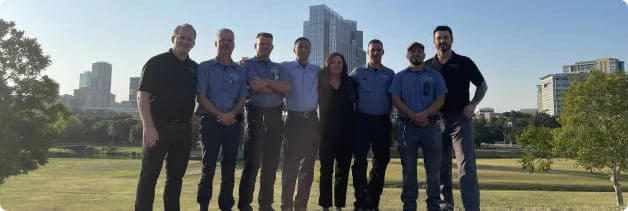
Mr. Electric of Rogers is a locally owned franchise of the Neighborly network, which has served homeowners since 1994. We bring national brand standards and local accountability to every electrical job we complete in Rogers and Benton County. We have built our reputation in Rogers on quality work, fair pricing, and responsive customer service. Read our customer reviews to see what your neighbors say about working with us. Then call and experience it for yourself. Here is what sets us apart:
- Locally owned and operated: We live and work in this community
- Upfront pricing: You get one written number before we touch anything
- Licensed team: Every electrician holds a valid Arkansas state license
- Background-checked: Every team member passes a background check before joining
- Insured: Full general liability and workers' compensation insurance on every job
- Permit-ready: We handle all permit applications and inspection coordination
- Customer service: You get clear communication before, during, and after every electrical job
- Neighborly Done Right Promise®: If we don't get it right, we make it right
-
Contact us by phone, through our website, or schedule your appointment online. We respond quickly to all service requests and often accommodate same-day or next-day appointments for urgent needs. Our emergency service is available for electrical emergencies that cannot wait. When you call, our customer service team discusses your specific electrical issue or project, answers your questions, and schedules a convenient time for one of our licensed Rogers electricians to visit your home. We provide upfront quotes before any work begins, handle all permits and inspections, and back our work with the Neighborly Done Right Promise®. Contact Mr. Electric of Rogers today to schedule your electrical service or complimentary safety inspection.
Our Blog
View All Blog PostsDangers of an Overloaded Circuit
Overloading an electrical circuit can cause some serious problems. While that may seem obvious, chances are that you’ve caused a circuit overload at least once in your life.
Read More
Is Your Electrical Outlet Not Working?
When the simple task of plugging your cell phone charger or hair dryer into the wall leaves you scratching your head and wondering why
Read MoreExpert Tips
View All Expert Tips

Top 8 Electrical Safety Essentials Your Home Needs
The cliche of "always be prepared" reigns true in most areas of life, but especially in homeownership. You never know when the next electrical storm will hit, when you'll suddenly notice mold and mildew in your basement, or when someone will attempt to break into your home. Even if you feel as though these things could never happen to you, it's better to be safe than sorry.
Read MoreSmart Devices: How Safe Are They?
The market for smart home products is worth an estimated $40 billion, with 65% of Americans already owning at least one device or system and a majority of those planning to purchase more in the future. People embrace this trend to increase security, improve energy efficiency, or gain more control over their home’s day-to-day functions.
Read MoreServices We Provide

-
Large Appliance Outlets
Outdoor Outlets
USB Outlets
Tamper Resistant Outlets
Outlet Installation
Outlet Repair
Safety Outlets
Panel Installation
Panel Upgrades and Repair
Circuit Breakers
Surge Protectors
Power Conditioners
Light Switches
Wall Switches
Knob and Tube Wiring Upgrades
Wiring Upgrades
Electrical Code Updates
Electrical Safety Check
Generators
Join Our Team
“We have the power to make things better.” That’s our mantra, not only for our customers' electrical issues, but also you, a future team member!

Your Source for Local Home Service Experts
Neighborly brands repair, maintain, and enhance properties — to make life easier and more enjoyable for homeowners. Our consistency and quality work are the basis for everything we do, and are what make us a leader in the home services space, as we constantly strive to "be so remarkable, we become a beloved household name."
Book Online
A representative from our office will get back to you shortly to schedule service.
Due to a system error, we did not get your request. Please call us for immediate assistance.
We don't currently provide service to this ZIP/postal code.
Yes! You can email me service reminders and other messages.
Mr. Electric, a Neighbourly Company on its own behalf and on behalf of and its affiliates and franchisees requests your consent to send promotional and other electronic messages to you concerning products and services they believe are of interest to you. By checking this box, you agree to receive these messages. You can unsubscribe at any time.
Text opt-in does not apply for Canadian residents.