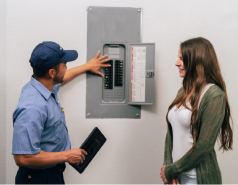
A hot tub requires a dedicated 240-volt electrical service before you fill it with water. You’ll need a licensed electrician to install a circuit rated for 40 to 60 amps, depending on your spa model. Standard household outlets do not support the power demands of a hot tub. NEC Article 680 mandates specific wiring methods, GFCI protection, equipotential bonding, and weatherproof disconnect boxes for all spa installations. During the installation process, our Columbus electrician does more than just run wire. It is required that equipotential bonding be used to connect your hot tub shell, pump motor, heater assembly, control panel, and all metal objects within five feet of the water. This creates uniform electrical potential across all conductive surfaces, preventing dangerous voltage gradients. Rest assured that Mr. Electric of Columbus, GA is the right choice for this job!
Hot Tub Electrical Installation in Columbus, GA
Book Online
A representative from our office will get back to you shortly to schedule service.
Due to a system error, we did not get your request. Please call us for immediate assistance.
We don't currently provide service to this ZIP/Postal code.
Yes! You can email me service reminders and other messages.
Mr. Electric, a Neighbourly Company on its own behalf and on behalf of and its affiliates and franchisees requests your consent to send promotional and other electronic messages to you concerning products and services they believe are of interest to you. By checking this box, you agree to receive these messages. You can unsubscribe at any time.
Text opt-in does not apply for Canadian residents.
What You Get from Our Hot Tub Electrician: Columbus, GA
-
Columbus's humid subtropical climate with summer temperatures exceeding 92°F and humidity above 70% creates corrosion challenges for outdoor electrical components. Your installation must withstand these conditions while protecting your family from electrical shock. Most residential hot tubs draw 50 amps at 240 volts. Our electrician runs 6-gauge copper wire from your main panel through buried conduit to a disconnect box near the spa.
-
Your existing electrical panel may not have sufficient capacity to support this load. Homes built before 2000 in Columbus neighborhoods like Green Island Hills, Wynnton, and St. Elmo often have 100-amp or 150-amp service panels already operating near capacity. Your HVAC system, water heater, and kitchen appliances consume most available power. Adding a 50-amp hot tub circuit requires careful load calculation to prevent overloading your electrical system.
-
Your GFCI breaker protects against ground faults by monitoring current flow and tripping within milliseconds if it detects an imbalance exceeding 5 milliamps. Underground conduit is buried to code-specified depths with proper bedding material to accommodate expansion of Georgia's red clay soil during wet seasons.
-
Mr. Electric of Columbus, GA provides licensed electricians who handle every technical requirement from permit application through final inspection. Request a service appointment today to get started on your spa experience!

Let us know how we can help you today.
Why Choose Mr. Electric of Columbus, GA for Hot Tub Electrical Installation?
Licensed Electricians with Spa Wiring Expertise
Your hot tub installation gets handled by Georgia-licensed electricians trained in NEC Article 680 requirements for spa and pool wiring. This specialization matters because hot tub electrical work differs significantly from standard residential circuits. The bonding requirements alone involve up to eight separate connection points on typical installations. Our professional electrician maps the equipotential bonding grid, sizes bonding conductors according to manufacturer specifications, and installs corrosion-resistant compression lugs that withstand Columbus's humid environment.
Generic handymen lack this specialized knowledge. You risk missing critical bonding connections, using undersized grounding conductors, or placing GFCI devices beyond the required distance from your spa. These violations create shock hazards and guarantee inspection failure. Licensed electricians can complete the work correctly, from the initial site evaluation through the final sign-off on the inspection.
We care about delivering guaranteed workmanship and high-quality customer service. Take a look at what previous homeowners have to say in their customer testimonials. When you’re ready, call our local experts to schedule a service!
FAQs About Hot Tub Electrical Installation in Columbus, GA
-
Circuit Sizing and Wire Gauge Specifications
Your hot tub manufacturer specifies exact electrical requirements in the owner's manual. Most 240-volt spas require 40-amp, 50-amp, or 60-amp circuits. The circuit breaker rating must match your hot tub's specifications exactly. Undersized circuits cause wire overheating and breaker tripping. Oversized breakers fail to protect equipment from overcurrent damage. Wire gauge selection depends on circuit amperage and wire run distance. A 50-amp circuit requires 6 AWG copper wire for runs under 100 feet. A 60-amp circuit needs 6 AWG or 4 AWG copper, depending on the distance from the panel to the spa. Longer wire runs create voltage drops that require a larger wire gauge to maintain proper voltage at the hot tub.
GFCI Protection Requirements
NEC Article 680.42 mandates GFCI protection for all hot tub branch circuits. Your GFCI breaker must detect ground faults and disconnect power within 4 to 6 milliseconds when the current imbalance exceeds 5 milliamps. This protection prevents electrocution when electrical current finds a path through water to ground. The GFCI device gets installed at your main panel or subpanel. Some jurisdictions allow GFCI protection at the disconnect box, but panel-mounted protection provides more reliable operation. You test the GFCI monthly by pressing the test button to verify proper operation.
Bonding Requirements Under NEC Article 680
Equipotential bonding ensures electrical continuity among all metal components of your hot tub. NEC 680.26 requires bonding of the hot tub shell, pump motor, heater assembly, metal equipment pad, metal fencing within five feet, and metal electrical components. The bonding conductor must be solid copper wire sized at a minimum of 8 AWG. Bonding wire connects to factory-installed lugs on spa equipment and compression connectors on structural metal. This bonding grid ensures that all metal surfaces maintain the same electrical potential, preventing shock caused by voltage differences between components.
Grounding Electrode System
Your hot tub requires a connection to the dwelling's grounding electrode system. This typically involves copper grounding rods driven eight feet into the soil at least six feet apart. Georgia's red clay soil presents grounding challenges because clay conducts electricity poorly when dry but becomes conductive when saturated. Grounding effectiveness varies with soil moisture content. Your electrician tests ground resistance to verify adequate earth contact. Some installations require multiple grounding rods or supplemental grounding electrodes to achieve required resistance values below 25 ohms.
Disconnect Box Placement and Specifications
NEC 680.12 mandates a disconnect device located between five and 50 feet from your hot tub with line-of-sight visibility to the spa. This disconnect allows you to cut power during emergencies without having to run to your main panel. The disconnect must be accessible, weatherproof, and lockable in the open position. NEMA 3R enclosures provide weather resistance for Columbus's humid climate. The disconnect contains either a circuit breaker or a switch rated for the full load current of your hot tub.
Conduit Installation Methods
Underground wire runs require Schedule 40 PVC conduit buried at a minimum of 18 inches depth for residential installations. Above-ground exposed conduit must use Schedule 80 PVC rated for impact resistance and UV exposure. Conduit runs include expansion fittings to accommodate thermal expansion during temperature swings between Georgia's winter lows and summer highs. All conduit connections receive proper waterproofing to prevent moisture infiltration, which can cause wire insulation degradation.
-
Most residential hot tubs require a dedicated 50-amp or 60-amp circuit at 240 volts. Your spa's owner's manual specifies exact amperage requirements based on heater wattage and pump motor size. According to the National Electrical Manufacturers Association, 240-volt hot tubs typically draw between 40 and 60 amps during normal operation. You cannot use an existing circuit or tap into other electrical loads. Columbus homes often need panel upgrades to support this additional electrical demand.
-
Step 1: Site Assessment and Load Calculation. Your electrician inspects your electrical panel, measures the distance from the panel to the hot tub, reviews your spa's electrical specifications, and calculates the total household electrical load to determine whether panel upgrades are necessary.
Step 2: Permit Application. Mr. Electric submits permit applications to the Columbus Consolidated Government with complete installation plans, load calculations, and equipment specifications. Permit approval typically takes three to five business days.
Step 3: Trenching and Conduit Installation. Your electrician digs trenches for underground conduit runs, installs Schedule 40 PVC conduit to the proper depth, and pulls copper wire through the conduit from the panel to the disconnect location.
Step 4: Panel Work and Circuit Installation. The new circuit breaker gets installed in your main panel with proper wire terminations. The GFCI breaker receives testing to verify the trip function before energizing the circuit.
Step 5: Disconnect Box and Final Connections. Your electrician mounts the weatherproof disconnect box, completes bonding connections to all metal components within five feet of the spa, and verifies grounding electrode connections.
Step 6: Inspection and Testing. Columbus building inspectors review the installation to verify code compliance. Your electrician tests voltage, GFCI function, and bonding continuity before turning the spa over to you.
-
Yes, NEC Article 680.42 mandates GFCI protection for all hot tub circuits regardless of location. Your GFCI breaker must trip within 4 to 6 milliseconds when the current imbalance exceeds 5 milliamps. The Consumer Product Safety Commission reports that GFCI devices prevent approximately 70 percent of electrical fatalities in wet locations. Columbus's humid climate makes GFCI protection especially critical because moisture creates conductive paths for electrical current. Your electrician tests the GFCI function before the final inspection.
-
Your home's electrical capacity is thoroughly evaluated before installation begins. Most Columbus homes built between 1950 and 1990 in neighborhoods like Wynnton, Dimon, and Forest Road have 100-amp or 150-amp electrical service. Your 50-amp hot tub represents one-third to one-half of the total available capacity. When you account for your central air conditioner drawing 30 amps, an electric water heater using 20 amps, and normal household loads, you may exceed safe operating limits.
Mr. Electric performs load calculations in accordance with NEC Article 220, determining whether your existing panel supports the hot tub addition or requires an upgrade to 200-amp service. This prevents nuisance tripping, overheated breakers, and potential fire hazards. You receive an honest assessment up front rather than discovering capacity issues mid-installation.
-
Columbus Consolidated Government requires electrical permits for all hot tub installations. Permits ensure that your installation meets the requirements of NEC Article 680 and local code amendments. According to the Georgia Department of Community Affairs, unpermitted electrical work leads to insurance claim denials and complicates home sales. Your electrician submits permit applications, schedules inspections, and ensures your installation passes review. Permit fees typically range from $50 to $150, depending on project scope.
-
Yes. Columbus receives 54 inches of annual rainfall with average humidity above 70 percent. Your hot tub's electrical components are exposed to constant moisture, which accelerates corrosion on terminals and connections. Standard indoor-rated materials deteriorate within months in outdoor conditions. Mr. Electric installs NEMA 3R-rated disconnect boxes with stainless steel hardware, sealed conduit connections, and moisture-resistant wire nuts.
The GFCI breaker receives additional environmental protection if your electrical panel is located in a garage or outdoors. Bonding wire connections get treated with an anti-corrosion compound at every termination point. These installation details prevent the callback repairs common with substandard work.
-
Columbus Consolidated Government requires electrical permits for all hot tub installations. The permitting process involves submitting load calculations, circuit diagrams, equipment specifications, and installation plans to the local building department. Mr. Electric can help you handle paperwork, schedules required inspections, and ensure your installation passes review on the first visit.
City inspectors verify that the wire gauge matches the amperage requirements, that GFCI protection functions correctly, that bonding connections comply with local codes, that disconnect box placement complies with regulations, and that the grounding electrode system meets specifications. Your project stays on schedule because experienced electricians know exactly what inspectors look for during review.
-
Many Columbus homes require panel upgrades before installing a hot tub. Your 100-amp service panel may operate at 80 percent capacity before adding a 50-amp spa circuit. NEC Article 220 requires load calculations to verify adequate capacity. The U.S. Energy Information Administration reports that homes built before 1990 typically have 100- to 150-amp service, while modern homes typically have 200-amp panels. Your electrician calculates the existing load and determines if an upgrade to 200-amp service is necessary before proceeding with hot tub circuit installation.
-
NEC Article 680.26 requires equipotential bonding of all metal components within five feet of your hot tub. Your installation bonds the spa shell, pump motor, heater assembly, control panel, metal equipment pad, and nearby metal structures using a minimum of 8 AWG solid copper wire. The International Association of Electrical Inspectors emphasizes that proper bonding prevents voltage gradients that cause electric shock. Columbus installations must pass bonding inspection before the spa gets filled with water. Your electrician installs compression lugs at all bonding points to ensure permanent connections.
-
Most hot tub electrical installations take four to eight hours for straightforward runs under 50 feet from the panel. Your timeline extends if panel upgrades are necessary or if wire runs exceed 100 feet, requiring trenching. According to the National Electrical Contractors Association, complex installations with panel upgrades may require one to two full days. Columbus permit processing adds three to five business days to your project timeline. Your electrician coordinates inspection scheduling to minimize delays between the completion of installation and final approval.
-
Installation cost depends on the distance from your panel to the spa, panel capacity, upgrade requirements, trenching difficulty in Georgia red clay, and local permit fees. Wire costs increase significantly for runs exceeding 75 feet because larger gauge wire is needed to prevent voltage drop. The National Association of Home Builders reports that upgrading from a 100-amp to a 200-amp electrical panel adds $1,500 to $3,500 to the project cost. Columbus installations through landscaped areas require additional expenses for trenching and landscape restoration. Your electrician provides detailed estimates after a site assessment.
-
Mr. Electric of Columbus, GA provides hot tub electrical installation services and more throughout Columbus and surrounding communities, including Green Island Hills, Cusseta, Wynnton, St. Elmo, Dimon, Forest Road, Midland, Cataula, Fortson, Box Springs, Ellerslie, Fort Benning, Fort Mitchell, Hamilton, Waverly Hall, and Phenix City, Alabama. Your neighborhood receives the same expert service whether you live in historic downtown Columbus or newer developments in North Columbus.
-
Contact Mr. Electric of Columbus, GA to schedule a professional hot tub electrical installation. Licensed electricians handle permits, installation, and inspection coordination for code-compliant work that protects your family. Your backyard spa deserves electrical service that lasts for many years.
Residential & Commercial Services