Glossary
-
Electrical Glossary: Terms Every Homeowner Should Know
Mr. Electric of Central Iowa knows that understanding electrical terminology helps you make better decisions about your home. When your local Des Moines electrician explains what they found, you deserve to know exactly what they're talking about. This glossary covers the terms you're most likely to hear during an inspection, a panel upgrade, a wiring job, or a code-compliance conversation.
-
AC (Alternating Current)
The type of electricity delivered to your home through the utility grid. AC current reverses direction at a fixed frequency, 60 times per second in North America, measured in hertz (Hz). It's what powers virtually every outlet, switch, and fixture in a standard home.
AFCI (Arc Fault Circuit Interrupter)A circuit breaker or outlet device that detects dangerous electrical arcs inside your wiring and shuts off power before a fire starts. Arcs happen when electricity jumps across a damaged wire, a loose connection, or a frayed cord. The 2020 NEC requires AFCI protection in most living areas of new homes, including bedrooms, living rooms, hallways, and kitchens. Many older homes lack this protection entirely.
AlternatorA generator that converts mechanical energy into AC electricity. You're most familiar with this term from your car. In a home context, whole-home standby generators use an alternator to produce power during outages.
Aluminum WiringElectrical wiring made from aluminum instead of copper. It was widely installed in North American homes from the mid-1960s through the mid-1970s because copper prices spiked. Aluminum expands and contracts more than copper as it heats and cools, which loosens connections over time and creates fire risks at outlets, switches, and panel connections. Homes with aluminum wiring require special connectors, compatible devices, or full rewiring to be safe. If your home was built between 1965 and 1975, it's worth having an electrician inspect your wiring.
Amp (Ampere)The unit of measurement for electrical current, specifically the volume of electrons flowing through a wire at any moment. Think of water in a pipe: voltage is pressure, and amps are flow rate. A standard bedroom circuit runs on 15 amps. A kitchen circuit typically runs on 20 amps. A large appliance like an electric range or EV charger may need 40 to 60 amps dedicated to it alone.
AmpacityThe maximum current a wire, cable, or device can safely carry without overheating. Wire gauge (AWG) determines ampacity. A 14-gauge wire has an ampacity of 15 amps. A 12-gauge wire handles 20 amps. Push more current than the wire is rated for and it generates heat, sometimes enough to start a fire inside your wall.
AmmeterA tool used to measure the current flowing through a circuit, expressed in amps. Electricians use clamp meters, which slide around a wire without cutting into it, to measure current safely during diagnostics.
ArcA visible or invisible discharge of electricity between two conductors not in direct contact. Arcs generate extreme heat and are a leading cause of house fires. They occur at loose connections, damaged insulation, and improperly installed devices.
Arc FlashA sudden, violent release of energy caused by an electrical arc. Arc flash produces intense heat, light, pressure waves, and molten metal. It's primarily a hazard around commercial switchgear and utility panels, but can occur in residential panels under fault conditions. Never remove a panel cover yourself.
Armored Cable (AC)Electrical cable wrapped in a flexible spiral metal sheath, sometimes called BX cable. The metal armor protects the wires from physical damage. Common in exposed locations like basements, crawl spaces, and commercial spaces. The sheath itself serves as a grounding path in older installations.
Automatic Transfer Switch (ATS)A device that detects when utility power fails and automatically switches your home's power source to a standby generator. A properly installed ATS keeps the generator isolated from the utility line, protecting both your home and lineworkers on the street.
AWG (American Wire Gauge)The standardized system for measuring wire diameter in North America. Counterintuitively, a lower AWG number means a thicker wire. 14-gauge wire is standard for 15-amp circuits. 12-gauge handles 20-amp circuits. 10-gauge handles 30-amp circuits. The heavier the load, the thicker the wire you need.
-
Ballast
A device inside fluorescent and HID (high-intensity discharge) light fixtures that limits current and provides the voltage needed to strike the lamp. Without a ballast, fluorescent tubes would immediately burn out. LED replacements for fluorescent fixtures sometimes need the ballast bypassed; that's a job for an electrician, not a DIY swap.
Bare ConductorAn electrical conductor with no insulation around it. Used in grounding applications, including the bare copper wire you'll see bonded to your ground rod, water pipe, and panel.
BondingConnecting all metal components in an electrical system to ensure they sit at the same electrical potential. Bonding prevents voltage differences that could cause a shock if you touch two metal surfaces simultaneously. The metal water pipes in your home, your ductwork, and structural steel all need to be bonded together.
Box FillAn NEC calculation that limits how many wires, devices, and connectors you can fit inside an electrical box. Overfilling a box traps heat and makes it physically impossible to make safe connections. The box volume determines the fill limit based on the cubic-inch requirements of each item inside it.
Branch CircuitOne circuit that extends from a breaker in your panel to a set of outlets, lights, or appliances. Most rooms in your home are served by at least one dedicated branch circuit. Kitchens require multiple 20-amp branch circuits by code.
Breaker (Circuit Breaker)A protective switching device that shuts off power automatically when a circuit draws more current than it's rated for. A tripped breaker protects your wiring from overheating. If a breaker trips repeatedly, that's a signal of either an overloaded circuit or a fault somewhere in the wiring, not a reason to replace the breaker with a larger one.
Busbar (Bus)A metal bar inside your electrical panel that distributes power to the individual breakers. Your panel has a hot busbar for each phase of power and a neutral busbar where neutral wires terminate. The ground bar is a separate bonded busbar for ground wires.
BX CableSee Armored Cable.
-
Cable
A group of insulated conductors bundled together inside a protective outer jacket. Standard residential cable is called NM-B (nonmetallic sheathed cable), or Romex by the common brand name. The sheath identifies the wire gauges inside. "12-2 with ground" means two 12-gauge current-carrying conductors plus a bare copper ground wire.
CapacitorA small component that stores and releases electrical charge. In HVAC systems, capacitors start and run the motors in your air handler, furnace blower, and outdoor compressor. When a capacitor fails, motors may hum but not start, or run sluggishly. Capacitors hold a charge even after the power is off; leave replacement to a pro.
CircuitA complete, closed path through which electric current flows from the power source, through the load (a light, appliance, outlet), and back to the source. Break the path anywhere, and the current stops.
Circuit BreakerSee Breaker.
Clamp MeterA handheld diagnostic tool that measures current flowing through a wire by clamping around it, without cutting into the insulation. Electricians use clamp meters during load analysis and troubleshooting.
Code (Electrical Code)The National Electrical Code (NEC), published by the National Fire Protection Association (NFPA), sets minimum safety standards for electrical installation in the United States. Individual states and municipalities adopt specific editions of the NEC, sometimes with local amendments. Canada uses the Canadian Electrical Code (CEC). Code compliance is not optional; it's required for permitted work and verified by inspectors.
ConduitA protective tube, either metal (EMT, rigid) or plastic (PVC), used to house and protect electrical wiring. Conduit is required in exposed locations, such as unfinished basements, garages, and outdoor runs, where cable would be vulnerable to physical damage.
ConductorAny material that allows electricity to flow through it with low resistance. Copper and aluminum are the primary conductors used in residential wiring. Copper is more conductive and handles expansion and contraction better at connections.
ContinuityAn unbroken electrical path between two points. Electricians test for continuity with a multimeter to confirm a wire isn't broken, a fuse hasn't blown, or a switch is functioning correctly. A continuity test sends a small current through the circuit and detects whether it completes the path.
Copper WiringThe standard material for residential electrical wiring. Copper is highly conductive, flexible, and holds connections well under repeated heating and cooling. Most homes built after the mid-1970s use copper throughout.
-
Dead Front
A panel cover or enclosure designed to prevent accidental contact with live electrical parts. Your main panel cover is a dead front. Never operate a panel with the dead front removed unless you're a licensed electrician with the right protective equipment.
Dedicated CircuitA branch circuit that serves a single appliance or device. Your refrigerator, dishwasher, microwave, washer, dryer, HVAC system, and electric vehicle charger each need dedicated circuits. Sharing these loads with other outlets overloads wiring and trips breakers.
Demand LoadThe amount of electrical power a building actually draws at any given time, as opposed to its total connected load. Demand load calculations help electricians size service entrances, panels, and feeders correctly for the expected usage patterns.
DFCI (Dual-Function Circuit Interrupter)See AFCI/GFCI Combination.
Dimmer SwitchA switch that reduces current flow to a light fixture, lowering its output. Modern dimmers use electronic components to adjust light levels. LED fixtures require LED-compatible dimmers; older dimmers designed for incandescent bulbs cause LED lights to flicker, hum, or fail prematurely. Always check compatibility before buying.
DisconnectA switch or breaker that isolates an electrical circuit or piece of equipment from its power source. Your HVAC system has a dedicated disconnect mounted near the outdoor unit. Disconnects allow safe service without going back to the main panel.
Distribution PanelSee the Main Panel or Sub-Panel.
Double-Pole BreakerA circuit breaker that occupies two slots in your panel and controls a 240-volt circuit. Electric dryers, ranges, water heaters, and HVAC equipment all run on double-pole breakers. The two poles provide two 120-volt legs, which combine to deliver 240 volts to the appliance.
-
Electrical Box
A metal or plastic enclosure that houses wire connections, outlets, or switches. Every connection in your electrical system must be made inside a closed box. Open connections inside walls violate code and pose fire and shock hazards.
Electrical PermitAuthorization from your local building department to perform specified electrical work. Permits trigger inspections, which verify that the work meets code. Most wiring projects beyond simple device swaps require a permit. Work done without permits creates problems when you sell your home and may void your homeowner's insurance after a loss.
Electrical ServiceThe utility connection that delivers power to your home. Residential service comes in through the service entrance, which includes the service head (weatherhead), service conductors, the utility meter, and the main panel. Service capacity is rated in amps, with common residential sizes being 100, 150, 200, and 400 amps.
EMT (Electrical Metallic Tubing)A thin-wall metal conduit widely used in commercial and industrial wiring. In residential applications, EMT appears in garages, basements, and utility spaces where wiring runs are exposed.
EV Charger (Electric Vehicle Charger)A device that supplies power to recharge electric vehicle batteries. Level 1 chargers use a standard 120-volt outlet. Level 2 chargers require a 240-volt, dedicated 40- to 60-amp circuit, which most homes need an electrician to install. Level 2 charging is significantly faster, typically 3 to 7 times the speed of Level 1.
-
Fault (Electrical Fault)
An unintended connection or break in a circuit that allows current to flow along an unintended path. Ground faults and short circuits are the two most common types. Faults trip breakers, blow fuses, and can cause fires or shocks if protective devices fail.
FeederConductors that carry power from the main panel to a sub-panel, or from a sub-panel to branch circuits. Feeder wires are sized based on the load they serve and the distance they run.
GFCI (Ground Fault Circuit Interrupter)See GFCI under "G."
FixtureAny permanently installed electrical device that provides light, heat, or power output. Light fixtures, ceiling fans, bathroom exhaust fans, and recessed cans are all fixtures. Fixtures are hardwired to your electrical system, as opposed to portable appliances that plug in.
FuseAn older overcurrent protection device containing a metal element that melts when current exceeds the rated limit. Fuses do the same job as circuit breakers, but don't reset; they blow and must be replaced. Homes with fuse boxes instead of breaker panels may need a panel upgrade, especially if the fuse ratings don't match the wire gauges they protect.
-
GFCI (Ground Fault Circuit Interrupter)
A safety device that detects even tiny imbalances in current flow between the hot and neutral wires and shuts off power in 1/40th of a second. GFCI protection prevents electrocution in wet areas. The NEC requires GFCI protection in bathrooms, kitchens within 6 feet of a sink, garages, crawl spaces, unfinished basements, outdoors, and near swimming pools. You'll recognize GFCI outlets by the "Test" and "Reset" buttons on their face. Press the Test button monthly to confirm they're working.
GFCI/AFCI Combination BreakerA single breaker that provides both arc fault and ground fault protection. The NEC requires these in some areas of the home where both hazards are present, most notably in kitchens and laundry areas of new construction.
GeneratorA device that produces electricity from mechanical energy, typically through a gasoline, propane, or natural gas engine. Portable generators power a few circuits during an outage, but should never be connected directly to your home's wiring; doing so sends power back up the utility lines and can kill lineworkers. Standby generators connect through an approved transfer switch.
GroundA conducting connection, intentional or accidental, between an electrical circuit or equipment and the earth. Grounding provides a low-resistance path for fault current to travel to earth rather than through a person. Modern wiring systems include three conductors: hot (black), neutral (white), and ground (green or bare copper).
Ground FaultA fault that occurs when current flows through an unintended path to ground, for example, through your body if you touch a live wire while standing on a wet floor. GFCIs protect against ground faults.
Ground RodA copper-clad or solid copper rod driven into the earth, typically 8 feet deep, to establish a reference ground connection for your electrical system. The ground rod connects to your panel via a bare copper conductor called a grounding electrode conductor.
Grounding Electrode ConductorThe wire that connects your electrical panel to the grounding electrode system (ground rods, metal water pipes, or building steel). This conductor provides the earth connection that protects your home's wiring.
-
Hard-Wired
Describes electrical equipment connected permanently to the building wiring, without a plug. Ceiling fans, dishwashers, range hoods, and built-in HVAC systems are hard-wired. Hard-wired devices require an electrician to install or remove safely.
High-Leg DeltaA three-phase electrical service configuration sometimes found in older commercial buildings. One of the three phases carries 208 volts to neutral instead of the standard 120 volts, making it unsuitable for standard 120-volt loads. Relevant if you're converting older commercial space for residential use.
Home RunIn electrical rough-in work, the single cable that runs from the panel to the first device in a circuit. Other outlets or switches on the same circuit are connected in sequence (daisy-chained) from there.
Hot WireThe current-carrying wire in a circuit, identified by a black or red insulator. The hot wire carries voltage from the panel to the load. Contact with a hot wire while grounded completes a circuit through your body, which is the definition of electrocution.
Hz (Hertz)The unit of frequency, measuring how many times per second AC current reverses direction. North America uses 60 Hz. Europe uses 50 Hz. Some appliances designed for 50 Hz regions run hotter and less efficiently on 60 Hz power.
-
IAEI (International Association of Electrical Inspectors)
The professional organization representing electrical inspectors across the United States and Canada. Electrical inspectors hold certifications from IAEI or similar bodies, which train them to verify compliance with the NEC and CEC for permitted work.
Insulation (Wire)The non-conductive coating around a conductor that prevents accidental contact or shorting. Insulation types are identified by letter codes printed on wire sheathing. THHN is the most common indoor wire insulation. THWN is rated for wet locations. Underground cables use XHHW or similar moisture-resistant insulation.
InterrupterA device designed to break, or "interrupt," current flow under fault conditions. Circuit breakers and fuses are interrupters. GFCI and AFCI devices are specialized interrupters for specific hazard types.
Isolated GroundA grounding method used in sensitive equipment, such as servers, audio gear, and medical devices, where the equipment ground connects directly to the panel without sharing a ground path with other devices. Isolated grounds reduce electrical noise from other equipment on the same circuit.
-
Junction Box
An electrical box that houses wire splices and connections. Every splice in your home's wiring must be inside a closed, accessible junction box. Junction boxes behind finished walls that are covered or inaccessible violate code.
-
kVA (Kilovolt-Ampere)
A unit of apparent power, equal to 1,000 volt-amperes. Used to rate transformers, UPS systems, and generators. Because of the power factor, kVA differs from kilowatts in systems with inductive loads, such as motors.
kW (Kilowatt)A unit of real power equal to 1,000 watts. Your utility bills in kilowatt-hours (kWh), which measure the amount of energy used over time. A 1,000-watt appliance running for one hour consumes 1 kWh.
kWh (Kilowatt-Hour)The unit your utility uses to measure your electricity consumption. One kWh is the energy consumed by a 1,000-watt device running for one hour. The average U.S. home uses about 875 kWh per month, according to the U.S. Energy Information Administration (EIA).
-
Lath and Plaster
An older wall construction method using thin wood strips (lath) covered in coats of plaster, common in homes built before the 1950s. Fishing new wiring through lath-and-plaster walls requires more care and skill than fishing through drywall. Expect a longer job time and possible small access holes.
Leakage CurrentA small amount of current that flows along an unintended path, such as through insulation or across wet surfaces. GFCI devices detect leakage currents of as little as 4 to 6 milliamps, amounts too small to trip a breaker but large enough to cause ventricular fibrillation.
LED (Light-Emitting Diode)A lighting technology that produces light by passing current through a semiconductor. LEDs use 75 to 80% less energy than comparable incandescent bulbs and last 15 to 25 times longer. Retrofitting older fixtures to LED sometimes requires wiring or ballast modifications.
License (Electrical License)State- or province-issued authorization to perform electrical work. License categories typically include apprentice, journeyman, and master electrician. Requirements vary by state. Mr. Electric electricians hold current local licenses and pass ongoing training.
LoadAny device or appliance that consumes electricity. Lights, motors, heaters, and electronics are all loads. Calculating total load helps size circuits, panels, and service entrances correctly.
Load CalculationA detailed analysis of all electrical loads in a building, used to size the service entrance, panels, and circuits. The NEC Article 220 load calculation method determines whether a 100-amp, 200-amp, or larger service meets the building's needs.
Low-Voltage WiringWiring that operates below 50 volts. Doorbells, thermostats, landscape lighting, data cables, and some outdoor lighting run on low-voltage systems. While less immediately dangerous than line voltage, low-voltage wiring still requires code-compliant installation.
-
Main Breaker
The large double-pole breaker at the top of your electrical panel that controls power to the entire panel. Flipping the main breaker off de-energizes every circuit in your home but does not de-energize the service conductors entering the panel from the meter. Those wires are always live.
Main Panel (Main Electrical Panel / Breaker Box / Load Center)The central distribution point for your home's electrical circuits. The main panel receives power from the utility, passes it through the main breaker, and distributes it to individual branch circuit breakers. Panel capacity is measured in amps; most current homes have 200-amp service. Homes with more loads, EVs, or electric appliances may need a 400-amp upgrade.
Meter (Electric Meter)The utility company's device that measures your home's power consumption in kWh. The meter mounts between the utility service drop and your main panel. The utility company owns it. The wiring between the meter and panel is your responsibility.
MultimeterThe standard diagnostic tool every electrician carries. A multimeter measures voltage, resistance, and current. It tests for the presence of voltage, confirms wire continuity, and identifies open or shorted circuits. Most electricians use digital multimeters (DMMs).
-
NEC (National Electrical Code)
See Code.
Neutral WireThe current-return conductor in a circuit, identified by white or gray insulation. In a standard 120-volt circuit, current flows from the panel on the hot wire, through the load, and returns to the panel on the neutral wire. The neutral wire connects to the neutral bar in your panel and is bonded to ground only at the main panel.
NM-B Cable (Nonmetallic Sheathed Cable)The most common wiring cable in residential construction, sold under the brand name Romex. The outer sheath is a gray (for 600V), white (14-gauge), or yellow (12-gauge) PVC jacket. The color-coding helps electricians quickly identify wire gauges on the job. NM-B is approved for interior dry locations.
-
Ohm
The unit of electrical resistance. Higher resistance means less current flows for a given voltage. Ohm's Law states that Voltage = Current x Resistance (V = IR). Resistance measurements help diagnose faulty devices, open circuits, and insulation breakdown.
Ohm's LawThe fundamental relationship in electrical circuits: V = IR, where V is voltage (volts), I is current (amps), and R is resistance (ohms). Understanding this relationship helps explain why wire gauge matters, why undersized wiring overheats, and how protective devices are rated.
Open CircuitA circuit with a break that prevents current from flowing. A blown fuse, a tripped breaker, a broken wire, or a faulty switch all create open circuits. Lights that don't turn on, outlets that don't work, and appliances that don't run are common symptoms.
OvercurrentAny condition where current exceeds the rated capacity of a wire or device. Overcurrent causes heat, insulation damage, and fire. Circuit breakers and fuses protect against overcurrent by interrupting the circuit when the rating is exceeded.
Overcurrent Protection Device (OCPD)A breaker or fuse sized to protect the wiring it serves. The OCPD rating must match the ampacity of the wires in the circuit. A 15-amp breaker protects 14-gauge wire. A 20-amp breaker protects 12-gauge wire. Never replace an OCPD with a higher-rated device to stop nuisance tripping; that hides the real problem and creates a fire hazard.
-
Panel Upgrade
Replacing an older or undersized electrical panel with a new one that meets current code and provides adequate capacity. Common triggers include adding large appliances, installing an EV charger, finishing a basement or addition, upgrading to a 200-amp service, or replacing outdated panels like Federal Pacific (Stab-Lok) or Zinsco/Sylvania, which have documented reliability and safety problems.
PermittingThe process of obtaining a building permit before electrical work begins. Permits protect you. The inspection process catches code violations before they're buried in walls. Insurance companies and home buyers both want documented proof that major electrical work was done legally.
PhaseA measure of AC power supply. Residential homes in North America use single-phase 120/240-volt power. Commercial and industrial buildings use three-phase power for large motors and heavy equipment. If you're converting commercial space to residential, understanding the phase configuration matters.
PigtailA short wire used to extend a connection from a wire or device. Pigtails are common in outlets: instead of connecting two wires directly to the outlet terminals, you splice them to a short wire, which connects to the terminal. This makes the outlet easier to replace and keeps it from being a series connection in the circuit.
Polarized PlugA two-prong plug where one prong is wider than the other, ensuring it can only be inserted one way. This polarity ensures the neutral conductor connects to the neutral terminal in the device, keeping the hot side of the circuit away from the switch contacts inside the appliance.
PVC ConduitRigid plastic conduit used for underground wiring runs and wet locations. PVC doesn't rust but needs to be buried at the correct depth depending on the circuit voltage and application. Wiring buried in PVC conduit is accessible for future work without digging up the conductors themselves.
-
Raceway
Any enclosed channel designed to hold electrical wires. Conduit, cable trays, surface raceways, and wireways are all raceways. Surface-mount raceways allow new wiring to be added to finished walls without cutting into them.
ReceptacleThe proper electrical term for what most people call an outlet. A duplex receptacle has two plug-in spots. Tamper-resistant receptacles include plastic shutters inside the slots, preventing children from inserting objects. The NEC has required tamper-resistant receptacles in new residential construction since 2008.
ResistanceA material's opposition to current flow, measured in ohms. Poor connections, corroded contacts, and loose wire terminals all add resistance. Resistance generates heat. A loose connection at a panel bus or breaker terminal can get hot enough to start a fire, even if the breaker never trips.
Rough-InThe phase of electrical work where conduit and wiring are installed before walls are closed. Rough-in happens after framing and before insulation and drywall. Inspectors check rough-in work before it's covered up. This is the best and least expensive time to add circuits.
RomexA brand name for NM-B cable, widely used as the generic term for residential sheathed wiring. See NM-B Cable.
-
Service Drop
The overhead cables that run from the utility pole to your home. The utility company owns and maintains the service drop. If the wires are too low, damaged, or improperly attached to your home, you need to contact both your utility and a licensed electrician.
Service EntranceThe point where utility power enters your home, including the service conductors, meter socket, and main panel. Service entrance wiring is always energized, even when your main breaker is off. Only the utility company can de-energize service entrance conductors.
Service PanelSee Main Panel.
Short CircuitA fault that creates an unintended low-resistance path between conductors, allowing current to spike far above normal levels. Short circuits usually trip breakers immediately. They occur when a hot wire touches a neutral or ground wire, or when two hot wires contact each other.
Single-Pole BreakerA standard circuit breaker occupying one slot in your panel, protecting a 120-volt circuit. Most lights, outlets, and small appliances use single-pole breakers rated at 15 or 20 amps.
Smart PanelA modern electrical panel equipped with monitoring technology that tracks energy use by circuit in real time. Smart panels from brands like Span or Leviton let you manage circuits from an app, view consumption data, and prioritize loads during generator operation.
SpliceA connection that joins two or more wires together. Splices must be made with appropriate connectors (wire nuts, push-in connectors, or compression connectors) and enclosed in a junction box. Never tape two bare wires together and bury them in a wall.
Sub-PanelA secondary electrical panel fed by a feeder circuit from the main panel. Sub-panels distribute circuits in detached garages, workshops, additions, or large homes where routing individual circuits back to the main panel would be impractical. Sub-panels have their own breakers but draw power from the main panel.
Surge ProtectorA device that limits voltage spikes from reaching your equipment. Point-of-use surge protectors (the power strips with the buttons) protect individual electronics. Whole-home surge protectors installed at the panel protect every circuit in the house, including hardwired appliances, HVAC equipment, and smart home devices. Whole-home protection is recommended wherever lightning is a seasonal risk.
-
THHN Wire
A common type of single-conductor wire with a nylon jacket over a heat-resistant, thermoplastic insulation. THHN is used inside conduit in dry and damp locations and is the most widely used wire in commercial construction. It's rated for 90°C.
THWN WireSimilar to THHN but rated for wet locations. The W in THWN stands for wet-rated. Often sold as THHN/THWN dual-rated wire.
TransformerA device that increases or decreases AC voltage using electromagnetic induction. The utility pole transformer near your home steps high-voltage transmission power down to the 240/120-volt service delivered to your panel. Low-voltage transformers inside your home power doorbells, landscape lighting, and HVAC control systems.
Trim-OutThe final phase of electrical installation, where outlets, switches, covers, fixtures, and devices are installed after walls are finished. Trim-out follows rough-in and inspection. It's also called "finish electrical."
Tripping (Breaker)When a breaker shuts off due to an overload, short circuit, or, in the case of GFCI/AFCI devices, a detected fault. A breaker that trips once has done its job. A breaker that trips repeatedly on the same circuit is telling you something is wrong with the load or the wiring.
-
UL (Underwriters Laboratories)
An independent safety certification organization. UL-listed electrical products have been tested against safety standards. The NEC and most local codes require UL-listed or equivalent products. Never install uncertified electrical products.
Underground Feeder (UF) CableA type of cable rated for direct burial without conduit. UF cable has a solid plastic sheath that encases the individual conductors, making it resistant to moisture and soil contact. The NEC requires minimum burial depths based on voltage and application, typically 12 inches for UF cable under normal conditions and 6 inches under concrete.
Utility MeterSee Meter.
-
Volt (V)
The unit of electrical pressure, or potential difference, that drives current through a circuit. Standard residential outlets in North America supply 120 volts. Large appliances and EV chargers use 240 volts. Higher voltage allows the same power to be delivered at lower current, which allows smaller wire gauges over long runs.
Voltage DropA reduction in voltage that occurs as current travels through a wire. Longer wire runs have higher resistance, which causes more voltage drop. Excessive voltage drop causes lights to dim, motors to run hot, and electronics to malfunction. The NEC recommends limiting voltage drop to 3% on branch circuits and 5% total from the panel to the end of the circuit.
Volt-Amp (VA)A unit of apparent power in AC circuits. For purely resistive loads like incandescent lights and baseboard heaters, VA equals watts. For inductive loads like motors and transformers, VA exceeds watts due to reactive power. Used to rate transformers and UPS systems.
-
Watt (W)
The unit of real power, specifically the actual energy consumed by a device per unit of time. A 100-watt bulb consumes 100 joules of energy per second. Power = Voltage x Current (P = VI) for purely resistive loads.
WeatherheadThe curved fitting at the top of the service entrance conduit, where the utility's service drop connects to your home. The weatherhead points downward to shed rain. It's part of the service entrance equipment you're responsible for maintaining. A damaged weatherhead needs replacement before the utility will reconnect service.
Whole-Home GeneratorA permanently installed standby generator that starts automatically within seconds of a power outage. Whole-home generators run on natural gas or propane, require a transfer switch, and need a dedicated electrical connection. Sizing depends on which circuits you want backed up.
Wire GaugeSee AWG.
Wire NutA twist-on connector used to join two or more conductors inside an electrical box. Wire nuts come in color-coded sizes matched to the number and gauge of wires being joined. They're simple, reliable, and the most common connector used in residential wiring.
Wiring DiagramA schematic that shows the electrical connections in a circuit or system. Electricians use wiring diagrams for panel layouts, sub-panel feeds, and complex multi-switch circuits. If your home had work done by the previous owner, a diagram documenting the panel layout helps future electricians and inspectors.
-
Zinsco (Sylvania) Panel
A brand of electrical panel manufactured primarily in the 1970s with documented reliability issues. Zinsco breakers are prone to failing to trip under overload conditions, which creates a fire hazard. Homes with Zinsco panels should be inspected, and the panels should be considered for replacement.
Zone ControlAn electrical control system that divides a building into independently controlled heating, cooling, or lighting zones. Zone control systems use multiple thermostats, dampers, or relays managed by a central controller. Electricians install the low-voltage wiring and line-voltage connections for zone control systems.
-
Quick Reference: Common MeasurementsResidential voltage
120V for standard outlets and circuits; 240V for large appliances, EV chargers, and HVAC
Standard circuit breaker ratings15A (14-gauge wire), 20A (12-gauge wire), 30A (10-gauge wire), 40 to 60A (8- or 6-gauge wire)
Common residential service sizes100A (older homes), 150A (transitional), 200A (modern standard), 400A (large homes, EV charging, electric HVAC)
AC frequency in North America60 Hz
NEC voltage drop recommendationsNo more than 3% on a branch circuit; no more than 5% total
Have questions about a term you heard during a service call or inspection? Contact us today. We are your local Mr. Electric of Central Iowa. Our licensed electricians explain every step of the work in plain language before, during, and after the job.
Join Our Team
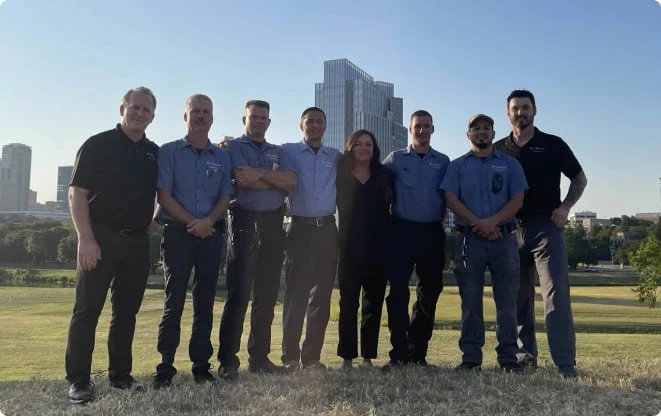
“We have the power to make things better” “That’s our mantra, not only for our customers electrical issues, but also you, a future team member”!