Licensed Electrician in Beaverton, Oregon | Expert Home Electrical Services
When something goes wrong with your electrical system, you need a licensed electrician in Beaverton who diagnoses the problem and fixes it right the first time. Mr. Electric® of Beaverton - Tigard is a locally owned and operated franchise serving homes and businesses throughout Washington County. We handle all your electrical needs, from panel upgrades and replacements to dedicated circuits for EV charging stations and whole-home backup generator systems.

Book Online
A representative from our office will get back to you shortly to schedule service.
Due to a system error, we did not get your request. Please call us for immediate assistance.
We don't currently provide service to this ZIP/Postal code.
Yes! You can email me service reminders and other messages.
Mr. Electric, a Neighbourly Company on its own behalf and on behalf of and its affiliates and franchisees requests your consent to send promotional and other electronic messages to you concerning products and services they believe are of interest to you. By checking this box, you agree to receive these messages. You can unsubscribe at any time.
Text opt-in does not apply for Canadian residents.
Customer Reviews
View All Testimonials
The Neighborly Done Right Promise® delivered by Mr. Electric®, a proud Neighborly company.
Easy Online BookingProfessional Electrical Service for Beaverton Homes and Businesses
Electrical work is not a place to cut corners. A loose connection creates heat. Heat damages wire insulation. Over time, this creates electrical hazards, including fire risk and system failure. Our Beaverton electricians know what to look for, how to test circuits properly, and how to bring older systems up to current safety standards. We work on homes throughout neighborhoods like Cedar Hills, Raleigh Hills, Five Oaks, West Beaverton, Sexton Mountain, and Progress Ridge, where electrical systems range from mid-century wiring to modern smart home setups.
Oregon law requires a Construction Contractors Board (CCB) license for any electrical work over $400. Our team holds the required state licensing, pulls permits when needed, and coordinates inspections for panel upgrades, service changes, and new circuit installations. You get professional work done to code, inspected by your local authority, and backed by a franchise with more than 30 years of experience in residential electrical services.
-
Installations
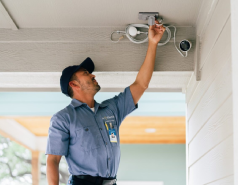
Mr. Electric installs top-of-the-line electrical equipment to help you save on energy costs.Learn more Installations -

Lighting
Our experts can handle any lighting fixture for a single-family home, apartment, condo, or business.Learn more Lighting -
Electrical Safety
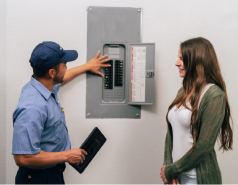
Let our expert electricians keep your home or business above building code standards.Learn more Electrical Safety -
Repairs
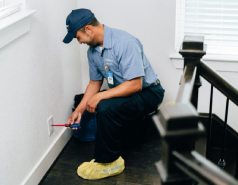
Your courteous Mr. Electric electrician will arrive and finish on time, barring unforeseen issues.Learn more Repairs

Let us know how we can help you today.
Why Beaverton Residents Choose Mr. Electric
-
Mr. Electric of Beaverton - Tigard is a locally owned and operated franchise serving Beaverton, Tigard, Hillsboro, Aloha, Tualatin, and communities throughout Washington County. You work with a team that lives and operates in your community, backed by a national brand founded in 1994 and part of the Neighborly network, the world's largest home services company. We know the housing stock in West Beaverton, Cedar Hills, Raleigh Hills, and Progress Ridge, and we understand the electrical challenges that come with older homes in the Portland metro area.
-
Every electrician on our team holds an Oregon CCB license, carries liability insurance, and has passed a thorough background check. You get a uniformed professional who shows up on time, wears shoe covers, protects your floors, and cleans up completely after the electrical work is done. Our licensing information is public and verifiable through the Oregon CCB online lookup tool. We also carry workers' compensation insurance, which protects you from liability if a worker is injured on your property.
-
We quote by the job, not by the hour. Before we start any work, you get a clear price in writing. You know exactly what you are paying before you commit. If the scope changes, we explain why and give you a revised quote before proceeding. Financing options are available for larger electrical jobs, such as panel upgrades, generator installations, and whole-home rewiring. Every job is backed by the Neighborly Done Right Promise®. If the work is not done right, we make it right. That is our commitment to customer service on every project, large or small.
14355 SW Allen Blvd. #200 Beaverton, OR 97005, United States
Mr. Electric of Beaverton-Tigard
Frequently Asked Questions About Electrical Service in Beaverton, Oregon
-
The City of Beaverton and surrounding municipalities require an electrical permit for many electrical projects. This includes wiring installations, changes to electrical panels, EV charging station installations, and generator hookups. Minor work, such as replacing a light fixture or electrical outlet with the same type in the same location, typically do not require a permit. According to the City of Beaverton Building Division, any electrical work that adds capacity, changes circuit configuration, or modifies your power supply must be properly permitted and inspected.
Your Beaverton electrician will submit the permit application. The building department will schedule inspections at the rough-in stage, service connection, and final completion. Skipping permits creates problems during home sales, insurance claims, and resale inspections. Ask your electrician to confirm permit requirements before any electrical work begins, even for seemingly minor jobs.
-
Permit processing time through the City of Beaverton Building Division depends on project complexity and current application volume. Simple permits for outlet additions or circuit installations are often processed within one to three business days. But more complex permits for electrical panel replacement, service upgrades, or generator installations require plan review and typically take one to two weeks. Your electrician submits the application with load calculations, site plans, and equipment specifications. The city reviews for code compliance before issuing the permit.
Applying online through the city's permit portal speeds processing compared to paper applications. During peak construction seasons, processing times increase. Factor permit lead time into your project schedule, especially for time-sensitive installations like EV chargers or heat pump wiring. We handle the entire permit process on your behalf, so you do not need to deal with the building department directly.
-
Oregon Revised Statutes 447.015 allows homeowners living on the property to perform minor electrical repairs without a permit or license. This includes replacing light fixtures, electrical outlets, and switches with the same type in the same location. Projects such as installing new circuits, performing electrical panel changes, working inside the service panel, or any work exceeding $400 in labor and materials all require a CCB-licensed contractor.
Homeowner exemptions do not apply to rental properties or homes you do not occupy. Oregon law treats electrical work seriously because improper wiring is a leading cause of residential fires. If you are unsure whether your project qualifies as a minor repair, call a licensed electrician before you start. The cost of a professional assessment is far less than the cost of correcting unlicensed work that fails inspection.
-
Call an emergency electrician immediately if you smell burning from an outlet, switch, or electrical panel, see sparks or smoke, hear buzzing or crackling from your breaker panel, or notice outlets or switches that are hot to the touch. These are signs of a fault condition that creates fire and electrical shock risk. Other situations requiring emergency electrical service include complete power loss to your home after confirming there is no outage in your area, water intrusion into your electrical panel, or exposed wiring due to storm or structural damage.
If you see a downed power line, call 911 first, then Portland General Electric. Do not approach downed lines or touch anything in contact with them. Turn off power at the main breaker if it is safe to approach, and wait for a licensed electrician. Mr. Electric of Beaverton - Tigard provides emergency electrical services throughout Washington County.
-
Our Beaverton electrical service team offers complimentary home electrical safety inspections to identify hazards before they become expensive problems. Our electricians check for things like outdated panels, improper grounding, missing Ground Fault Circuit Interrupter (GFCI) protection, overloaded circuits, and deteriorating electrical connections. If your home was built before 2000, there is a good chance your 100-amp panel is working harder than it should. We test, document, and explain every finding in plain language so you know exactly what your electrical system needs.
-
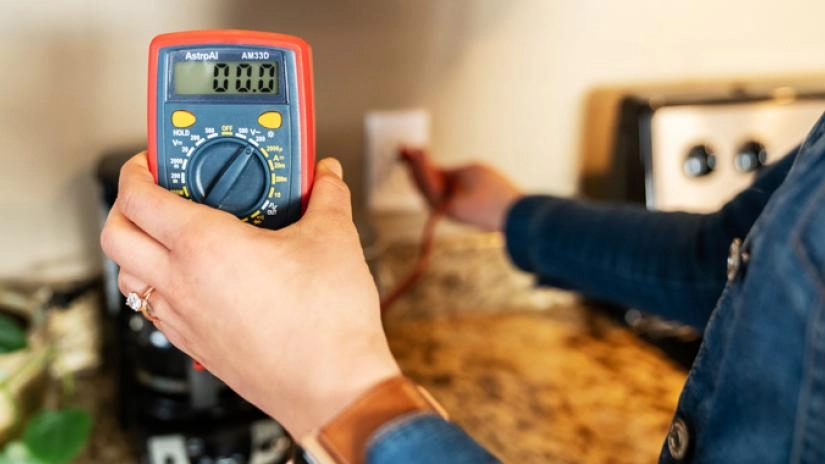
Flickering lights, dead electrical outlets, and circuit breakers that trip without explanation are symptoms of a bigger problem. Flickering lights often point to a loose neutral connection, an overloaded circuit, or a failing breaker. Dead outlets are usually caused by a tripped GFCI, a tripped breaker, or a loose backstab connection at the outlet. Breakers that trip repeatedly signal a short circuit, a ground fault, or a circuit carrying more load than it was designed for. We diagnose electrical problems using calibrated testing equipment, not guesswork. Repairs include outlet and switch replacements, breaker replacements, Arc-Fault Circuit Interrupter (AFCI) and GFCI upgrades, wiring corrections, and repairs to faulty electrical connections.
-
Beaverton homes have specific wiring needs that go beyond standard circuits. Our electricians handle the full range of specialty electrical work that requires dedicated circuits, correct wire sizing, and proper GFCI or AFCI protection.
- Hot tub and spa wiring: Hot tubs require a 240-volt, 50-amp dedicated circuit with a 4-wire connection, a disconnect within sight of the tub, and GFCI protection at the panel. The Oregon Building Code and Article 680 of the NEC govern hot tub installations. Improper wiring poses a serious risk of electrical shock. Especially when water is involved, you want to be confident it was done correctly. We pull the required permit and schedule the inspection before the tub goes live.
- Garage and shop wiring: A detached garage or workshop needs to have its own subpanel, 240-volt outlets for tools and equipment, proper lighting circuits, and a dedicated circuit for compressors or welders. We size the subpanel based on your planned equipment load and run the feeder from the main panel with the correct wire gauge and conduit protection.
- Bathroom exhaust fan installation: Bathroom exhaust fans require a switched circuit, proper duct routing to the exterior, and, in some cases, a GFCI-protected outlet on the same circuit. We install new fans, replace existing units, and upgrade timer switches for better moisture control.
- Underground electrical services: Running power to a detached garage, outbuilding, outdoor kitchen, or exterior structure requires underground electrical service. We trench, install conduit, pull the correct wire gauge for the load, and backfill to code. Underground runs require a permit and an inspection to verify that the burial depth and conduit type meet Oregon Building Code requirements.
- And more
-
Flickering lights are among the most common electrical issues reported by Beaverton homeowners, and the cause determines the urgency of the fix. A single flickering bulb usually means a loose bulb, a failing lamp, or an incompatible LED dimmer combination. Lights flickering throughout one room point to a loose connection at the outlet, switch, or fixture on that circuit. But lights flickering across multiple rooms when a large appliance starts, such as an air conditioner or refrigerator, points to a voltage drop due to an undersized circuit or a panel with insufficient electrical capacity.
Whole-home flickering or flickering with a burning smell is a serious warning sign of a loose main connection, a failing breaker, or a deteriorating service entrance. The National Electrical Code requires all electrical connections to be mechanically secure and electrically continuous. Loose connections create arcing, which generates heat and creates fire risk inside your walls. If you notice any of the above warning signs, don’t delay. Schedule an electrical inspection to identify the source.
-
A dead electrical outlet in your Beaverton home has four common causes. First, check whether a GFCI outlet on the same circuit has tripped. GFCI outlets protect downstream outlets, so a tripped GFCI in the bathroom or garage cuts power to outlets in other rooms. Press the RESET button on any GFCI outlet in the area. Second, check your breaker panel for a tripped breaker. A tripped breaker sits between ON and OFF and needs to be pushed fully to OFF before resetting to ON.
Third, if the outlet was wired using the backstab method, the connection works loose over time. Backstabbed connections use spring-loaded clips instead of screw terminals and are known to fail in older homes. Fourth, the outlet itself fails after years of use. If resetting the GFCI and breaker does not restore power, call an electrician to test the circuit, locate the fault, and replace the outlet or repair the wiring. Do not use an outlet that sparks, feels warm, or shows discoloration around the face plate.
-
A GFCI outlet detects an imbalance of as little as 5 milliamps between the hot and neutral conductors and shuts off power in under 1/40th of a second. This speed is fast enough to prevent fatal electrical shocks. Oregon Electrical Specialty Code, based on the 2020 NEC Section 210.8, requires GFCI protection on all outlets in kitchens, bathrooms, garages, outdoor locations, crawl spaces, unfinished basements, laundry areas, and within 6 feet of any sink.
GFCI outlets have TEST and RESET buttons on the face plate. If your bathroom or kitchen outlets lack these buttons, they are not code-compliant. GFCI protection is especially important in Pacific Northwest homes where wet conditions are common year-round. Replacing a standard outlet with a GFCI outlet takes about 30 minutes. One correctly wired GFCI outlet protects all downstream outlets on the same circuit, so a single installation can bring multiple outlets into compliance.
-
GFCI (Ground Fault Circuit Interrupter) protection works by detecting current leaking outside the intended circuit path, such as when electricity travels through water or a person, and shutting off power in milliseconds to prevent electrical shocks. Oregon Electrical Specialty Code requires GFCI protection in kitchens, bathrooms, garages, outdoor locations, crawl spaces, unfinished basements, and laundry areas. AFCI (Arc Fault Circuit Interrupter) protection detects dangerous arcing caused by damaged, deteriorating, or loose wiring. Arcing does not always trip a standard breaker, but it generates enough heat to ignite surrounding materials.
The 2020 NEC, adopted in Oregon, requires AFCI protection on all 120-volt, 15- and 20-amp branch circuits in living areas, bedrooms, hallways, closets, and dining rooms. Homes built before 2000 rarely have AFCI breakers. Adding AFCI protection to older circuits is one of the most effective electrical safety upgrades available for Beaverton homes with aging wiring.
-
Electrical outlets in Beaverton homes show specific warning signs when they are unsafe. Look for discoloration or scorch marks around the outlet face, outlets that feel warm or hot to the touch, outlets that spark when you plug in a device, outlets where plugs fit loosely and fall out on their own, and outlets that make crackling or buzzing sounds. Any of these signs can indicate a wiring problem, a failed outlet, or an overloaded circuit.
Check whether your kitchen, bathroom, and garage outlets have GFCI protection. Outlets without TEST and RESET buttons in these locations are not code-compliant and do not protect against electrical shocks. The NEC requires tamper-resistant outlets with internal shutters that block foreign objects in all new and renovated dwelling units. If your home has older two-prong ungrounded outlets, those are a safety and functionality concern. A licensed electrician replaces them with properly grounded three-prong outlets or GFCI-protected outlets where grounding is not available.
-
Most homes built before 2000 in the Beaverton area have 100-amp electrical panels. Modern electrical demand from central air conditioning, EV charging stations, home offices, and high-efficiency heat pumps regularly exceeds what a 100-amp service provides. Signs you need an electrical panel upgrade include:
- Breakers that trip frequently
- Dimming lights when large appliances start
- No open slots for new circuits
- Buzzing sounds from breaker panel
- Panel feels warm to the touch
If you are adding an EV charger or a backup generator system, a load calculation per NEC Article 220 determines whether your existing panel has the electrical capacity. A 200-amp service upgrade requires an electrical permit from the City of Beaverton, coordination with Portland General Electric, and inspections at multiple stages. Most panel replacement projects are completed in one day. According to the Oregon CCB, electrical panel work is among the most frequently permitted residential electrical jobs in the state.
-
Federal Pacific Electric (FPE) and Zinsco panels were installed in thousands of Beaverton homes between the 1960s and 1980s. Both brands have documented failure rates where breakers do not trip under fault conditions, which means a short circuit or overload that should disconnect power sometimes does not. This creates a serious fire risk. Zinsco breakers are also known to fuse to the bus bar, making them impossible to switch off manually.
Most home inspectors flag these panels, and many insurance companies refuse coverage or charge higher premiums for homes with FPE or Zinsco breaker panels. Panels older than 25 to 30 years often lack AFCI breakers required by current electrical codes. Schedule an electrical inspection if your home was built before 1990, and the panel has never been evaluated. Other warning signs of an unsafe panel include:
- Rust or corrosion inside the enclosure
- Burning smell near the panel
- Breakers that will not reset or feel physically loose
- Scorch marks on breakers or bus bars
- Panel that hums or buzzes under load
-
Oregon requires all electrical contractors to hold a license from the Oregon Construction Contractors Board (CCB). Any electrical work exceeding $400 in labor or materials must be performed by a CCB-licensed contractor. You verify licensing status through the Oregon CCB License Lookup Tool. There, you can enter the contractor's business name or license number to see their license status, bond information, insurance coverage, and any complaints or violations on record.
A legitimate contractor will provide their CCB number and welcome verification. Always ask for this information before signing a contract or paying a deposit. Unlicensed electrical work is illegal in Oregon. It voids most homeowner insurance policies and creates liability during home sales. At Mr. Electric of Beaverton - Tigard, our CCB license information is available on request and verifiable through the state database.
Our residential electricians are licensed, background-checked, and trained to comply with the National Electrical Code (NEC) and the Oregon Electrical Specialty Code. We show up on time, in uniform, explain what we find, and give you upfront pricing before we start any work. Every job is backed by the Neighborly Done Right Promise®. If the work is not done right, we make it right.
-
Most older homes in the Beaverton area carry 100-amp electrical panels. Back before each family needed their own computer, this was sufficient. But modern electrical demand from HVAC systems, kitchen appliances, home offices, and EV chargers regularly exceeds that electrical capacity. When your panel runs out of space, or your load calculation shows demand above safe limits, an electrical panel replacement or service upgrade to 200 amps is the right solution.
The process involves obtaining an electrical permit from the City of Beaverton or local building authority, disconnecting your existing breaker panel, and installing the new panel with proper grounding and bonding. We'll need to upgrade the service entrance if needed, and schedule inspections with the local building department. We coordinate directly with Portland General Electric (PGE) for all utility-side work, including service-drop upgrades and meter-base replacements.
What to expect during an electrical panel upgrade:
- Load calculation to confirm the correct service size for your home
- Permit application submitted to the City of Beaverton Building Division
- Power is disconnected at the meter for the duration of the panel work
- Old panel removed and new panel installed with labeled circuits
- Grounding and bonding verified to the current code
- Rough-in and final inspections scheduled and completed
- Power restored and all circuits tested before we leave
-
Electrical panel upgrade costs in Beaverton will vary based on the scope of work. For instance, a straightforward 100-amp to 200-amp panel replacement at the existing location costs less than a full-service upgrade requiring a new meter base, utility coordination with Portland General Electric, and service-entrance rewiring. Additional factors include whether your panel location meets current code clearance requirements, the condition of your existing grounding system, and whether PGE needs to upgrade the transformer or service drop on the utility side.
At Mr. Electric of Beaverton - Tigard, we provide upfront, flat-rate pricing after evaluating your existing electrical system. Your quote includes the electrical permit, all materials and equipment, labor, and inspection coordination. Financing options are available for panel upgrades and other major electrical jobs. We do not charge by the hour, so you know the full cost before we start.
-
Most electric cars will come with a Level 1 charger, but for many EV owners, this device isn’t sufficient for their needs. Level 1 charging stations use a standard 120-volt outlet and deliver roughly 4 to 5 miles of range per hour. This means it can take over 40 hours to charge your vehicle. Level 2 EV charging stations, in comparison, deliver 20 to 30 miles of range per hour, allowing you to fully recharge your vehicle overnight. The faster charging makes them a more practical choice for daily home charging.
Installing a Level 2 electric vehicle charging station in Beaverton requires a dedicated 240-volt circuit rated at 40 or 50 amps, depending on your vehicle's onboard charger capacity. Your electrician runs a new circuit from the breaker panel to the charging location and installs the correct wire gauge, typically 6 AWG copper for a 50-amp circuit. They'll mount the EVSE unit and test the system before use. The City of Beaverton and surrounding municipalities require an electrical permit for this job, and an inspection must be completed before the charger goes live.
If your existing panel does not have the electrical capacity or open breaker slots, a load calculation determines whether you need an electrical panel upgrade, a load management device, or a subpanel. Level 2 EV chargers from ChargePoint, JuiceBox, Tesla Wall Connector, and other manufacturers all follow the same basic installation requirements. Most installations take four to six hours once permits are issued and materials are on hand.
-
A 200-amp service upgrade becomes necessary when your total electrical load exceeds the safe capacity of your existing panel. If you have a 100-amp panel and are adding an EV charging station (40 to 50 amps), a heat pump (30 to 60 amps), and modern kitchen appliances, a load calculation per NEC Article 220 shows whether the panel can safely handle the combined demand.
The NEC sets the minimum service size for dwelling units at 100 amps, but most electrical professionals recommend 200 amps for any home with modern electrical demands. Oregon homes adopting heat pumps as their primary heating system almost always require a service upgrade. A licensed electrician performs the load calculation based on your home's square footage, existing heating and cooling equipment, and planned additions. Visible signs that you need more electrical capacity include:
- Frequent breaker trips
- Dimming lights when the air conditioner or furnace starts
- A panel with no open slots for new circuits
-
Certain appliances and equipment require their own dedicated 240-volt circuits to operate safely. Water heaters, ranges, dryers, EV chargers, hot tubs, and sump pumps draw enough current to trip a shared circuit or create a voltage drop that shortens appliance life. We install dedicated circuits with the correct wire gauge for the load, typically 6 American Wire Gauge (AWG) or 8 AWG copper for 240-volt, 30-amp to 50-amp loads, and the appropriate breaker protection. This prevents nuisance trips and protects your electrical equipment.
-
Hot tubs and spas require a dedicated 240-volt, 50-amp circuit with a 4-wire connection (two hots, one neutral, one ground), a GFCI breaker at the panel, and a disconnect switch located between 5 and 50 feet from the tub and within line of sight. NEC Article 680 and Oregon Building Code govern all hot tub wiring to prevent electrical shocks in and around water. The disconnect must be accessible but not reachable from inside the tub. All wiring within 5 feet of the water must be in conduit.
The City of Beaverton requires an electrical permit, and an inspection must be completed before the tub is filled. Improperly wired hot tubs create serious electrical shock hazards. Voltage in and around water does not need to be high to be fatal. Our electricians follow the requirements of Article 680 precisely and verify the GFCI function before sign-off.
-
Underground electrical service refers to electrical circuits installed below grade in conduit or direct-burial cable to reach locations that overhead wiring cannot serve safely or practically. Common applications in Beaverton include powering a detached garage, a backyard workshop, an outdoor kitchen, a pool or hot tub equipment pad, landscape lighting systems, and exterior outbuildings. Underground electrical work requires trenching to the correct burial depth, which varies by conduit type. Schedule 80 PVC conduit requires a minimum burial depth of 6 inches, while direct-burial cable without conduit requires 24 inches under most circumstances per NEC Table 300.5.
The Oregon Building Code requires a permit and inspection for all underground electrical service runs. We size the feeder conductors based on the load at the destination, account for voltage drop over the run length, and install proper weatherproof terminations at both ends. Underground service is more reliable than overhead wiring in areas with tree cover and eliminates the tripping hazard posed by surface-mounted cables.
-
Adding electrical service to a detached garage or workshop requires a subpanel fed from your main panel, sized to handle the load you plan to run. A basic garage with lighting and a few outlets needs a 60-amp subpanel at minimum. A shop with 240-volt tools, a compressor, and a welder requires a 100-amp subpanel. The feeder from the main panel to the subpanel runs overhead or underground, with underground being the preferred method for permanent installations. The subpanel must be a separate enclosure from the main panel, with its own grounding electrode system at the detached structure per NEC Article 250.
Inside the garage, we install the circuits you need: 20-amp general-purpose outlets, 240-volt outlets for tools, dedicated circuits for compressors, and lighting circuits. All garage wiring projects will require a City of Beaverton electrical permit. Garage and shop wiring is one of the most common electrical jobs we complete for homeowners in West Beaverton and surrounding neighborhoods.
-
Outdoor lighting options for Beaverton homes range from low-voltage landscape lighting systems to full line-voltage installations for security, entertainment, and architectural illumination. Low-voltage systems (12-volt) use a transformer plugged into or hardwired to a standard outlet and run thin cable to path lights, spotlights, and garden fixtures. These systems are energy-efficient and safe to handle, but they require proper transformer sizing to avoid voltage drop across long runs. Line-voltage systems (120-volt) power security floodlights, driveway lights, porch fixtures, and outdoor kitchen lighting. These require weatherproof conduit, GFCI-protected outlets, and properly rated fixtures for wet or damp locations.
We also install outdoor lighting controls, including motion sensors, photocell switches that turn lights on at dusk and off at dawn, timer controls, and smart lighting controls that integrate with your home automation system. Outdoor kitchen and patio lighting installations include dedicated circuits for appliances, task lighting over cooking areas, and ambient lighting for seating areas. All outdoor electrical work requires weatherproof materials rated for the exposure and a permit for new circuit installations.
-
We install and replace every type of interior lighting fixture, from recessed can lights and LED retrofits to pendant fixtures, chandeliers, under-cabinet lighting, and accent lighting. Lighting options range from basic fixture replacement to full lighting design with layered controls. We install dimmer switches compatible with LED fixtures, occupancy sensors, and smart lighting controls that integrate with home automation systems. Choosing the right lighting fixtures matters beyond aesthetics. A fixture rated for damp locations in a bathroom, a fixture with the correct trim and housing for insulated ceilings, and a fixture wired with the proper gauge all affect safety and performance. We select lighting accessories and materials rated for the application and explain your options before we start.
-
LED lighting reduces energy costs by up to 75% compared to incandescent bulbs and lasts 25 times longer, according to the U.S. Department of Energy. For a typical Beaverton household, this means lower monthly electric bills, fewer replacement bulbs, and less heat generated inside the home during summer months. The Energy Trust of Oregon offers rebates for qualifying LED fixture installations, reducing your upfront cost on eligible upgrades. LED lighting options include warm white (2700K) for living spaces, neutral white (3500K) for kitchens and bathrooms, and daylight (5000K) for task areas and garages.
LED fixtures work with dimmable controls when you select a compatible dimmer and a dimmable-rated bulb or fixture. Recessed LED retrofit kits fit into existing housings without replacing the entire can, making LED upgrades practical in homes with extensive recessed lighting. Smart lighting controls add occupancy sensing and scheduling to further reduce energy use.
-
A whole-home standby generator keeps your power supply running during outages without manual intervention. Backup generator systems require a transfer switch that automatically disconnects your home from the utility grid and switches to generator power within seconds of an outage. We size generators based on your actual electrical load, install the transfer switch with the appropriate permit, connect the natural gas or propane supply, and coordinate inspections. Whole-home generators range from 12 kW to 24 kW for most residential applications. Larger homes with electric heat, multiple HVAC zones, or well pumps require 20 kW or more. Portable generator hookups require a proper inlet box and interlock kit to prevent backfeeding power into PGE lines, which creates lethal hazards for utility workers.
-
Generator sizing depends on which circuits you want to power during an outage. A load calculation identifies the wattage of essential loads: refrigerator (150 to 400 watts), furnace blower (500 to 1,000 watts), well pump or sump pump (750 to 1,500 watts), lighting circuits (varies), and select outlets. Each motor-driven load also has a startup surge factor, typically two to three times the running wattage, which must be factored into sizing. Whole-home standby generators for most Beaverton homes range from 12 kW to 20 kW. Homes with electric heat, multiple HVAC zones, or large appliances require at least 22 kW.
Backup generator systems require an automatic transfer switch, a connection to a natural gas or propane supply, a permit from the City of Beaverton, and inspections at the rough-in and final stages. Portable generator hookups require an inlet box and an interlock kit at the main panel to prevent backfeeding into PGE lines. Backfeeding creates lethal hazards for utility workers restoring power in your neighborhood.
-
No. Federal Pacific Electric (FPE) and Zinsco panels were installed in Beaverton homes during the 1960s, 1970s, and 1980s, particularly in neighborhoods such as Cedar Hills, Raleigh Hills, and West Beaverton. Independent testing and consumer safety investigations found that FPE Stab-Lok breakers fail to trip under fault conditions at rates significantly higher than modern breakers. A breaker that does not trip during a short circuit allows current to continue flowing through a fault, generating heat that ignites surrounding materials.
Zinsco breakers have a documented failure mode where the breaker element fuses to the aluminum bus bar, making it impossible to manually disconnect the circuit. Most home inspectors flag both panel types during real estate transactions, and many insurance carriers refuse to write policies or charge higher premiums for homes with these panels. Electrical panel replacement is the only reliable solution. The work takes one day and eliminates a known fire hazard from your home.
-
Pacific Northwest winter storms bring ice, wind, and power outages that stress both the utility grid and your home's electrical system. Before storm season, press the TEST button on every GFCI outlet in your home to confirm that it trips and resets properly. Inspect all outdoor outlets and verify that weatherproof covers close fully and show no cracks. If you have a portable generator, test the inlet connection and verify the interlock kit at the panel prevents backfeeding. Check that your electrical panel is accessible and not blocked by storage.
Surge events are common when utility power is restored after an outage. Unplug sensitive electronics and appliances before power comes back, or install whole-home surge protection at your panel. Portland General Electric reports outages at portlandgeneral.com. For downed lines or immediate electrical hazards, call PGE's emergency line. A whole-home standby generator with an automatic transfer switch eliminates the need for manual generator management entirely and keeps your power supply stable through extended outages.
-
Whole-home surge protection installs at your electrical panel and protects every circuit in your home from voltage spikes caused by lightning, utility switching, and grid fluctuations. Portland General Electric's above-ground distribution lines in Beaverton and surrounding Washington County communities are vulnerable to storm-related surge events. A panel-mounted surge protector rated for Type 1 or Type 2 service per UL 1449 diverts excess voltage to ground before it reaches your wiring or connected equipment.
Point-of-use surge strips can protect individual devices, but hardwired appliances like HVAC systems, water heaters, and refrigerators are left unprotected. The cost of replacing a furnace control board, a refrigerator compressor, or a home-automation hub far exceeds that of a panel-mounted surge protector. We recommend pairing surge protection with any panel upgrade for complete coverage of your electrical system. Installation takes about one hour.
-
The City of Beaverton Building Division requires inspections for all permitted electrical work. Major projects, including electrical panel replacement, service upgrades, and new circuit installations, typically require three inspections: rough-in (before walls or ceilings are closed), service (at the meter and panel connection), and final (after all devices are installed and circuits are energized). Smaller projects, such as adding a single outlet or circuit, require at least a final inspection.
Your Beaverton electrician schedules inspections through the city's online permit portal or by phone. Inspectors typically require 24 to 48 hours' advance notice. Inspections verify code compliance, correct wire sizing, secure electrical connections, and ensure proper device installation. Work cannot proceed past the rough-in stage until that inspection passes. Never close walls until electrical work is approved by inspection. Doing so requires reopening the wall for the inspector, adding significant cost and time to your project.
-
Handymen without electrical licenses cannot legally perform circuit work, panel repairs, or installations. Oregon law requires anyone performing any electrical work exceeding $400 in labor or materials to have a CCB license. Licensed electricians must complete Oregon apprenticeship programs, pass state licensing examinations, and carry liability insurance. They pull permits for work that requires inspection. When a licensed electrician performs your work, the City of Beaverton inspects and approves the installation. This creates a record that protects your home's value and insurability.
Unlicensed electrical work creates liability during home sales and often requires expensive rework to pass inspection. It voids most homeowner insurance policies in the event of a fire or injury results. Licensed electricians also carry workers' compensation insurance, which protects you from liability if a worker is injured on your property. Handymen typically do not carry the licensing or insurance required for electrical work in Oregon.
-
A burning smell from an outlet or electrical panel is a sign of overheating, which occurs when connections loosen, wires corrode, or a circuit carries more current than it is rated for. Turn off power to the affected circuit at the breaker if you know which one controls it. If the smell comes from the panel itself, shut off the main breaker if it is safe to approach. Do not touch the panel if it feels hot or if you see smoke. Evacuate and call 911 if you see flames or heavy smoke.
For burning smells without visible fire, call an emergency electrician immediately. Do not use the affected outlet or circuit until an electrician has inspected and repaired the problem. Loose connections at outlets, backstabbed wiring, and overloaded circuits are common causes in older Beaverton homes. Overheating damages wire insulation and creates fire risk inside walls, where you cannot see or smell the damage until it is severe.
-
If your home loses power, check first whether your neighbors are affected. If only your home is dark, check your main breaker and individual circuit breakers for any that have tripped. If all breakers are in the ON position and you still have no power, the problem is at the meter connection or between the meter and your panel, which requires a licensed electrician. If multiple homes are without power, the outage is on the utility side.
Report outages to Portland General Electric at portlandgeneral.com, where PGE provides an outage map with affected areas and estimated restoration times. For downed power lines or immediate electrical hazards, call PGE's emergency line. Do not approach downed lines or touch anything in contact with them. If your power is out but your neighbors have power, call Mr. Electric of Beaverton - Tigard to inspect your service entrance, meter base, and panel.
-
A sump pump circuit is a dedicated 20-amp, 120-volt circuit with a GFCI-protected outlet installed in the crawl space or basement where the sump pump operates. Rainfall and seasonal groundwater levels in the Pacific Northwest make sump pumps a practical necessity in many Beaverton homes, particularly in low-lying areas and neighborhoods with high water tables. A dedicated circuit prevents the pump from competing with other loads during heavy rain events when it runs frequently.
The NEC requires GFCI protection for outlets in crawl spaces and unfinished basements. If your sump pump shares a circuit with other devices, a tripped breaker during a storm disables the pump at the worst possible time. We install dedicated sump pump circuits with weatherproof outlets, proper conduit protection in the crawl space, and a GFCI breaker at the panel. This is a straightforward electrical job that provides significant protection for your home's foundation and flooring.
-
Ceiling fan installation requires more than swapping a light fixture. A standard electrical box is rated for up to 35 pounds and is not designed to handle the dynamic load of a spinning fan. We install a fan-rated electrical box, which supports up to 70 pounds and is designed to absorb the torque and movement of the fan motor. Rooms with existing overhead lighting but no fan typically need a new switch leg run from the switch box to the ceiling box to allow separate control of the fan and light.
Rooms without any overhead wiring require a new circuit from the panel. We connect wall controls or remote receiver modules, set the blade pitch and balance, and test for wobble. When properly installed, ceiling fans improve air circulation, reduce heating and cooling costs, and last significantly longer than one installed on an undersized box. Most ceiling fan installations take two to four hours, depending on whether new wiring is required.
-
Several electrical upgrades reduce energy costs for Beaverton homeowners. LED lighting upgrades reduce lighting energy use by up to 75%, according to the U.S. Department of Energy. Smart lighting controls, including occupancy sensors and programmable dimmers, can reduce energy use by eliminating lights left on in unoccupied rooms. Whole-home surge protection protects electronics from power surges, extending equipment life and avoiding replacement costs. Adding dedicated circuits for high-draw appliances prevents overloading shared circuits, reducing heat buildup in wiring and improving appliance efficiency.
For homes with electric heat, a properly sized heat pump system on a correctly wired dedicated circuit uses 30 to 50 percent less energy than resistance electric heat. The Energy Trust of Oregon offers cash rebates for qualifying LED fixtures, heat pump installations, and smart thermostats. Ask us about current rebate programs when scheduling your electrical work, as incentive amounts and eligibility requirements change periodically.
-
Prioritize safety first during any electrical emergency. If you see flames or smoke, evacuate immediately and call 911. For sparking outlets, burning smells, or a panel that feels hot, shut off the main breaker if it is safe to do so, then call an emergency electrician. Do not use water on an electrical fire. Use a Class C or ABC fire extinguisher rated for electrical fires. For power outages, check your breakers, confirm whether neighbors are affected, and contact Portland General Electric for utility-side outages.
Know the location of your main electrical shutoff before an emergency occurs. It is typically a large double-pole breaker at the top of your main panel or a separate disconnect outside near the meter. If you experience an electrical shock from an outlet or appliance, stop using the device immediately, turn off the circuit at the breaker, and call an electrician. Repeated electrical shocks from the same outlet or appliance indicate a wiring fault or missing ground that requires professional repair.
-
Oregon requires licensed electrical contractors to carry general liability insurance and post a surety bond with the Construction Contractors Board. Liability insurance covers property damage or injury caused by the electrician's work. The bond provides financial recourse if the contractor fails to complete work, violates Oregon construction law, or performs defective electrical work. Workers' compensation insurance protects you from liability if a worker is injured on your property during the job. Verify all three, insurance, bond, and workers' compensation, through the Oregon CCB License Lookup Tool before signing a contract. At Mr. Electric of Beaverton - Tigard, we carry all required insurance and maintain our CCB bond in full compliance with state requirements. We provide documentation on request. Contractors who hesitate to provide proof of insurance are a red flag.
-
Schedule service online or call our office directly. We provide residential electrical services throughout Beaverton, Tigard, Cedar Hills, Raleigh Hills, West Beaverton, Five Oaks, Progress Ridge, Sexton Mountain, and surrounding communities in Washington County. Our team is available 24/7 for emergency electrical service. For planned work, including panel upgrades, EV charging station installation, ceiling fan installation, generator installation, or lighting upgrades, schedule a time that works for you. We provide upfront, flat-rate pricing before starting any work. Every job is backed by the Neighborly Done Right Promise®. Our electricians are licensed, insured, and background-checked. Contact us today to schedule your complimentary electrical safety inspection or to request service for any electrical repair, installation, or upgrade.
Our Blog
View All Blog PostsDangers of an Overloaded Circuit
Overloading an electrical circuit can cause some serious problems. While that may seem obvious, chances are that you’ve caused a circuit overload at least once in your life.
Read More
Is Your Electrical Outlet Not Working?
When the simple task of plugging your cell phone charger or hair dryer into the wall leaves you scratching your head and wondering why
Read MoreExpert Tips
View All Expert Tips

Top 8 Electrical Safety Essentials Your Home Needs
The cliche of "always be prepared" reigns true in most areas of life, but especially in homeownership. You never know when the next electrical storm will hit, when you'll suddenly notice mold and mildew in your basement, or when someone will attempt to break into your home. Even if you feel as though these things could never happen to you, it's better to be safe than sorry.
Read MoreSmart Devices: How Safe Are They?
The market for smart home products is worth an estimated $40 billion, with 65% of Americans already owning at least one device or system and a majority of those planning to purchase more in the future. People embrace this trend to increase security, improve energy efficiency, or gain more control over their home’s day-to-day functions.
Read More

Join Our Team
“We have the power to make things better.” That’s our mantra, not only for our customers' electrical issues, but also you, a future team member!

Your Source for Local Home Service Experts
Neighborly brands repair, maintain, and enhance properties — to make life easier and more enjoyable for homeowners. Our consistency and quality work are the basis for everything we do, and are what make us a leader in the home services space, as we constantly strive to "be so remarkable, we become a beloved household name."
Book Online
A representative from our office will get back to you shortly to schedule service.
Due to a system error, we did not get your request. Please call us for immediate assistance.
We don't currently provide service to this ZIP/postal code.
Yes! You can email me service reminders and other messages.
Mr. Electric, a Neighbourly Company on its own behalf and on behalf of and its affiliates and franchisees requests your consent to send promotional and other electronic messages to you concerning products and services they believe are of interest to you. By checking this box, you agree to receive these messages. You can unsubscribe at any time.
Text opt-in does not apply for Canadian residents.