The right generator size for a Tampa Bay home is based on electrical load which circuits must run at the same time not square footage. Most Tampa homes land in one of three tiers: essential loads only (10–14 kW, no central AC), most-of-house backup including one AC system (18–22 kW, where most homeowners land), or whole-home backup (22–28+ kW). Because Tampa runs air conditioning nearly year-round and many homes have pool pumps and electric water heaters, loads run heavier than national averages. The exact size comes from an on-site load calculation under NEC Article 220.
Learn moreMr. Electric of Tampa Bay Blog
Shared Resources for Your Home Needs
National Electrical Safety Month: Your Guide to Checking Electrical Hazards in Your Home
May is National Electrical Safety Month, making it the ideal time to check the systems that homeowners rely on every day. Electrical hazards often develop quietly through overloaded circuits, aging panels, or outdated outlets until they become costly or dangerous problems.
Showing 14 Results for None
The right backup power system for a Tampa Bay home is determined by neighborhood, not brand: your utility (TECO in Hillsborough, Duke Energy in Pinellas), whether natural gas reaches your street, your lot size and setbacks, HOA rules, and flood exposure decide whether a natural gas standby, a propane standby, or an Anker Solix E10 battery system makes sense. A complete, permitted 22 kW natural gas installation typically runs $12,000–$15,000 in 2026; propane $12,000–$17,000; and a fully configured E10 battery system $10,000–$15,000. All installations are governed by the 2020 NEC under Florida’s 8th Edition Building Code and require a permit.
Learn moreThe best holiday lighting for a Tampa Bay home matches the architecture: warm-white C9 bulbs tracing a Craftsman bungalow’s roofline and porch in Hyde Park, restrained up lighting on a Palma Ceia Mediterranean estate’s arches, long clean lines on a Carrollwood mid-century ranch, and water-facing displays with salt-rated fittings on Davis Islands. Getting it right also means getting the electrical right GFCI-protected outdoor outlets, circuits that will not trip on Christmas Eve, and weather-rated connections built for Florida rain. Mr. Electric of Tampa Bay does both: a licensed electrical contractor (EC13015799) and a CLIPA-certified holiday lighting installer that designs, installs with gutter-safe clips, maintains, takes down after the holidays, and stores your commercial-grade lights so nothing ends up in your garage.
Design consultations book up by mid-October. Call (813) 474-9789 or book online to reserve your holiday lighting design, install, and takedown across Hillsborough and Pinellas counties.
Most Tampa homes do not automatically need a panel upgrade before installing a Level 2 EV charger. Whether you need one depends on four things: your current service size, how much capacity your panel is already using, how much breaker space is available, and the amperage of the charger you want. A licensed electrician performs a load calculation under 2020 NEC Article 220 and reviews all four factors before recommending anything.
Learn moreA small blue spark when you plug in an appliance can be normal; it often happens when electricity first begins flowing, especially with higher-demand devices such as vacuum cleaners, hair dryers, window AC units, or power tools. But repeated, large, bright, or crackling sparks are not normal. If an outlet sparks along with a burning smell, heat, buzzing, discoloration, a loose plug, flickering lights, or a tripped breaker, stop using it and have a licensed electrician inspect the outlet and circuit.
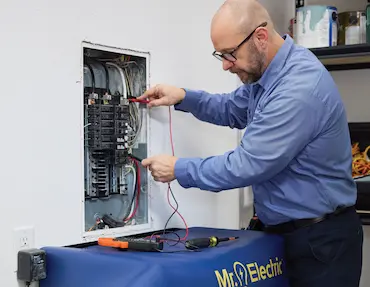
Learn moreYour electrical panel is the single most critical component in your home’s electrical system. Every circuit, every outlet, every appliance, and every device in the house draws power through the panel.
Learn more