Licensed Electrician in St. Louis | Locally Owned, Nationally Backed
If you live in St. Louis or surrounding communities like Ballwin, Fenton, Kirkwood, or Glendale, you need a licensed electrician who understands the unique challenges of our older housing stock and knows how to bring outdated systems up to modern code. Mr. Electric® of St. Louis is locally owned and operated, backed by a national brand with over 30 years of electrical expertise. We handle everything from electrical panel upgrades and knob-and-tube wiring replacement to EV charger installations.

Book Online

A representative from our office will get back to you shortly to schedule service.
Due to a system error, we did not get your request. Please call us for immediate assistance.
We don't currently provide service to this ZIP/Postal code.
Yes! You can email me service reminders and other messages.
Mr. Electric, a Neighbourly Company on its own behalf and on behalf of and its affiliates and franchisees requests your consent to send promotional and other electronic messages to you concerning products and services they believe are of interest to you. By checking this box, you agree to receive these messages. You can unsubscribe at any time.
Text opt-in does not apply for Canadian residents.
Customer Reviews
View All Testimonials
The Neighborly Done Right Promise® delivered by Mr. Electric®, a proud Neighborly company.
Easy Online BookingResidential and Commercial Electrical Services in St. Louis
We see it every day in St. Louis: 60-amp or 100-amp electrical panels struggling to handle air conditioning, home offices, kitchen appliances, and electric vehicle charging stations. Many homes in this city were built before 1950, and have outdated electrical wiring, undersized panels, and electrical systems never designed for modern demands. Add in issues like ungrounded outlets, aging circuit breakers, and knob-and-tube wiring still hiding in walls, and you have a system working far harder than it should. Our licensed electricians specialize in bringing older homes up to code while delivering reliable electrical solutions for every home or business need. From a 200-amp electrical panel upgrade to whole-house surge protection and Level 2 EV charger installation, we deliver safe, code-compliant work backed by the Neighborly Done Right Promise®.
-
Installations
Learn more InstallationsOur solutions can transform your space and conserve energy; ask us how we can help you!
-
Lighting
Learn more LightingYour home or office will look dazzling throughout the holidays with our professional installation.
-
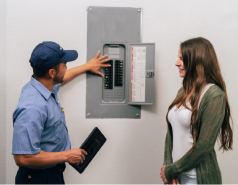
Electrical Safety
Learn more Electrical SafetyParents rely on our tamper-proof shutter-system outlets to keep kids safe from their own curiosity.
-
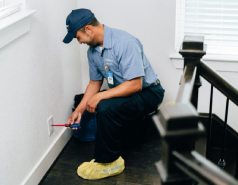
Repairs
Learn more RepairsNeed to power up? Trust our professional electricians in St. Louis, MO, for fast, reliable repairs.
Let us know how we can help you today.
Why St. Louis Chooses Mr. Electric
-
We are a locally owned and operated franchise, which means you get personal service from people who live and work in your community. At the same time, you benefit from the training, systems, and reputation of Mr. Electric, a brand established in 1994 and part of Neighborly, the world's largest home services company. Our electricians are licensed, insured, and background-checked. Every job follows National Electrical Code standards and St. Louis Building Division requirements. We measure every job by customer satisfaction, which is why our reviews reflect the consistent, professional electrical service the St. Louis area counts on.
-
You get a flat-rate quote for the job before we start. We perform a thorough diagnostic to uncover the root cause of your issue. We explain what needs to be done and answer your questions. You approve the price and work before we touch a single wire. If permits are required, we pull them and coordinate inspections. If additional work is needed once we open a panel or inspect your electrical wiring, we will explain your options and provide a clear price before proceeding.
-
Every job is backed by the Neighborly Done Right Promise®. If we do not complete the work to your satisfaction, we will make it right. Our electricians show up in uniform, wear shoe covers in your home, protect floors and work areas, and clean up when the job is finished. We treat your home the way we treat our own.
248 Grand Avenue Kirkwood, MO 63122, United States
Areas We Serve
Frequently Asked Questions About Electrical Services in St. Louis
-
A circuit breaker trips when it detects an overload, short circuit, or ground fault. The most common cause is circuit overload, which occurs when too many devices share a single circuit. This is especially common in older St. Louis homes where 15-amp circuits were standard and far fewer outlets were installed. Here is how we diagnose it: the first thing we check is whether the breaker trips under a specific load or immediately on reset. If it trips once and resets successfully, an overload was likely the cause. If it trips immediately after resetting, or trips repeatedly, you have a more serious problem. A short circuit occurs when the hot and neutral wires touch, creating a dangerous path for current.
A ground fault happens when electricity finds an unintended path to ground. Loose connections inside outlets, switches, or the panel itself create resistance, generate heat, and trip circuit breakers. Old or failing breakers, particularly in Federal Pacific or Zinsco panels common in St. Louis homes from the 1950s through 1980s, fail to trip during an overload or trip when they should not. Do not keep resetting a breaker that trips repeatedly. Call a licensed electrician to diagnose the problem before a fire starts.
-
Flickering lights indicate a problem in your electrical system that needs attention. The most dangerous cause is a loose connection at a switch, outlet, fixture, or inside your electrical panel. Loose connections create resistance, generate heat, and start fires. If flickering happens throughout your home or in multiple rooms, the problem is likely at the panel or service entrance. If flickering is isolated to a single room or circuit, the issue is downstream of the panel.
Overloaded circuits cause voltage drops that show up as flickering, especially when large appliances cycle on. Many St. Louis homes built before 1980 have undersized circuits that struggle with modern electrical demands. Aluminum electrical wiring, common in homes built between 1965 and 1975 in St. Louis County suburbs, expands and contracts differently than copper, leading to loose connections over time. If lights flicker when the wind blows, the problem is likely your utility service connection at the weatherhead. Schedule an electrical inspection if you experience regular flickering. We test connections, check voltage, and identify problems before they become fire hazards.
-
Mysterious power outages that affect only part of your home, not your whole street or neighborhood, almost always point to a problem inside your electrical system rather than with the utility. The most common causes are a tripped circuit breaker, a failing double-pole breaker, a loose connection at the panel, or a damaged wire in the wall. A tripped breaker is the easiest to identify: check your electrical panel for a breaker in the middle position between ON and OFF. A failing breaker appears normal but loses internal contact, cutting power intermittently. Loose connections at the panel bus bar or on individual breakers cause the same symptom.
In older St. Louis homes, deteriorating electrical wiring inside walls loses contact at junction boxes or splice points, causing intermittent outages. Partial outages affecting 240-volt circuits, such as your dryer, range, or air conditioner, often indicate a problem with one leg of your service at the weatherhead or meter base. This is a utility issue and requires a call to Ameren Missouri and a licensed electrician to assess your panel after service is restored. Do not ignore intermittent outages. They indicate a fault that will worsen over time.
-
Replace your electrical panel immediately if you have a Federal Pacific Electric (FPE) or Zinsco brand panel. These panels, installed in many St. Louis homes from the 1950s through the 1980s, have documented failure rates. Their circuit breakers often fail to trip during an overload, posing a serious fire hazard. Replace your panel if:
- You see rust, corrosion, or burn marks
- Breakers trip frequently
- The panel feels warm to the touch
- You hear buzzing or crackling sounds
Most St. Louis homes built before 1980 have 60-amp or 100-amp service, which is insufficient for modern electrical demands. If you plan to install an EV charger, add central air conditioning, finish a basement, or make other major electrical upgrades, upgrading the panel to 200 amps is necessary. Homes over 40 years old with original panels should be inspected by a licensed electrician. We assess your panel condition, check for code violations, test circuit breakers, and recommend replacement when safety or capacity issues exist. Panel replacement requires a permit from the St. Louis Building Division or St. Louis County, as well as a final electrical inspection.
-
You need an electrical panel upgrade if any of the following apply to your home:
- You plan to install an EV charger or electric vehicle charging station
- You are adding central air conditioning or a heat pump
- You are finishing a basement, remodeling a kitchen, or adding a home office
- Your circuit breakers trip frequently or lights dim when appliances turn on
- Your panel has fewer than 20 circuit spaces
- You rely on extension cords because you lack enough outlets
- Your panel is 60-amp or 100-amp service
- Your panel is a Federal Pacific Electric or Zinsco brand
According to U.S. Census data, most St. Louis homes built before 1980 have 100-amp service or less. Modern homes need 200-amp service to handle HVAC systems, kitchen appliances, washers and dryers, water heaters, and the growing number of devices we use daily. We perform a load calculation to determine your electrical needs and recommend the right panel size for your home and future plans.
-
The difference lies in capacity. A 100-amp service provides 24,000 watts of total electrical capacity for your entire home. A 200-amp service provides 48,000 watts, double the capacity. Before the 1980s, 100-amp service was standard because homes had fewer electrical demands. Today, between central air conditioning, electric heating, kitchen appliances, home offices, and EV chargers, most homes need 200-amp service. Here is a practical comparison:
- Central air conditioner: 15 to 20 amps
- Electric range: 40 to 50 amps
- Electric dryer: 30 amps
- Level 2 EV charger: 40 to 50 amps
- Electric water heater: 18 to 25 amps
- Refrigerator: 3 to 6 amps
Add those together with your lighting, computers, and other circuits, and a 100-amp panel runs out of capacity fast. Many St. Louis homes built before 1990 still have 100-amp service. Adding an EV charger to a 100-amp panel without upgrading risks overloading the system, which can trip circuit breakers and create fire hazards. A 200-amp upgrade future-proofs your home and gives you the capacity to add whatever electrical equipment you need.
-
Every electrical panel upgrade in St. Louis requires a permit, whether you live in St. Louis City or St. Louis County. In St. Louis City, you obtain the permit from the St. Louis Building Division. In St. Louis County, permits are issued by the County Department of Public Works Building Division, though some municipalities within the County maintain their own building departments. The permit ensures your electrical work meets the National Electrical Code and local amendments. Only a licensed electrician pulls an electrical permit.
After the panel installation is complete, an electrical inspector visits your home to verify the work was done correctly and safely. The inspector checks wire sizing, grounding, bonding, circuit labeling, and overall code compliance. Once your installation passes inspection, the permit is closed, and your work is legal and documented. Unpermitted electrical work halts a home sale or forces expensive corrections. We pull permits, coordinate inspections, and handle the entire process for you.
-
A typical electrical panel upgrade follows this timeline:
- Permit processing: 1 to 3 business days (St. Louis City and County)
- Physical installation: 6 to 8 hours on the day of work
- Power outage during installation: 4 to 6 hours
- Inspection scheduling: 1 to 3 business days after completion
- Total project timeline: 1 to 2 weeks from permit to final inspection
We coordinate every step of the upgrade, from pulling the permit to scheduling the inspection, so you do not have to manage the process. We arrive in the morning, coordinate the power shutoff, complete the installation, restore power, test everything, and clean up the work area. The inspector visits separately after the work is complete to verify code compliance and close the permit.
-
Installing an electric vehicle charger requires an electrical permit in both St. Louis City and St. Louis County. The permit is required because EV charger installation involves adding a new dedicated circuit to your electrical panel, running electrical wiring to the charger location, and installing a 240-volt outlet or hardwired charging unit. This is major electrical work that must comply with the National Electrical Code. The permit ensures proper wire sizing, circuit protection, grounding, and GFCI protection.
After installation, an electrical inspector verifies the work was completed safely and correctly. A panel upgrade is often required before installing an EV charger. If your home has a 100-amp panel, which is common in St. Louis homes built before 1990, upgrading to 200-amp service is typically necessary to handle the additional 40 to 50-amp load of the charger. We assess your electrical system, determine if an electrical panel upgrade is needed, pull the necessary permits, install the charger, and coordinate the inspection.
-
A Level 2 electric vehicle charging station, which is what most people install at home, requires the following:
- A dedicated 240-volt circuit (same voltage as your dryer and range)
- 40 to 50-amp circuit capacity
- 6 AWG wire for 50-amp circuits or 8 AWG wire for 40-amp circuits
- GFCI protection to prevent shock hazards
- Weatherproof mounting if installed outdoors
- Positioning within reach of your vehicle's charging cable
Many St. Louis homes have 100-amp electrical panels that do not support adding a 40 to 50-amp EV charger circuit without exceeding safe capacity. A load calculation determines whether your current panel can handle the charger or if you need a 200-amp upgrade first. We perform the load calculation, explain your options, and provide an upfront quote that includes all necessary electrical work, permits, and inspections.
-
It depends on your panel size and current electrical load. If you have a 200-amp electrical panel, your home likely supports an EV charger, though a load calculation is needed to confirm. If you have a 100-amp panel or smaller, which is common in St. Louis homes built before 1990, adding an EV charger typically requires upgrading to 200-amp service first. A Level 2 EV charger draws 40 to 50 amps continuously for hours at a time.
Your electrical panel must have sufficient spare capacity to handle that load, in addition to your air conditioning, heating, water heater, kitchen appliances, and other electrical demands. We perform a load calculation by adding up the amperage of all your circuits and comparing it to your panel capacity. If adding an EV charger would exceed 80 percent of your panel capacity, the safe maximum continuous load, an upgrade is required. We provide a complete assessment and quote that covers both the panel upgrade and the EV charger installation.
-
We install and service standby generators for homes and local businesses throughout St. Louis City and St. Louis County. A standby generator connects directly to your electrical panel and natural gas or propane line, so it starts automatically within seconds of a power outage. This keeps your refrigerator, sump pump, heating and cooling system, and other essential circuits running during storms or grid failures. St. Louis experiences severe thunderstorms, ice storms, and occasional tornadoes that knock out power for hours or days. A properly sized standby generator eliminates that vulnerability entirely.
Our generator services include sizing assessment, load calculation, and installation. We handle permit coordination, transfer switch installation, and startup testing. Generator installation requires an electrical permit, a transfer switch to safely isolate your home from the grid, and a final inspection. We handle the entire process. For businesses, generator services protect against revenue loss and keep critical systems running during outages. Contact us to schedule a generator assessment for your home or business.
-
Generator sizing depends on which circuits you want to protect:
- Essential circuits only (sump pump, refrigerator, lights, outlets): 7 to 12 kW generator
- Whole-home coverage with central AC: 20 to 22 kW generator
- Whole-home coverage with electric heat or large appliances: 22 to 26 kW generator
- Larger homes or homes with well pumps and multiple HVAC zones: 26 kW or larger
We perform a load calculation that accounts for your actual electrical usage and recommends the right generator for your needs and budget. Oversizing wastes money. Undersizing means your generator trips under load. We size it correctly the first time. Brands we work with include Generac and Kohler, both of which offer automatic standby generators designed for residential and commercial use in St. Louis's climate.
-
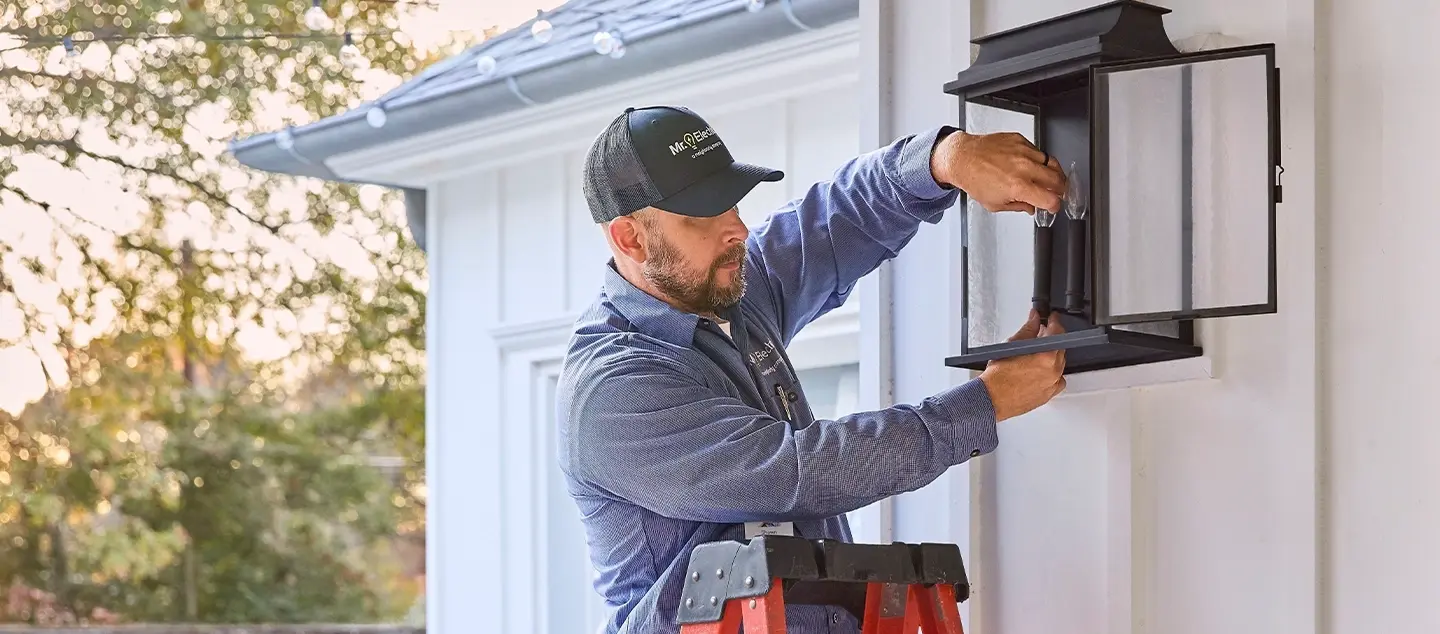
We provide complete lighting installation and lighting solutions for homes and businesses throughout St. Louis. Our residential lighting services include:
- Recessed lighting installation and layout planning
- LED light upgrades and LED retrofit installations
- Light fixture installation and replacement
- Outdoor and landscape lighting
- Deck, patio, and pathway lighting
- Lighting controls, including dimmers, sensors, timers, and smart lighting systems
- Under-cabinet and accent lighting
- Ceiling fan installation
For commercial projects, we install LED lighting systems, parking lot lighting, emergency exit lighting, and custom lighting layouts for offices, retail spaces, and tenant improvements. LED lights reduce energy bills significantly compared to older fluorescent or incandescent fixtures. A typical LED lighting upgrade for a St. Louis home reduces lighting energy use by 50 to 75 percent. We assess your existing light fixtures, recommend the right lighting solutions for your space and goals, and install everything to code with proper circuit sizing and switching.
-
Outdoor and landscape lighting refers to lighting systems installed in your yard, garden, driveway, or along pathways to improve visibility, security, and appearance. There are two main types: low-voltage outdoor lighting systems (12-volt, often DIY-installable) and line-voltage outdoor lighting systems (120-volt, requires a licensed electrician). Line-voltage outdoor lighting delivers stronger output, greater durability, and better performance for security lighting, large properties, and permanent installations. It requires weatherproof fixtures rated for outdoor use, GFCI-protected circuits, proper burial depth for underground wiring, and permits for new circuit installations.
Many St. Louis homes have outdoor electrical boxes that are unprotected or improperly installed. We inspect your outdoor electrical setup, install weatherproof GFCI outlets, run dedicated circuits for outdoor lighting, and install outdoor lighting systems that withstand St. Louis's humid summers and freezing winters. If you want smart outdoor lighting controls, we integrate those into your system as well. Reach out to us to see how we can improve your outdoor space with lighting solutions.
-
We provide commercial electrical services for local businesses, property owners, and commercial projects throughout St. Louis and St. Louis County. We understand that downtime costs money. Our commercial electrical contractors work around your schedule to minimize disruption. We pull permits, coordinate inspections, and complete commercial projects on time. Whether you are opening a new location, renovating an existing space, or upgrading an outdated electrical system, contact us to discuss your commercial electrical needs. Our commercial electrical work includes:
- Commercial electrical panel installation and upgrades
- Tenant improvement electrical work for retail, office, and restaurant spaces
- LED lighting installation and commercial lighting upgrades
- Dedicated circuits for commercial kitchen equipment
- Data and communication wiring for offices and retail environments
- EV charging station installation for commercial parking areas
- Electrical inspections for commercial properties
- Generator installation and service for businesses
- Emergency electrical services for commercial facilities
-
We handle all residential and commercial electrical repairs throughout St. Louis. Common electrical repairs we perform include:
- Outlet repair and replacement, including GFCI and USB outlets
- Light switch and dimmer repair and replacement
- Light fixture repair and replacement
- Circuit breaker replacement and panel repairs
- Electrical wiring repair for damaged or deteriorating wire
- Junction box repairs and cover plate installations
- Ceiling fan repair and replacement
- Whole-house surge protector installation
- Smoke and carbon monoxide detector installation
- Dedicated circuit installation for appliances and equipment
Many electrical repairs in older St. Louis homes are not isolated problems. When we open a wall or inspect a circuit, we often find that one failing outlet is connected to wiring with deteriorated insulation or a junction box that was buried during a renovation. We document what we find, explain your options, and give you a clear price before we do any additional work.
A common scenario we encounter in St. Louis: someone calls about one dead outlet, and when we open the box, we find the original knob-and-tube wiring has been spliced into modern wire with no junction box cover, buried behind drywall. That one outlet repair becomes a safety correction that protects the entire circuit. Our goal is to fix the problem correctly the first time, not to create repeat service calls.
-
A professional electrical inspection covers every major component of your electrical system, including:
- Electrical panel condition: corrosion, burn marks, breaker function, wire sizing, labeling
- Service entrance and weatherhead: connection integrity, insulation condition
- Grounding and bonding: proper grounding at panel, water pipe bonding, ground rods
- Electrical wiring types: knob-and-tube, aluminum, cloth-insulated, or modern copper
- GFCI protection: all required locations tested and verified
- AFCI protection: bedroom and living area circuits checked
- Outlets and switches: loose connections, proper grounding, cover plates
- Junction boxes: accessible, covered, not buried in walls
- Smoke and carbon monoxide detectors: placement and function
- Unpermitted or amateur electrical work: identified and documented
The National Fire Protection Association recommends electrical inspections every 10 years for homes under 40 years old and every 3 to 5 years for homes over 40 years old. We offer complimentary electrical safety checks for St. Louis homes. After the inspection, you receive a written report with our findings and recommendations. This helps you prioritize electrical upgrades, budget for necessary work, and make informed decisions about your home's electrical safety.
-
An electrical emergency is any situation in which electricity poses an immediate danger of fire, shock, or injury. Call an electrician immediately if you experience any of the following:
- Burning smell from outlets, switches, or your electrical panel
- Sparks or arcing from outlets, switches, or wiring
- Smoke from any electrical component or device
- Hot or discolored outlet covers or switch plates
- Partial power outage in your home not caused by the utility
- Exposed wires from damaged cables or open boxes
- Water contact with electrical panels, outlets, or wiring
If you see any of these conditions, turn off the power at your main electrical panel if you can safely reach it. Do not touch electrical components if you see sparks, smoke, or water. Evacuate your home if you see smoke or flames. Call 911 if there is a fire, then call us for emergency services and emergency electrical repairs once everyone is safe. Our 24/7 support line connects you with our team at any hour for emergency guidance and scheduling.
-
Follow these steps immediately:
- Stop using the outlet. Do not plug anything in or unplug devices while sparking is active.
- Go to your electrical panel and turn off the breaker for that outlet.
- If you do not know which breaker controls it, turn off breakers one at a time until the outlet loses power, or shut off the main breaker.
- Once power is off, unplug all devices from outlets on that circuit.
- Do not open the outlet or attempt to inspect it yourself.
- Leave the breaker off and call a licensed electrician.
Sparking outlets indicate loose connections, damaged electrical wiring, short circuits, or failing outlets. These conditions are serious fire hazards. We test the circuit, identify the cause, replace damaged components, and verify everything is safe before restoring power. Many older St. Louis homes have outlets with loose connections due to age and thermal expansion over decades. This is one of the most common electrical repairs we perform.
-
It is safe to reset a tripped circuit breaker once if you know what caused it to trip and you have corrected the problem. For example, if you ran a space heater and a hair dryer at the same time and the breaker tripped from overload, unplugging one device and resetting the breaker is safe. Do not keep resetting it if the breaker trips again immediately or trips repeatedly. Repeated circuit breaker trips indicate a serious problem such as a short circuit, ground fault, or failing breaker.
Never force a breaker into the ON position. Never bypass a circuit breaker or replace it with a higher-amp breaker unless an electrician verifies that your electrical wiring can handle the increased load. If you smell burning, see scorch marks on the breaker or panel, or hear buzzing when you reset the breaker, leave it off and call an electrician immediately. Circuit breakers are safety devices designed to cut power before wires overheat and start fires. We diagnose why breakers trip, find the root cause, and fix the problem correctly.
-
Several electrical upgrades directly reduce your energy bills and improve efficiency. Here are the most impactful options for St. Louis homes:
- LED light upgrades: Replacing older incandescent or fluorescent fixtures with LED lights reduces lighting energy use by 50 to 75 percent. LED lights also last 15 to 25 times longer, reducing replacement costs.
- Smart lighting controls: Dimmers, occupancy sensors, and programmable lighting controls reduce energy use in rooms that are frequently left lit when empty.
- Whole-house surge protection: Protects appliances and electronics from voltage spikes that shorten their lifespan and increase replacement costs.
- Dedicated circuits for major appliances: Reduces circuit stress, prevents breaker trips, and allows appliances to operate at their designed efficiency.
- Electrical panel upgrades: A properly sized panel ensures your HVAC system and appliances receive clean, stable power, improving their efficiency and extending their life.
St. Louis summers are hot and humid, with temperatures regularly exceeding 90 degrees Fahrenheit. Air conditioning accounts for a large portion of summer energy bills. An overloaded or outdated electrical system forces your HVAC equipment to work harder, increasing both energy use and wear. Electrical upgrades that properly support your HVAC system translate directly into lower energy bills and longer equipment life.
-
According to U.S. Census Bureau data, approximately 60 percent of homes in St. Louis City were built before 1940. These older homes present unique electrical challenges. Knob-and-tube electrical wiring, which was standard before the 1950s, is a fire hazard and an insurance problem. Many carriers refuse coverage or charge significantly higher premiums if knob-and-tube wiring is active. Ungrounded two-wire electrical systems lack the safety grounding that protects against shock hazards. The original electrical panels in these homes are often 60-amp service, which does not meet modern electrical demands.
Homes built in the 1950s through 1980s in both the City and County often have Federal Pacific Electric or Zinsco panels, both of which have documented failure rates and should be replaced. St. Louis County suburbs built in the 1960s and 1970s frequently have aluminum branch circuit electrical wiring, which requires special connections and maintenance. Historic neighborhoods like Soulard, Lafayette Square, Shaw, Central West End, and Tower Grove have beautiful homes with serious electrical infrastructure challenges. We specialize in upgrading older St. Louis homes, bringing outdated electrical systems up to modern code. We replace knob-and-tube wiring, upgrade panels, add grounding, install GFCI and AFCI protection, and ensure your home is safe and insurable.
-
Both St. Louis City and St. Louis County adopt the National Electrical Code (NEC) as the foundation for electrical requirements, so the technical standards are the same. They are separate jurisdictions with separate building departments and permit offices. If you live in St. Louis City, you obtain electrical permits from the St. Louis Building Division. If you live in St. Louis County, you obtain permits from the St. Louis County Department of Public Works Building Division. Some municipalities within St. Louis County, such as Clayton and Kirkwood, maintain their own building departments and issue their own permits.
The permit process, fees, and inspection scheduling differ slightly between jurisdictions, but the electrical work itself must meet the same NEC standards. When you hire our licensed electrical contractors, we know which jurisdiction you fall under, which permit office to contact, and what local procedures apply. We pull the correct permits, schedule inspections with the right authority, and ensure your electrical work is legal and compliant, no matter where you live in the greater St. Louis area.
-
GFCI stands for Ground Fault Circuit Interrupter. A GFCI device detects ground faults, which happen when electricity finds an unintended path to ground, often through water or a person. When a ground fault occurs, the GFCI cuts power in milliseconds, preventing serious shock or electrocution. GFCI outlets are identifiable by the TEST and RESET buttons on the face of the outlet. The National Electrical Code requires GFCI protection in the following locations:
- All kitchen countertop outlets
- All bathroom outlets
- All garage outlets
- All outdoor outlets
- All basement outlets
- Laundry areas and outlets near sinks
GFCI requirements have expanded over the years, so homes built before the 1990s often lack GFCI protection where it is now required. Many older St. Louis homes do not have GFCI outlets in kitchens or bathrooms, which creates serious shock hazards. We install GFCI outlets where required, test them to ensure proper operation, and bring older homes up to current electrical code. Test your GFCI outlets monthly by pressing the TEST button. If the outlet does not cut power when you press TEST, it needs to be replaced.
-
GFCI and AFCI are both safety devices, but they protect against different hazards:
- GFCI (Ground Fault Circuit Interrupter): Protects against shock hazards by detecting ground faults and cutting power instantly. Required in wet areas: kitchens, bathrooms, garages, outdoor locations, and basements.
- AFCI (Arc-Fault Circuit Interrupter): Protects against electrical fires by detecting dangerous arcing in damaged wires, loose connections, or deteriorating insulation. Required in bedrooms, living rooms, hallways, closets, and other living areas per NEC 2008 and later cycles.
GFCI protection comes from special outlets with TEST and RESET buttons, though GFCI breakers also exist. AFCI protection comes from special circuit breakers in your electrical panel. Modern panels should have both AFCI breakers for living areas and GFCI protection for wet locations. Many St. Louis homes lack AFCI protection in bedrooms and living areas because they were wired before AFCI requirements went into effect. We upgrade older panels with AFCI breakers, install GFCI outlets, and bring your home up to current safety standards.
-
Knob-and-tube electrical wiring is dangerous for multiple reasons and should be replaced. This wiring method was standard before the 1950s and is common in older St. Louis homes, particularly in historic neighborhoods. The National Fire Protection Association recommends replacing knob-and-tube wiring. We remove old wiring, install modern grounded electrical wiring, upgrade your panel, and bring your home's electrical system up to current code and safety standards. The dangers of knob-and-tube are specific and serious:
- No grounding wire: Knob-and-tube wiring has no ground conductor, which means it does not protect against shock hazards the way modern grounded systems do.
- Deteriorating insulation: The cloth or rubber insulation becomes brittle over time, falls off, and leaves bare wires exposed inside walls, attics, and ceilings.
- Incompatible with modern loads: It was designed for much lower electrical demands than we use today and does not safely handle modern appliances.
- Incompatible with insulation: Building codes prohibit covering knob-and-tube wiring with thermal insulation because the wiring relies on air circulation to dissipate heat. If insulation is added, the wires overheat and start fires.
- Insurance problems: Insurance companies often refuse coverage or charge significantly higher premiums if knob-and-tube wiring is active.
-
The National Fire Protection Association recommends electrical system inspections every 10 years for homes under 40 years old and every 3 to 5 years for homes over 40 years old. If you live in a historic St. Louis home built before 1950, schedule an electrical inspection every 3 to 5 years. We offer complimentary electrical safety checks for St. Louis homes. After the inspection, you receive a written report with our findings and any recommended electrical upgrades. This helps you prioritize work, budget for improvements, and make informed decisions about your home's electrical safety. You should also schedule an inspection in these situations:
- Before buying a home
- After a major renovation or addition
- When experiencing electrical problems such as flickering lights or tripping circuit breakers
- When adding major appliances, an EV charger, or a generator
- If your home has never had a professional electrical inspection
- After a significant storm, flood, or lightning strike
-
Missouri law allows you to perform electrical work on your single-family home, but significant limitations and risks apply. You must still obtain electrical permits for major work, such as panel upgrades, service changes, new circuits, and substantial modifications. Your work still must pass electrical inspections and meet all National Electrical Code requirements. Many types of electrical work, including anything involving your electrical panel, service entrance, or main disconnects, require a licensed electrician by law.
Even when DIY work is technically legal, it is dangerous without proper training and experience. Mistakes cause electrical fires, shock hazards, and code violations that surface during home inspections when you sell. Most home insurance policies void coverage if electrical fires result from improper DIY electrical work. Unpermitted electrical work discovered during a home sale halts the transaction and forces expensive corrections. Professional electrical installation ensures your work is safe, meets code, passes inspection, and maintains your insurance coverage and home value. Licensed electrical contractors carry liability insurance, provide workmanship guarantees, and stand behind the quality of the installation. For your safety and long-term protection, hire a licensed professional for all electrical work beyond simple tasks like replacing light fixtures or outlets.
-
Contact us online or by phone to schedule electrical service. We serve St. Louis City, St. Louis County, Jefferson County, and surrounding communities, including Ballwin, Fenton, Valley Park, Kirkwood, Glendale, and nearby areas. Our customer support team is available 24/7 to answer questions and schedule service. When you contact us, we ask about your electrical issue or project, discuss your needs, and set up a time that works for your schedule.
Our licensed electrician arrives in a marked vehicle, in uniform, with a fully stocked service vehicle. We assess the work, provide an upfront flat-rate quote, and complete the job the same day whenever possible. If permits or inspections are required, we handle the entire process for you. We serve residential electrical service and commercial electrical service needs throughout the greater St. Louis area. Our residential services include everything from outlet repairs and panel upgrades to full rewiring and EV charger installation.
Our Blog
View All Blog PostsDangers of an Overloaded Circuit
Overloading an electrical circuit can cause some serious problems. While that may seem obvious, chances are that you’ve caused a circuit overload at least once in your life.
Read More
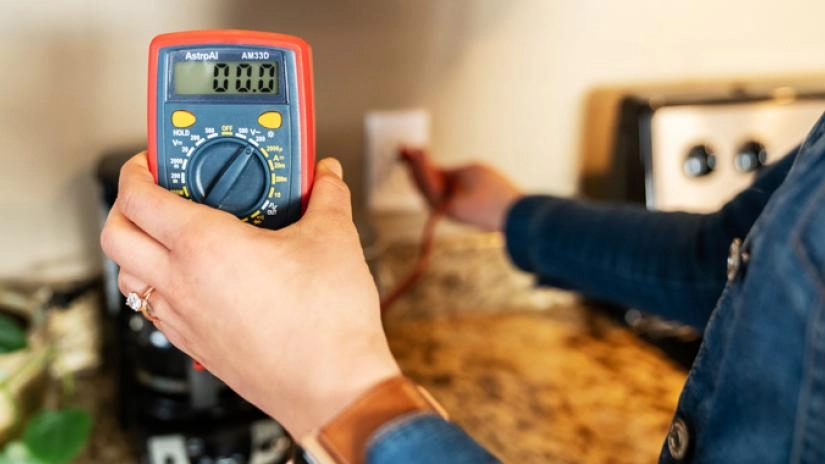
Is Your Electrical Outlet Not Working?
When the simple task of plugging your cell phone charger or hair dryer into the wall leaves you scratching your head and wondering why
Read MoreExpert Tips
View All Expert Tips
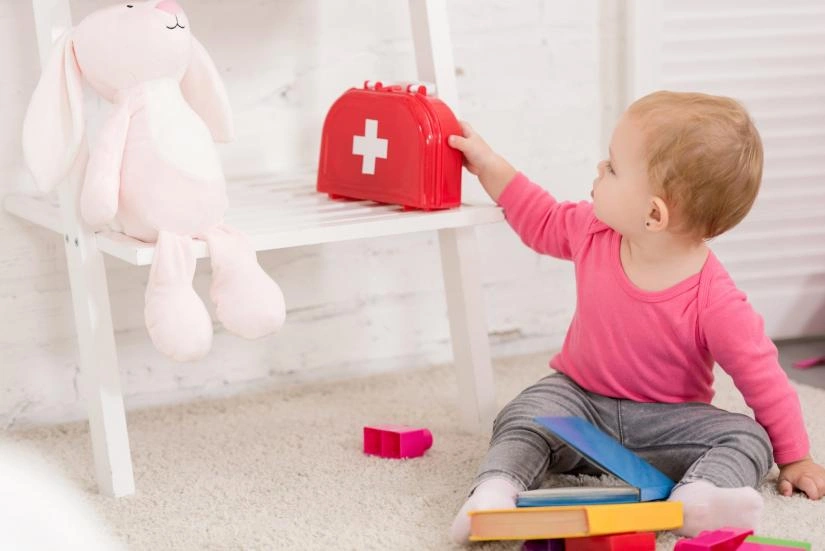
Top 8 Electrical Safety Essentials Your Home Needs
The cliche of "always be prepared" reigns true in most areas of life, but especially in homeownership. You never know when the next electrical storm will hit, when you'll suddenly notice mold and mildew in your basement, or when someone will attempt to break into your home. Even if you feel as though these things could never happen to you, it's better to be safe than sorry.
Read MoreSmart Devices: How Safe Are They?
The market for smart home products is worth an estimated $40 billion, with 65% of Americans already owning at least one device or system and a majority of those planning to purchase more in the future. People embrace this trend to increase security, improve energy efficiency, or gain more control over their home’s day-to-day functions.
Read MoreServices We Provide

-
Large Appliance Outlets
Outdoor Outlets
USB Outlets
Tamper Resistant Outlets
Outlet Installation
Outlet Repair
Safety Outlets
Panel Installation
Panel Upgrades and Repair
Circuit Breakers
Surge Protectors
Power Conditioners
Light Switches
Wall Switches
Knob and Tube Wiring Upgrades
Wiring Upgrades
Electrical Code Updates
Electrical Safety Check
Join Our Team
“We have the power to make things better.” That’s our mantra, not only for our customers' electrical issues, but also you, a future team member!

Your Source for Local Home Service Experts
Neighborly brands repair, maintain, and enhance properties — to make life easier and more enjoyable for homeowners. Our consistency and quality work are the basis for everything we do, and are what make us a leader in the home services space, as we constantly strive to "be so remarkable, we become a beloved household name."
Book Online
A representative from our office will get back to you shortly to schedule service.
Due to a system error, we did not get your request. Please call us for immediate assistance.
We don't currently provide service to this ZIP/postal code.
Yes! You can email me service reminders and other messages.
Mr. Electric, a Neighbourly Company on its own behalf and on behalf of and its affiliates and franchisees requests your consent to send promotional and other electronic messages to you concerning products and services they believe are of interest to you. By checking this box, you agree to receive these messages. You can unsubscribe at any time.
Text opt-in does not apply for Canadian residents.