Most home EV charging installs follow two common paths. One path uses a hardwired Level 2 charger. The other path uses a plug-in Level 2 charger fed by a 240-volt receptacle. The right choice depends on the charger model, the desired charging rate, and the installation location.
Tesla charger installation
A Tesla Wall Connector install starts with placement planning, then circuit sizing, then mounting and wiring. Placement matters, and a Cary electrician does it right. The cord should reach the charge port without crossing a walkway or stretching across a doorway. Settings should match the breaker size and the charger nameplate.
Level 2 EV charger installation
A Level 2 charger runs on a 240-volt circuit and supports most EV brands. A dedicated circuit supports steady charging without competing with other garage loads. Equipment selection and installation details should match the manufacturer's instructions during your EV charger installation in Apex.
Dedicated circuit and wiring
A dedicated branch circuit keeps EV charging off shared outlets and mixed-use circuits. This approach lowers heat at connections and reduces nuisance trips. Correct conductor sizing, correct breaker sizing, and solid terminations matter on long, steady loads like charging.
Panel capacity review and upgrades
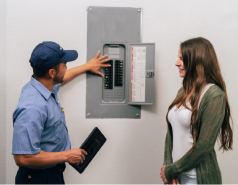
A load review checks available panel capacity and breaker space. If the panel lacks capacity, the next step might involve a panel upgrade or an approved load management approach. The goal stays the same: stable charging without overstressing the electrical system.
Permits, inspection, and documentation
Permits and inspections often apply when a new 240-volt circuit gets installed for EV charging. Permit steps and inspection steps depend on the project scope and the local rules in Apex. Keep the charger cut sheet and the circuit details ready for the inspection file.
How Our EV Charger Installation Process Works in Apex, NC
- Initial call and planning: Vehicle type, charger choice, and parking setup guide the plan.
- On-site assessment: The electrician checks panel capacity, breaker space, and cable routing. The visit also confirms indoor or outdoor placement and cord reach.
- Permit and inspection planning: The scope and local rules drive the permit steps and inspection plan.
- Installation day: The job includes a dedicated circuit, breaker installation, wiring, EVSE mounting, labeling, and cleanup.
- Testing and walkthrough Charging starts get tested: Basic operating steps and reset steps get covered before closeout.
What Makes Mr. Electric of Cary the Top Choice for Your EV Charger Installation: Apex, NC
- Licensed electricians focus on safe residential EV charging work.
- Dedicated EV charging circuits match the charger rating and panel capacity.
- Clean workmanship keeps wiring routes neat and secure.
- Support covers Tesla charger installation and major Level 2 EVSE brands.
- Load reviews reduce breaker trips and overheating risks.
- A clear process keeps permitting and inspection steps on track.
Contact Mr. Electric of Cary today to book your EV charger installation. Apex, NC homeowners will have the ultimate peace of mind that they don’t have to detour to charge their car anymore.