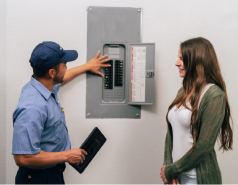
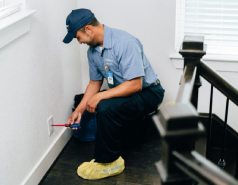
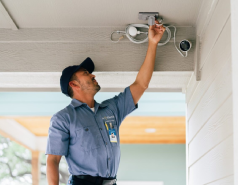
According to recent studies, unintentional carbon monoxide (CO) poisoning claims the lives of 2,100 Americans each year. Alarmingly, carbon monoxide poisoning is now the leading cause of poisoning-related deaths in the United States. This dangerous gas is completely tasteless, odorless, and invisible, making it impossible to detect without the help of a carbon monoxide detector. The good news is that CO poisoning can be entirely avoided by simply installing a detector in your home. Likewise, smoke detectors are legally required in all residences to prevent fire-related tragedies. Protect your loved ones from these household hazards by contacting Mr. Electric of Waco for professional carbon monoxide and smoke detector installations in Waco, Hewitt, Robinson, Woodway, and China Spring, TX.
Carbon Monoxide & Smoke Detector Installation Services in Waco, TX
Book Online
.webp)

Let us know how we can help you today.
Where Should Carbon Monoxide Detectors Be Installed?
As smoke rises, carbon monoxide spreads evenly throughout your home. Install standalone carbon monoxide detectors at knee or chest height to ensure safety. Placing them at knee height is ideal, as it matches the level of your face while sleeping, but chest-height placement is better if you have children or pets who may tamper with them. For combination smoke and carbon monoxide detectors, ceiling placement is best to catch smoke as early as possible in the event of a fire. Avoid placing detectors behind curtains or doors because this lower placement can limit their effectiveness. Always position these devices in open, unobstructed areas for optimal performance.
Installing Smoke Detectors to Keep Your Home Safe
Mr. Electric of Waco is here to ensure your home complies with state and local regulations by installing smoke detectors. These rules mandate placing smoke detectors near all bedrooms, and in some cases, they’re also required in hallways, staircases, and garages. If you're building a new home, recent construction laws specify that smoke detectors must be wired into your home's electrical system. They’re also required to have a battery backup and be interconnected. The National Fire Protection Association recommends replacing smoke detectors every 10 years, as their components can deteriorate over time, making them less reliable. We’re ready to help you select the best smoke detectors for your home, including options like these:
Ionization
This type of detector operates with a steady current flow between its electrodes. When smoke enters the device, it disrupts the current and triggers the alarm.
Photoelectric
This type of detector works by detecting a decrease in light reaching an internal photocell. When smoke enters the device, it disrupts the light, triggering the alarm.
Residential & Commercial Services