If you drive an electric vehicle and rely on a standard 120V outlet to charge it, you already know the frustration. A full charge takes 40 hours or more on some models. A Level 2 home charging station changes that completely. Running on a dedicated 240V circuit, a Level 2 EV charger cuts charging time to 4 to 8 hours, depending on your vehicle's onboard charger capacity. You plug in at night and wake up to a full battery. Mr. Electric of Newark handles everything from the panel assessment to the final outlet test, so your Newark, DE electrician manages the project from start to finish. Our licensed electricians serve Newark, Bear, Wilmington, New Castle, Hockessin, Yorklyn, Montchanin, Delaware City, and surrounding New Castle County communities.
Level 2 EV Charger Installation in Newark, DE
Book Online
What to Expect from a Level 2 EV Charger Installation in Newark, DE

Let us know how we can help you today.
Why Choose Mr. Electric of Newark for Level 2 EV Charger Installation
We know Newark's electrical infrastructure
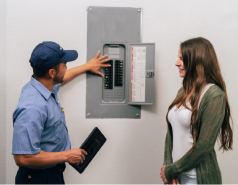
Newark is a mixed housing market. New construction near Christiana and Bear runs 200-amp service with plenty of panel capacity. Older ranches and split-levels in Hockessin and Winterthur still run 100-amp panels, some with aluminum wiring on branch circuits. Our electricians have worked in both. We don't make any assumptions before opening the panel. The inspection comes first, the quote comes second, and the work begins only after you've reviewed and agreed to the scope.
Upfront pricing, no hourly billing
Mr. Electric of Newark prices by the job, not by the hour. You get a written estimate before we start. If the scope changes because we find something unexpected in the wall or on the panel, we will notify you before proceeding. Every job is backed by the Neighborly Done Right Promise®: if it's not done right, we make it right.
Licensed electricians who follow the Delaware code
Delaware requires a licensed electrician for any new circuit work, including EV charger installations. Our team holds the required state licenses and pulls the proper permits through New Castle County. We schedule the inspection and confirm the work passes before closing out the job. That matters when you refinance, sell your home, or make an insurance claim. Unpermitted electrical work can void your homeowner's policy and delay a real estate closing.
Frequently Asked Questions About Level 2 EV Charger Installation in Newark, DE
Residential & Commercial Services