
Electrician Macon GA: Licensed, Locally Owned Electrical Services
Most homes in Macon are 47 years old, according to U.S. Census Bureau data. Your electrical panel dates from an era when families owned one TV and no computers. Older homes bring electrical challenges. Breakers trip when you run the microwave. Outlets spark. Lights flicker during summer storms. Mr. Electric® of Middle Georgia is locally owned and operated. We hold current Georgia state electrical licenses, carry full insurance, and are backed by the Neighborly Done Right Promise®.

Book Online
A representative from our office will get back to you shortly to schedule service.
Due to a system error, we did not get your request. Please call us for immediate assistance.
We don't currently provide service to this ZIP/Postal code.
Yes! You can email me service reminders and other messages.
Mr. Electric, a Neighbourly Company on its own behalf and on behalf of and its affiliates and franchisees requests your consent to send promotional and other electronic messages to you concerning products and services they believe are of interest to you. By checking this box, you agree to receive these messages. You can unsubscribe at any time.
Text opt-in does not apply for Canadian residents.

Customer Reviews
View All Testimonials
The Neighborly Done Right Promise® delivered by Mr. Electric®, a proud Neighborly company.
Easy Online BookingLicensed Electrical Services for Macon Homes and Businesses
Mr. Electric of Middle Georgia is the locally owned electrical company Macon residents trust for panel upgrades, whole-home surge protection, EV charger installation, rewiring, outlet repairs, lighting upgrades, and 24/7 emergency electrical services. We serve residential and commercial properties throughout Middle Georgia with proven electrical solutions for every project. Each and every one of the electricians on our team holds a current Georgia state license verifiable through the Secretary of State Professional Licensing Board. We deliver exceptional service from your first call through project completion. You receive upfront pricing before work begins. No hourly rates. No surprise charges. Every job meets the 2023 National Electrical Code and passes Macon-Bibb County inspection.
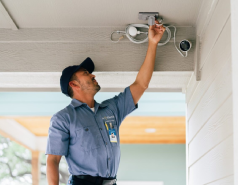



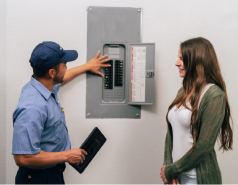

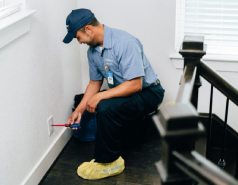


Let us know how we can help you today.
Why You Should Choose Mr. Electric of Middle Georgia
-
Every electrician on our team holds a current Georgia state electrical contractor license issued by the State Electrical Contractors Board. You verify our credentials online at the Government of Georgia’s website. We carry full liability insurance and workers' compensation coverage. Our electrical company, Mr. Electric of Middle Georgia, is locally owned and operated right here in your community. You hire your neighbors, not a distant call center.
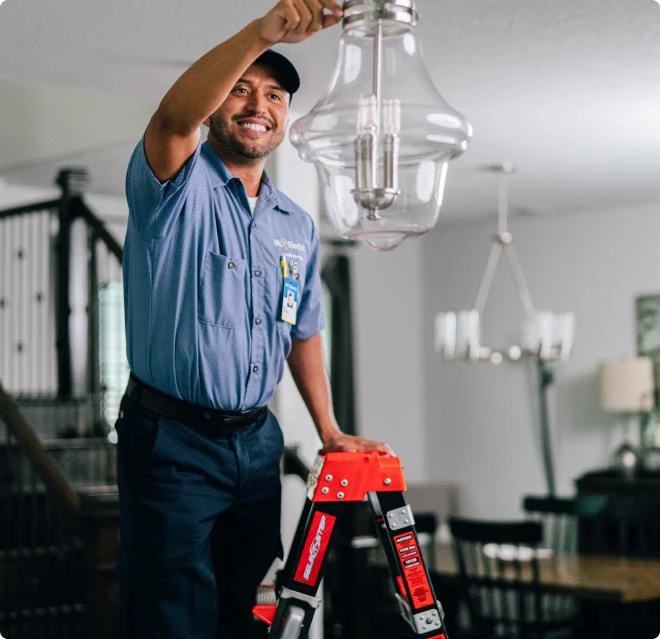
We know Macon homes inside and out. We understand the electrical challenges in historic neighborhoods like Ingleside Village, Shirley Hills, and Vineville, where homes date to the 1920s. We have upgraded panels in Coleman Hill, rewired homes in Bloomfield, and installed EV chargers in North Macon. When we arrive, we wear uniforms, shoe covers to protect your floors, and carry the tools to complete your job correctly the first time.
-
Mr. Electric was founded in 1994 and operates nearly 200 locations nationwide as part of the Neighborly family of home service brands. Neighborly is the world's largest home services company with over 30 brands and 5,500 franchises. You receive the personal accountability of local businesses with the systems, training, and safety standards of a national company serving communities for three decades.
Local businesses across Macon and Middle Georgia rely on us for commercial electrical installations, panel upgrades, lighting upgrades, and code compliance work. We answer every call, show up on time, and stand behind every job in Middle Georgia. We hold ourselves to that standard on every job in Macon and Middle Georgia. Every job is backed by the Neighborly Done Right Promise®: if the work is not done right, we make it right. No exceptions. No excuses. It covers every electrical service we perform in your Macon home or business. It is not a promotional offer. It is a contractual commitment.
-
We quote every job by the work required, not the hours it takes. You receive a clear, detailed price before we touch a single wire. You approve the cost. We complete the work. You pay exactly what we quoted. No hourly billing that climbs while we work. No surprise charges when we find additional issues. No hidden fees for permits, materials, or cleanup. Our pricing includes everything: Macon-Bibb County permits, all materials, professional labor, inspection coordination, and complete cleanup. We offer flexible financing options for larger projects like panel upgrades and whole-home rewiring. When we finish your electrical service, your home is cleaner than when we arrived. You receive documentation of the work performed and verification that everything passed inspection.
Mr. Electric of Middle Georgia: Areas We Serve
109 Macon W Drive Suite B Macon, GA 31210, USA
FAQs About Our Electrical Services for Macon, GA Homes and Businesses
-
Your Macon home needs whole-home surge protection because Middle Georgia lightning storms send thousands of volts through power lines directly into your electrical system every summer. According to the National Weather Service, lightning strikes within a quarter-mile of your home can send voltage spikes through power lines directly into your home. The Insurance Information Institute reports that power surges cause over $1 billion in insured losses annually across the United States.
Whole-home surge protection is installed at your electrical panel and diverts excess voltage to ground before surges reach your appliances, HVAC system, and electronics. Point-of-use surge strips protect individual devices but do nothing for hardwired equipment like your air conditioner, furnace, or panel itself. A single nearby lightning strike during Macon's summer storms sends thousands of volts through your electrical system. Our surge protection services include whole-home systems rated for Georgia storm conditions. We size each system based on your home's total connected load and the specific lightning risk in your part of Middle Georgia. We test everything before we leave and provide documentation for all completed electrical installations.
-
Modern electrical code requires specific outlet types in specific locations. GFCI outlets are required in kitchens, bathrooms, garages, and outdoor locations. They shut off power within 25 to 40 milliseconds upon detecting ground faults, preventing electrocution in wet areas. AFCI outlets protect against arc faults and are required in bedrooms and living areas under the 2023 National Electrical Code adopted by Georgia. Tamper-resistant outlets have internal shutters that protect children and are required in all new residential construction.
USB outlets provide built-in charging ports for phones and tablets without adapters. A USB outlet installation replaces a standard outlet in minutes and eliminates the need for wall adapters. 240-volt outlets power large appliances like dryers, ranges, and Level 2 EV chargers. Outdoor weatherproof outlets need sealed covers rated for Georgia weather. Homes in historic Macon neighborhoods like Ingleside Village, Shirley Hills, Vineville, or historic downtown Macon often have ungrounded two-prong outlets that need replacement with properly grounded three-prong outlets. We verify that your wiring supports the outlet type and install GFCI or AFCI protection where code requires it. Our outlet installation services meet all safety standards for your home.
-
Your panel needs immediate replacement if you smell burning odors, see scorch marks or discoloration, have breakers trip frequently, or feel hot to the touch. These are fire hazards. Most Macon homes built before 2000 have 100-amp panels designed for lower electrical demand. Today's homes need power for central HVAC systems drawing 15 to 20 amps, electric water heaters pulling 20 to 30 amps, home offices, kitchen appliances, and EV chargers. A 200-amp panel provides capacity for current needs and future additions.
Federal Pacific and Zinsco panels installed in homes from the 1960s through the 1980s have documented failure rates. The Consumer Product Safety Commission found that these breakers fail to trip under overload conditions, creating a fire risk. Panel upgrades require permits from Macon-Bibb County Planning and Zoning. We handle the permit, coordinate the planned outage with Georgia Power, and complete the electrical panel upgrade installation in 4 to 8 hours. All electrical installations meet current safety standards.
-
Circuit breakers protect every circuit from overload and short circuits. Breakers wear out from normal use. Each time a breaker trips and resets, internal components experience stress. Breakers also fail from overheating, corrosion, and manufacturing defects. If a breaker trips repeatedly, either the circuit is overloaded, there is a short circuit, or the breaker itself has failed. Homes in Macon with a median age of 47 years often have original breakers that have cycled thousands of times.
Federal Pacific Stab-Lok breakers and Zinsco breakers are known to fail without tripping, which defeats their safety purpose. Modern AFCI and GFCI breakers provide arc-fault and ground-fault protection that older breakers lack. Electrical wiring repairs and breaker replacement require working inside a live electrical panel with 240-volt connections. One mistake causes arc flash, electrocution, or fire. We match the correct amperage and type to your circuit load, verify panel compatibility, and test everything before closing the panel door.
-
You should call an electrician immediately if you:
- Smell burning odors near outlets or your panel
- See sparks or smoke
- Hear buzzing or sizzling sounds
- Notice discolored or melted outlets
- Panel feels hot to the touch
These indicate active electrical hazards that cause fires. Shut off power at the main breaker if you reach it safely. Evacuate if you see smoke or flames. According to the National Fire Protection Association, electrical failures cause an estimated 24,000 residential fires annually in the United States. These fires result in hundreds of deaths and over $800 million in property damage. Never ignore burning smells, sparking outlets, or hot panels. Working inside live electrical panels risks arc flash burns and fatal electrocution. We provide 24/7 emergency electrical service throughout Macon and Middle Georgia when problems cannot wait.
-
If your panel sparks or smokes, immediately shut off the main breaker if you reach it safely and without touching the panel itself. If you see flames or heavy smoke, evacuate your home and call 911 before calling us. Electrical panels spark or emit smoke due to loose wire connections, internal arcing, water intrusion, or failed circuit breakers. All of these generate extreme heat.
Arc faults reach temperatures over 10,000 degrees Fahrenheit, hot enough to ignite surrounding wood and insulation within seconds. Once your electrical panel shows sparking or smoking, a replacement panel is almost always required. Internal damage from arcing compromises the entire panel. Never open the panel cover or investigate yourself. Panel work involves live 240-volt connections. Call us for immediate emergency service. We assess the damage, make temporary repairs if safe to do so, and schedule full panel replacement.
-
Circuit breakers trip because of overloaded circuits, short circuits, or ground faults. Overloaded circuits occur when you plug in more devices than the circuit can handle. Short circuits occur when hot and neutral wires touch, causing sudden surges in current. Ground faults happen when electricity finds unintended paths through water or people. Most Macon homes are 47 years old on average, and have 15-amp circuits installed throughout. Modern kitchens need 20-amp circuits.
Home offices, garage workshops, and outdoor equipment all add electrical load that older 15-amp circuits cannot handle. When breakers frequently trip, your electrical system is protecting itself from overheating and fire. Never replace a tripping breaker with a higher amperage breaker. This removes the safety protection and poses a serious fire risk. We diagnose the root cause and recommend solutions like dedicated circuits, rewiring, or panel upgrades.
-
Burning smells from any electrical component always indicate dangerous conditions. Stop using the outlet immediately. Shut off the circuit breaker controlling it. Call an electrician the same day. Burning smells come from overheating connections, electrical arcing, or melting wire insulation. Loose connections create resistance. Resistance, in turn, generates heat that damages insulation and surrounding materials. Arc faults from damaged or loose connections reach over 10,000 degrees Fahrenheit. That temperature ignites wood framing, insulation, and drywall inside your walls.
Even if the burning smell disappears, the damage is permanent. The connection has overheated, the insulation melted or is charred, and the outlet itself needs replacement. The wiring behind it needs inspection to verify that no damage occurred. We open the electrical box and inspect connections and wiring. We replace damaged components and test the circuit to verify safe operation.
-
Electrical fire warning signs to watch out for include:
- Burning smells near outlets or your panel
- Warm or discolored outlets
- Buzzing sounds
- Flickering lights
- Frequent breaker trips
- Scorch marks on outlet covers
According to the U.S. Fire Administration and the National Fire Protection Association, electrical fires account for approximately 24,000 residential fires each year, leading to an estimated 280 deaths and more than $800 million in property damage. Older homes have a higher fire risk. The median age of Macon homes is 47 years. Wiring insulation deteriorates over decades. Connections loosen from thermal expansion and contraction. Outlets wear out from repeated use. Arc faults from aging or damaged wiring are the leading cause of electrical fires. Schedule an electrical safety inspection if your home shows any warning signs.
-
Yes, replace them immediately. Both panel brands have documented failure rates and create fire hazards. Federal Pacific Electric Stab-Lok breakers and Zinsco breakers fail to trip during overload or short circuit conditions. When breakers fail to trip, circuits carry dangerous current levels that overheat wires and start fires. The Consumer Product Safety Commission investigated Federal Pacific Stab-Lok panels and found breaker failure-to-trip rates as high as 65 percent in some tests.
Builders installed Federal Pacific panels in homes constructed during the 1960s through the 1980s. Zinsco panels date from the same era. Many Macon homes from this period still have these panels. Panel replacement is a safety necessity. Some insurance companies now require replacement of these panels or charge higher premiums. We handle the Macon-Bibb County permit, coordinate the Georgia Power outage, and complete installation in one day.
-
Knob-and-tube wiring does not meet current electrical code and needs replacement. This wiring system was used in homes built before the 1950s. Many historic Macon neighborhoods, including Ingleside Village, Shirley Hills, Vineville, and Coleman Hill, still have homes with knob-and-tube wiring. The system lacks a ground wire required by modern code. Builders designed it for electrical loads one-tenth of what today's homes demand. The cloth and rubber insulation around knob-and-tube wiring deteriorates over time.
In Macon homes 70 or more years old, that insulation has been breaking down for decades. Exposed wires create shock and fire hazards. Many insurance companies in Georgia will not provide coverage for homes with active knob-and-tube wiring, and those that do charge significantly higher premiums. Full home rewiring is the only solution. We assess your home and provide upfront pricing for complete rewiring that meets 2023 National Electrical Code standards.
-
Most electrical panel upgrades take 4 to 8 hours. This depends on your home's wiring configuration, service entrance condition, and whether your meter needs replacement. Your power will be completely off during installation. We coordinate a planned outage with Georgia Power before we begin and obtain permits from Macon-Bibb County Planning and Zoning. After installation, a Macon-Bibb County inspector verifies the work meets code before we energize the new panel.
Inspections are typically scheduled within one to three business days. The entire process from permit application to final inspection takes one to two weeks. The actual work in your home happens in a single day. Schedule your panel upgrades on a day when you have alternative plans. Charge devices ahead of time. Keep refrigerators and freezers closed tightly to maintain temperature.
-
Electrical work costs in Macon depend largely on permit fees, inspection coordination, cleanup, material prices, labor complexity, and whether your home needs code upgrades beyond the basic service. Permit fees from Macon-Bibb County Planning and Zoning vary by project scope. Materials (wires, circuit breakers, panels, outlets, switches, ect.) are priced based on what your job requires. Labor complexity depends on accessibility, existing wiring condition, and if upgrades are required to bring it to 2023 National Electrical Code standards. We provide upfront pricing, and you approve the total cost before work begins. Financing options are also available for larger projects. The cheapest quote is not always the best value. Verify every electrician's Georgia state license before you hire. Older Macon homes built before 2000 often need:
- Grounding upgrades
- Circuit additions
- Panel modifications
- Code compliance updates beyond the basic service requested
-
Most electrical work requires permits in Macon-Bibb County. Jobs that involve panel upgrades, service upgrades, new circuit installations, rewiring, and major installations, including generators and EV chargers, all require permits. Minor repairs, such as replacing an outlet, switch, or light fixture with a like-for-like replacement, typically do not require permits, but the work must still meet the 2023 National Electrical Code.
Macon-Bibb County Planning and Zoning Commission issues all electrical permits and enforces code compliance. Permitted work must pass inspection by a county building inspector before it gets closed up or energized. When you hire licensed electricians, we handle permit applications and inspection coordination. Unpermitted electrical work creates serious problems during home sales and voids insurance coverage if damage occurs. If you are unsure whether your project needs a permit, call a licensed professional.
-
Verify any Georgia electrician's license online at the Government of Georgia’s website before you hire. Search by business name or license number and confirm the license is active and current. All electrical contractors working in Macon must hold a current Georgia state license issued by the State Electrical Contractors Board. The online verification system allows you to search by business name or license number. Verify the license is active and not expired or suspended.
Licensed electricians must also carry liability insurance and workers' compensation coverage. When you call Mr. Electric of Middle Georgia, you receive licensed professionals every time. None of our electricians work without proper state licensing, certifications, and insurance coverage. Georgia recognizes several electrician classifications, including Unrestricted, Restricted, and Journeyman licenses. Our team holds every credential Georgia requires. When comparing electric companies in Macon, verify state licensing before you hire. Unlicensed operators pose a serious risk to your home. Their work does not meet code and voids your insurance coverage.
-
All electrical work in Macon must comply with the Georgia State Minimum Standard Electrical Code, based on the 2023 National Electrical Code with Georgia-specific amendments. This is the minimum standard across all Georgia municipalities. The National Electrical Code is published by the National Fire Protection Association. It is updated every three years to incorporate new safety standards and technology changes. Georgia adopts the NEC as the state baseline and adds amendments for state requirements. Macon-Bibb County enforces this code through the Planning and Zoning Commission. Code requirements exist for safety. GFCI protection prevents electrocution. AFCI protection prevents fires. Proper grounding protects from shock hazards. Wire sizing and circuit breaker matching prevent overheating. When we explain your project requirements, we tell you which code provisions apply and why they matter.
-
Georgia Power offers residential energy efficiency rebates for qualifying upgrades, including LED lighting and smart thermostats. Rebate amounts and eligible equipment change periodically. Check the Georgia Power website, or call them directly to verify current programs and rebate levels. The federal government provides tax credits through the Residential Clean Energy Credit, offering up to 30 percent back on qualifying improvements, including electric vehicle chargers and solar systems. The 30 percent credit rate is available through 2032 under the Inflation Reduction Act.
Federal tax credits have specific eligibility requirements and annual limits. Consult a tax professional or visit irs.gov. The IRS publishes Form 5695 guidance for calculating your Residential Clean Energy Credit, and updates eligibility rules annually. When you schedule electrical upgrades with us, ask about available rebates and incentives. Combining utility rebates with federal tax credits reduces your cost and improves return on investment. -
Whole-home surge protection defends every circuit in your home from lightning strikes, utility surges, and internal voltage spikes caused by large appliances cycling on and off. External surges come from lightning strikes and utility grid fluctuations. Internal surges happen when large appliances like HVAC systems and refrigerators cycle on and off. Middle Georgia experiences significant lightning activity from May through September.
According to the National Weather Service, lightning strikes within a quarter-mile of your home send voltage spikes through power lines directly into your electrical system. The Insurance Information Institute reports that power surges cause over $1 billion in insured losses annually across the United States. Whole-home surge protection diverts excess voltage into the ground before it reaches appliances, electronics, and HVAC equipment. Point-of-use surge strips can protect the individual devices plugged into it, but do nothing for hardwired equipment. Our surge protection services include whole-home panel-mounted systems rated for Georgia storm conditions. We size each surge protection installation to your home's connected load.
-
When licensed electricians perform the work and bring everything up to current code, upgrading outlets in older homes is safe. It’s often necessary for code compliance. Older homes frequently need additional work beyond swapping the outlet. Homes built before 1980 often have ungrounded circuits. Modern outlets require proper grounding. The 2023 National Electrical Code requires GFCI outlets in kitchens, bathrooms, garages, and outdoor locations. AFCI protection is required in bedrooms and living areas.
When we upgrade outlets in older Macon homes, we verify the wiring is in good condition, confirm proper grounding, and install GFCI or AFCI protection where code requires. Outlet upgrades in homes over 40 years old sometimes reveal damaged wiring, improper connections, or obsolete wiring methods needing correction. We explain what we find and what code requires before we proceed.
-
Our licensed electricians install Level 2 electric vehicle chargers for residential properties and Level 3 DC fast chargers for commercial locations. Level 2 chargers operate on 240-volt circuits and require a dedicated 40- to 50-amp circuit installed from your electrical panel to the charger location. If your home has a 100-amp panel, adding an EV charger requires upgrading to 200-amp service to handle the additional load.
We calculate your home's current electrical demand and determine whether your existing panel has capacity. Georgia ranked in the top 10 states for electric vehicle adoption, with growing infrastructure support. Federal tax credits offer up to 30 percent back on residential EV charger installation. EV charger installations require permits from Macon-Bibb County. We handle the permit, install the circuit and charger, coordinate inspection, and verify everything works before we leave.
-
Start by installing whole-home surge protection at your electrical panel before storm season begins in May. Middle Georgia experiences significant lightning activity from May through September. Summer thunderstorms bring frequent lightning strikes that send power surges through utility lines into homes. A typical lightning-induced surge carries 100,000 to 300,000 volts. Your home's standard 120-volt wiring is not built to absorb that. Before storm season this summer:
- Verify all outdoor outlets have weatherproof covers and GFCI protection. GFCI outlets shut off power instantly when they detect moisture.
- Check your electrical panel for rust, corrosion, or water stains. Panels exposed to moisture develop corrosion, which can cause connection failures and increase fire risk.
- Consider installing a backup generator if your home cannot tolerate extended outages. Generators keep critical systems running, including refrigeration, medical equipment, sump pumps, and HVAC.
- Schedule surge protection installation and electrical safety inspections before storm season, not after the first major strike damages your equipment.
- Unplug sensitive electronics during severe thunderstorms.
-
Your AC trips the breaker because older Macon homes with 15-amp circuits cannot handle the 15 to 20 amps a central air conditioner draws during Macon's summer heat. Macon summers are hot, with average high temperatures reaching 92 degrees Fahrenheit in July. Your AC runs constantly during heat waves. When your AC trips the breaker repeatedly, the problem is either electrical or mechanical. Electrical causes include undersized circuits, failing breakers, or damaged wiring. Mechanical causes include failing compressors, dirty condenser coils, or seized fan motors.
Your circuit breaker protects your home from overheated wires and potential fire. Never replace the breaker with a higher amperage rating. This removes the protection and creates a fire risk. We test the circuit with a clamp meter, measure the actual amperage your AC draws at startup and during steady-state operation, and determine whether you need a dedicated 20-amp circuit, panel upgrade, or HVAC service. AC compressors draw 2 to 3 times their running amperage at startup, which is when most breakers trip.
-
GFCI stands for Ground Fault Circuit Interrupter. A GFCI outlet shuts off power within 25 to 40 milliseconds when electricity escapes through water or a person, preventing electrocution. That response is faster than a heartbeat. The human body detects a shock at 1 milliamp and experiences cardiac fibrillation above 100 milliamps. GFCI protection trips at 5 milliamps, well below the danger threshold. GFCI outlets and breakers monitor the balance between hot and neutral wires on a circuit at all times.
over 10,000 degrees Fahrenheit,
Grounding and bonding work together with GFCI protection. Grounding provides a safe return path for fault current. Bonding connects all metal components so they share the same electrical potential, preventing shock when you touch two metal surfaces simultaneously. GFCI protection acts as the last line of defense when grounding and bonding are compromised. The RESET button should pop out. Press RESET to restore power. If the GFCI trips frequently, do not ignore it. Frequent tripping indicates moisture intrusion or ground faults.
-
Schedule electrical safety inspections every three to five years for homes under 25 years old. Homes over 40 years old need annual inspections because wiring insulation, breakers, and connections all degrade in predictable ways over that timeframe. The median age of Macon homes is 47 years, meaning most local homes fall into the annual inspection category. Electrical systems age over time. Wiring insulation breaks down. Connections loosen. Outlets and switches wear out. Circuit breakers degrade. You should also schedule inspections before purchasing older homes, after major storms or lightning strikes, if planning renovations, or if you notice flickering lights or tripping breakers. We offer complimentary electrical safety checks. Preventive inspections catch problems before they become dangerous. During inspections, we:
- Test your electrical panel,
- Check circuit breakers,
- Inspect visible wiring,
- Test outlets for proper grounding and GFCI function,
- Verify proper wire sizing
- Look for code violations and safety hazards
- Provide written reports of findings and recommendations
-
We install home standby generators and commercial backup generator systems throughout Macon and Middle Georgia. Standby generators automatically restore power within seconds of outages. They run on natural gas or propane and provide enough power for essential systems, including HVAC, refrigeration, lighting, medical equipment, sump pumps, and security systems. Generators provide safety and protection during extended outages from summer storms, ice storms, or utility failures.
For businesses, generators keep operations running, refrigerated inventory cold, and data systems online. Generator installations require permits from Macon-Bibb County. We coordinate the permit, handle electrical connections from your panel to the generator, arrange for fuel line installation if needed, and schedule required electrical inspections. Generators require dedicated transfer switches to prevent backfeeding electricity into utility lines. We install and test transfer switches to verify safe operation.
-
We provide complete residential services and commercial electrical services throughout Macon, Warner Robins, Fort Valley, and surrounding Middle Georgia communities. Every job starts with upfront pricing. You approve the cost before we begin. Our residential services cover complete electrical solutions for homes throughout Macon and Middle Georgia. Every residential service includes permit coordination and Macon-Bibb County inspection from start to finish. Georgia-licensed electricians perform all work to 2023 National Electrical Code standards, including permit and inspection coordination. Our services include:
- Electrical safety inspections
- Panel upgrades and repairs
- Circuit breaker replacement
- Whole-home surge protection
- 24/7 emergency electrical repairs
- Outlet installation and repair, including GFCI, AFCI, USB, tamper-resistant, and 240-volt outlets
- Light switch and dimmer installation
- Electrical wiring upgrades
- Knob-and-tube wiring replacement
- Dedicated circuit installation
- Electric vehicle charger installation
- Backup generator installation
- Ceiling fan installation
- Recessed lighting and LED lighting upgrades
- Outdoor and landscape lighting
- Smart home device installation
- Smoke detector installation
-
Mr. Electric of Middle Georgia serves:
- Macon
- Warner Robins
- Fort Valley
- Bolingbroke
- Bonaire
- Byron
- Centerville
- Clinchfield
- Culloden
- Elko
- Forsyth
- Juliette
- Kathleen
- Lizella
- Perry
- Smarr
- And surrounding communities
We provide residential and commercial electrical services throughout Bibb County, Houston County, Peach County, and surrounding areas. Our locally owned franchise has deep roots in Middle Georgia. We know the area, the housing stock, and the electrical challenges in older homes in historic neighborhoods like Ingleside Village, Shirley Hills, Vineville, Coleman Hill, and Bloomfield. We also serve newer developments and commercial properties throughout the region. When you call us, you reach our local team. We schedule service at times that work for you. We show up on time, in uniform, with the tools to complete your job correctly.
-
Call us or schedule online through our website. We ask about the electrical issue or project, your location and property type, and your availability. We offer flexible scheduling to work around your schedule. You receive a specific appointment time, not an all-day window. Clear pricing and a clean home when we leave are part of every job. Our electricians show up on time, in uniform, and ready to work. We begin every service call with a thorough assessment of the problem or project. You receive upfront pricing before any work begins. We quote by the job, not by the hour. You approve the price. We complete the work. No surprises. No hidden fees.
For larger projects like panel upgrades, whole-home rewiring, or generator installations, we provide detailed quotes that include permits, materials, labor, inspection coordination, and cleanup. Financing is available. After we complete your service, we test everything, clean up completely, and document the work. Every job is backed by the Neighborly Done Right Promise®. Our standard for customer service means you always know what to expect, what you will pay, and what we did.
-
Flickering lights in Macon homes signal loose wire connections, overloaded circuits, or voltage fluctuations from Georgia Power. Loose connections create resistance that causes lights to dim or flicker as electricity flows through them. Overloaded circuits happen when too many devices draw power simultaneously. Voltage fluctuations occur during storms or when large appliances cycle on. In older Macon homes with a median age of 47 years, flickering often results from deteriorated wire connections or undersized circuits. Homes wired with 14-gauge wire on 15-amp circuits cannot handle modern 20-amp appliance loads without voltage drops that cause flickering.
The National Electrical Code requires 12-gauge wire for 20-amp circuits. Running 20-amp loads through 14-gauge wire overheats the insulation and creates fire risk. Test whether flickering occurs when specific appliances are running. If one appliance causes flickering, that circuit is overloaded. If flickering occurs randomly throughout your home, you have loose connections or utility voltage issues. Never ignore flickering lights. Loose connections generate heat that damages insulation and creates fire risk.
-
Your electrical panel is too small if circuit breakers trip frequently, you cannot add new circuits for appliances or EV chargers, or your home has a 100-amp panel built before 2000. Most Macon homes built before 2000 have 100-amp electrical service. Modern homes need 200-amp service because items like central HVAC (15 to 20 amps), electric water heaters (20 to 30 amps), and kitchen appliances, home offices, and potential EV chargers require power.
Add up the amperage ratings on all your circuit breakers. If the total approaches or exceeds 100 amps, your panel lacks capacity, and you should consider upgrading it. Signs of undersized panels include dimming lights when large appliances start, inability to run multiple appliances simultaneously, and frequent nuisance breaker trips. We perform load calculations to determine if your electrical demand exceeds your panel capacity.
-
You reset the tripped breakers yourself, but understand why the breaker tripped in the first place. Open your electrical panel door. Look for breakers in the OFF position or in a middle position between ON and OFF. Switch the breaker fully OFF, then back ON. If the breaker trips immediately when you reset it, you have a short circuit or ground fault. Do not keep resetting it. Call an electrician.
If the breaker stays on after reset, the circuit was overloaded. Try unplugging some devices from that circuit to reduce load. If the same breaker trips repeatedly, either the circuit is consistently overloaded or the breaker is failing. Count how many times you reset the same breaker monthly. More than once a month indicates a problem needing professional diagnosis. Never force a breaker that will not reset or replace a breaker with higher amperage. Both create fire hazards.
-
Dead outlets mean a tripped GFCI upstream, a tripped circuit breaker, a loose wire connection, or a failed outlet that needs replacement. A tripped circuit breaker cuts power to all outlets on that circuit. A loose wire connection at the outlet or in the electrical box will interrupt the power flow. A failed outlet needs replacement. Test if other outlets on the same wall or in adjacent rooms also lost power.
If multiple outlets are dead, check your electrical panel for tripped breakers. If only one outlet is dead, check for GFCI outlets in bathrooms, kitchens, or garages. Press the RESET button on any GFCI outlet. If the dead outlet is in a kitchen, bathroom, garage, or outdoors, it should be GFCI-protected. Test the GFCI by pressing the TEST and RESET buttons. If outlets remain dead after checking breakers and GFCI outlets, you have loose connections or failed outlets needing replacement.
-
Brief sparks when plugging in devices are normal. But large, repeated, or burning sparks indicate issues with loose connections, damaged outlets, or short circuits, and those require immediate attention. Abnormal sparking includes large sparks, repeated sparking, sparks with burning smells, or sparks that char the outlet face. Abnormal sparking indicates loose wire connections, damaged outlets, short circuits, or improper wiring. Loose connections create arcing. Arcing generates extreme heat exceeding 10,000 degrees Fahrenheit. That heat melts plastic outlet components, creates carbon tracking on the outlet body, and ignites surrounding materials.
Carbon tracking is a conductive residue left by repeated arcing. It continues to arc even after the original loose connection is fixed, which is why replacing the outlet is the correct fix. Retightening the wires alone does not solve the problem. Water intrusion in outlets causes sparking and tripping. Outlets over 15 years old wear out from repeated plug insertions. The metal contacts lose their spring tension, resulting in poor connections. Stop using any outlet that sparks abnormally. Shut off the circuit breaker controlling it. Call an electrician the same day. Sparking outlets cause electrical fires. Do not wait or ignore the problem.
-
The National Electrical Code does not limit the number of outlets per circuit by count. Code limits circuits by electrical load. A standard 15-amp circuit handles a total load of 1,800 watts. A 20-amp circuit handles 2,400 watts. The NEC requires outlets to be calculated at 180 watts each for load calculations. So theoretically, a 15-amp circuit needs to support approximately 10 outlets, and a 20-amp circuit supports 13 outlets. The actual capacity depends on what you plug in.
A space heater draws 1,500 watts, exceeding the capacity of a 15-amp circuit. Modern kitchens need at least two 20-amp circuits for small appliances. Bathrooms need 20-amp circuits. In practice, bedrooms and living rooms typically have 8 to 10 outlets per circuit. Older Macon homes often have more outlets per circuit than recommended, which causes overloading when modern devices draw power.
-
Electrical panel upgrade costs vary based on panel accessibility, meter location, service entrance condition, whether the Georgia Power service drop needs to be upgraded, Macon-Bibb County permit fees, inspection requirements, and material costs. We provide upfront pricing that includes all permits, materials, professional labor, coordination with Georgia Power, inspection scheduling, and cleanup. Financing is available for qualifying projects.
Your cost increases if your service entrance needs replacement, your meter base is outdated, or your home requires a new service drop from the utility pole. Homes with panels in basements or difficult-to-access locations cost more than panels in garages or exterior walls. We provide detailed quotes after inspecting your current panel and service entrance. The investment in a panel upgrade adds value to your home, improves safety, and provides capacity for modern electrical needs, including EV chargers.
-
Your power will be off when we upgrade your electrical panel. We coordinate planned outages with Georgia Power before we begin the upgrade work. The power outage typically lasts 4 to 8 hours, depending on your home's wiring complexity and whether your meter needs replacement. We schedule panel upgrades on specific days and provide exact timeframes. Plan to be away from home or make alternative arrangements.
Charge all phones, laptops, and devices before we arrive. Keep refrigerators and freezers closed during the outage to maintain temperature. Full refrigerators and freezers stay cold for 4 to 6 hours if doors remain closed. Remove perishable food if you have concerns. Turn off and unplug sensitive electronics before we shut off power. After we complete the installation, a Macon-Bibb County inspector must verify the work before we restore power. We coordinate inspection scheduling to minimize your outage duration.
-
Georgia law requires licensed electrical contractors to perform panel upgrades. Macon-Bibb County will not issue permits for DIY panel work. Panel upgrades involve working with live 240-volt connections, which can cause fatal electrocution. One mistake creates arc flash burns exceeding 10,000 degrees Fahrenheit. Panel work requires coordination with Georgia Power to disconnect and reconnect service. Panel upgrades must meet the 2023 National Electrical Code and pass inspection by Macon-Bibb County.
Improper panel installation creates fire hazards, voids your home insurance coverage, and prevents you from selling your home until corrected by licensed electricians. Insurance companies deny claims for damage caused by unlicensed electrical work. Mortgage companies require electrical inspections and code compliance certifications at closing. Attempting DIY panel upgrades puts you, your family, and your home at serious risk. Hire licensed electricians with proper training, tools, and insurance.
-
Most modern homes need 200-amp electrical service. Homes under 1,500 square feet with gas appliances, no EV charger, and basic electrical needs might manage with 150-amp service. Homes over 2,500 square feet, homes with all-electric appliances, homes planning EV charger additions, or homes with workshops, pools, or hot tubs require a minimum 200-amp service. We perform load calculations based on your home's square footage, appliance inventory, heating and cooling systems, planned additions, and future needs. Load calculations follow National Electrical Code Article 220 requirements. A 2,000-square-foot Macon home with central HVAC, an electric water heater, and a kitchen range typically draws 150 to 180 amps of demand. A 200-amp panel provides the 20 percent safety buffer that the code recommends.
The calculation accounts for lighting loads, small-appliance circuits, laundry circuits, ranges and ovens, HVAC systems, water heaters, and other fixed appliances. We add capacity for future needs. Installing adequate panel capacity now prevents costly upgrades later when you add EV chargers, hot tubs, workshops, or home additions. For large homes or detached garages, a subpanel fed from your main panel distributes power to a specific area without running individual circuits back to the main panel. Subpanels are common in Macon homes with detached workshops, pool equipment, or in-law suites.
-
Electrical panels last 25 to 40 years. Most Macon homes have panels that are already past this range. Panels exposed to moisture, extreme heat, or frequent power surges fail sooner. The median age of Macon homes is 47 years, which means many local homes have original electrical panels past their design life. Federal Pacific and Zinsco panels should be replaced immediately, regardless of age, due to documented failure rates. Replace aging panels before they fail prevents emergencies, fires, and damage to electronics and appliances. Modern panels include features older panels lack, including:
- AFCI and GFCI breaker compatibility
- Higher amp capacity
- Better bus bar design
- Improved safety mechanisms
-
EV charger installations require electrical permits from Macon-Bibb County Planning and Zoning Commission. EV chargers require new dedicated circuits running from your electrical panel to the charger location. New circuits require permits. Permitted work must pass electrical inspection before the circuit gets energized. When you hire licensed electricians, we handle permit applications and submit required documentation. We schedule inspections and coordinate with Macon-Bibb County inspectors.
Unpermitted EV charger installations void your home insurance coverage. Insurance companies deny claims for fires or damage caused by unpermitted electrical work. Unpermitted work also creates problems during home sales. Buyers' mortgage companies require electrical inspections and code compliance certifications at closing. Attempting to install EV chargers without permits and inspections puts your home, your insurance coverage, and future sale at risk.
-
Most residential EV charger installations take 3 to 6 hours. The time frame depends on the distance from your electrical panel to the charger location, whether your panel has available breaker space, and whether your electrical service has adequate capacity. If your electrical panel is in your garage and you mount the charger on the garage wall, installation takes 3 to 4 hours. If your panel is in your basement or on the opposite side of your home from the garage, installation takes longer because wires must run through walls or conduit must be installed along exterior walls.
If your home has a 100-amp panel with limited capacity, you need to upgrade the panel before installing an EV charger. Panel upgrades add one day to the timeline. After installation, we schedule a Macon-Bibb County inspection. Inspections typically occur within one to three business days. The total timeline from start to charging your vehicles runs 3 to 7 days, including permit processing and inspection scheduling.
-
A Level 1 EV charger plugs into a standard 120-volt household outlet and adds 3 to 5 miles of range per hour of charging. Level 2 chargers operate on 240-volt circuits like electric dryers and add 20 to 60 miles of range per hour, depending on the charger capacity and vehicle. Level 1 charging works for plug-in hybrid vehicles with small batteries or drivers who drive fewer than 40 miles daily.
Level 1 charging takes 12 to 24 hours to fully charge a depleted electric vehicle battery. Level 2 charging is the standard for home EV charging. Level 2 chargers fully charge most electric vehicles in 4 to 8 hours overnight. Level 2 chargers require dedicated 240-volt circuits with 40 to 50-amp capacity. Most EV owners install Level 2 chargers in garages or carports. Level 3 DC fast chargers are commercial-grade chargers that add 100 to 200 miles of range in 20 to 30 minutes. Level 3 chargers are not practical for residential installation due to power requirements and cost.
-
Your electrical panel supports an EV charger if you have a 200-amp service with available breaker slots and adequate spare capacity. We perform load calculations to determine your home's current electrical demand. We add the EV charger load to your existing demand. If the total demand exceeds 80 percent of your panel capacity, you need a panel upgrade. Most Level 2 EV chargers require a 40- to 50-amp dedicated circuit.
A 40-amp circuit at 240 volts draws a continuous load of 9,600 watts. The NEC's 80-percent rule requires the circuit breaker to be rated at 50 amps to carry that load safely in the long term. If your home already operates near capacity with HVAC, water heater, kitchen appliances, and other loads, adding an EV charger exceeds safe capacity. Many Macon homes built before 2000 have 100-amp panels. 100-amp panels rarely have capacity for EV chargers without upgrades. Panel upgrades provide capacity for EV chargers and future additions. We explain exactly what your home needs and provide upfront pricing.
-
Install EV chargers in locations convenient to where you park your vehicle, close to your electrical panel to minimize wire runs, protected from weather, and accessible for maintenance. Most people install chargers in garages on walls near where the vehicle parks. If you park outside, mount chargers on exterior walls near parking areas or on freestanding posts with weatherproof enclosures. EV chargers need protection from direct rain exposure.
Wall-mounted chargers should be 3 to 4 feet above ground level for comfortable cable handling. When choosing locations, consider cable length. Most EV chargers include 20 to 25-foot cables, but you will need to mount the charger so the cable reaches your vehicle's charge port without stretching. If you own multiple vehicles or plan to add vehicles, consider locations that serve multiple parking spaces. We help you determine optimal charger placement based on your panel location, parking configuration, and budget.
-
Shut off power at your main electrical panel immediately if you locate the source. Evacuate your home if you see smoke or flames. Call 911 if fire is present. Call an electrician after ensuring your family's safety. Burning plastic smells from electrical sources indicate overheating outlets, damaged wire insulation, or failing electrical components. These smells come from melting plastic outlet covers, burning wire insulation, or overheating electrical devices.
Try to locate the source of the smell. Check outlets, switches, and your electrical panel. If an outlet or switch feels hot or shows discoloration, shut off the circuit breaker controlling it. If the smell comes from your electrical panel, shut off the main breaker if safe to do so.Never ignore burning plastic smells. These are early warnings of electrical fires. According to the National Fire Protection Association, electrical failures cause 24,000 residential fires annually. Most electrical fires start inside walls where you cannot see them until fire breaks through.
-
Extension cords are temporary solutions, not permanent wiring. Using extension cords permanently creates fire hazards and code violations. Extension cords lack the protection of permanent wiring installed inside walls with proper insulation and overcurrent protection. Extension cords overheat when you plug in devices that draw high current. Damaged extension cord insulation creates shock and fire hazards. Extension cords running under rugs, furniture, or through doorways get damaged from wear.
The National Electrical Code prohibits using extension cords as a substitute for permanent wiring. If you need outlets where none exist, hire electricians to install proper outlets. Outlet installation costs less than repairing fire damage from failed extension cords. If you must use extension cords temporarily, use heavy-duty cords rated for the device's amperage, inspect cords regularly for damage, never run cords under rugs or through walls, and never daisy-chain multiple extension cords together.
-
Shut off your main electrical breaker if you see sparks or smoke from your electrical panel, smell burning odors from the panel, see water flooding near the panel, or during electrical emergencies when you cannot identify which circuit breaker to shut off. Also, shut off the main breaker before hurricanes or extended vacations to protect your home from power surges when power is restored.
The main breaker is typically located at the top or bottom of your electrical panel and is larger than other breakers. It controls power to your entire home. Switching the main breaker OFF cuts all power. Switching it ON restores all power. After shutting off the main breaker during emergencies, evacuate your home and call electricians. Do not attempt to open the panel cover or investigate the problem yourself. Panel work involves live utility connections even when the main breaker is OFF. Only licensed electricians with proper training and tools should open electrical panels.
-
Electrical panels should never feel hot to the touch. Hot panels indicate loose connections, failing breakers, or overloaded circuits. All of these create fire hazards. If your panel feels hot, shut off the main breaker immediately, and do not touch the hot panel box. If you cannot safely reach the main breaker, leave it alone and evacuate. Call an electrician for emergency service. Do not open the panel door. Do not touch any breakers.
Heat indicates that electrical current is flowing through high-resistance connections. High-resistance connections generate extreme heat that damages panels and starts fires. Some panel warmth is normal when multiple circuits draw heavy loads simultaneously. For example, panels feel slightly warm when your HVAC system, water heater, oven, and dryer all run simultaneously. But your panel should never feel hot or uncomfortable to touch. Trust your instincts. If the panel feels wrong, call professionals immediately.
-
During a power outage, unplug computers, televisions, routers, modems, and home theater equipment to protect them from the surge that occurs when Georgia Power restores electricity. Power surges occur when electricity is restored. These surges damage sensitive electronics. Also, unplug high-wattage appliances like air conditioners, space heaters, irons, and hair dryers to reduce the load when power is restored. Leave one lamp plugged in and switched ON so you know when power is restored. Leave your refrigerator and freezer plugged in, but keep doors closed.
When power is restored, wait 2 to 3 minutes before plugging in sensitive electronics. This allows the voltage to stabilize. Plug in electronics one at a time rather than all at once. Consider whole-home surge protection installed at your electrical panel to protect all devices automatically during power restoration. Middle Georgia experiences frequent summer thunderstorms that cause power outages and surges.
-
Ingleside Village homes built from the early 1900s through the 1950s commonly have knob-and-tube wiring, undersized 60 to 100-amp panels, ungrounded two-prong outlets, and deteriorated cloth-insulated wiring. Common electrical issues include knob-and-tube wiring that lacks grounding and does not meet current code, undersized 60-amp or 100-amp electrical panels insufficient for modern needs, ungrounded two-prong outlets throughout the home, cloth-insulated wiring with deteriorated insulation, inadequate number of circuits for today's electrical demands, and outdated fuse boxes that need replacement with circuit breaker panels.
Many Ingleside Village homes were partially rewired over the decades, resulting in mixed wiring systems that combined old and new. These partial upgrades create safety concerns and code violations. Historic Ingleside Village homes require careful rewiring that preserves architectural features while meeting code. We work with the Macon-Bibb Historic Preservation Commission requirements when necessary. Full-home rewiring brings Ingleside Village homes up to 2023 National Electrical Code standards while preserving historic character.
-
Shirley Hills homes built in the 1940s through 1960s often have aluminum branch circuit wiring, Federal Pacific or Zinsco panels, and 100-amp service that no longer meets modern demand. Common electrical considerations include aluminum branch circuit wiring in homes built from 1965 to 1973, Federal Pacific or Zinsco electrical panels that need immediate replacement, 100-amp electrical service inadequate for modern demands, limited GFCI protection in kitchens and bathrooms, lack of AFCI protection in bedrooms and living areas, and insufficient circuits for home offices and modern electronics.
Aluminum wiring requires special handling. Aluminum expands and contracts differently than copper, causing connections to loosen over time. Loose aluminum connections create fire hazards. Homes with aluminum wiring need specialized connectors and an anti-oxidant compound at all connections. The CPSC recommends COPALUM crimp connectors or AlumiConn connectors installed by licensed electricians as the two accepted remediation methods. We inspect aluminum wiring systems and recommend remediation as needed. Many Shirley Hills homes have mature trees near power lines. Trees touching power lines pose outage risks and require coordination with Georgia Power for safe tree trimming.
-
Vineville electrical systems vary widely because the neighborhood spans Victorian-era homes from the 1890s through mid-century construction from the 1960s, each decade bringing different wiring systems and safety challenges. The electrical challenges vary based on home age. Victorian- and early-1900s homes often have knob-and-tube wiring, gas lighting converted to electric, and undersized service entrances. Homes from the 1920s through 1940s typically have cloth-insulated wiring and fuse boxes or early circuit breaker panels.
Mid-century Vineville homes face issues similar to Shirley Hills, including aluminum wiring and obsolete panel brands. Many Vineville homes were renovated without updating electrical systems. Kitchens and bathrooms remodeled with modern appliances often lack adequate circuit capacity. Adding granite countertops, tile backsplashes, and stainless steel appliances without upgrading electrical service creates overload situations. We assess Vineville homes based on original construction date and renovation history to recommend appropriate electrical upgrades.
-
Coleman Hill homes from the 1940s through 1960s frequently have undersized 100-amp panels, electric baseboard heating that limits available capacity, and kitchens with insufficient dedicated circuits. Common electrical concerns include a 100-amp service that is inadequate for modern all-electric homes, electric baseboard heating that draws substantial current and limits available capacity for other loads, window-unit air conditioners overloading circuits, and kitchens with insufficient dedicated circuits for appliances.
Many Coleman Hill homes went all-electric during an era when electric utilities promoted electric heating. Electric baseboard heat and electric water heaters consume significant amounts of electricity. Adding modern loads, such as EV chargers, requires panel upgrades. Coleman Hill's proximity to Wesleyan College and downtown Macon makes homes attractive for renovations and conversions. We design electrical systems for Coleman Hill homes that meet modern needs and pass Macon-Bibb County inspection, whether you are renovating or doing a full electrical upgrade.
-
Test GFCI outlets monthly using the TEST and RESET buttons on the outlet face. Press the TEST button. You should hear a click, and the RESET button should pop out. This indicates the GFCI tripped successfully. While the GFCI is tripped, plug a lamp or phone charger into the outlet. The device should not work, confirming the GFCI cut power. Press the RESET button firmly. You should hear another click and feel the button set. The RESET button should stay in.
Test your device again. It should now work, confirming the GFCI restored power. If the TEST button does not trip the GFCI, the GFCI has failed and needs to be replaced. If the RESET button will not stay in, the GFCI detected a ground fault and is protecting you. Call an electrician to diagnose the ground fault. Test all GFCI outlets in your home monthly, including outlets in kitchens, bathrooms, garages, outdoor areas, and any other locations with GFCI protection.
-
Teach children never to stick objects into electrical outlets and never to touch electrical outlets or switches with wet hands. Teach them to never use electrical devices near water, never to pull cords to unplug devices, and to tell adults immediately if they see damaged cords or sparking outlets. Teach them to never touch power lines or climb trees near power lines. Install tamper-resistant outlets throughout your home. Tamper-resistant outlets have internal shutters that prevent children from inserting objects into slots.
The 2023 National Electrical Code requires tamper-resistant outlets in all residential construction. Older homes should be retrofitted with tamper-resistant outlets. Explain that electricity is invisible but dangerous. Children understand comparisons to things they know are dangerous. Tell them electricity is like fire. You use fire carefully for cooking and heating. You use electricity carefully for lights and devices. Both will hurt you if used incorrectly. Set good examples. Children copy adult behavior. Unplug devices by gripping plugs, not cords. Never use devices near bathtubs or sinks. Store devices safely when not in use.
-
The National Fire Protection Association reports 24,000 residential fires annually from electrical failures. Leading causes include electrical distribution equipment, home heating, and cooking equipment. The median Macon home age is 47 years. Older homes face higher electrical fire risk from aging wiring, deteriorated insulation, and outdated electrical components. Proactive maintenance and timely upgrades dramatically reduce electrical fire risk. Prevent electrical fires by:
- Scheduling electrical safety inspections every 3 to 5 years
- Replacing outlets and switches that feel warm or show discoloration
- Never use extension cords as permanent wiring
- Never overload outlets with multiple devices using power strips
- Keeping electrical panels accessible and not blocked by storage
- Replacing damaged electrical cords immediately
- Installing whole-home surge protection to prevent damage from lightning strikes
- Upgrading obsolete electrical panels, including Federal Pacific and Zinsco brands
- Installing AFCI breakers in bedrooms and living areas
- Hiring licensed electricians for all electrical work
-
Homes in Middle Georgia should prioritize surge protection due to frequent summer thunderstorms. Older homes should prioritize GFCI and AFCI upgrades, plus panel replacement if you have Federal Pacific or Zinsco panels. We assess your home and recommend safety features based on your home's age, current electrical system condition, and local risks. You should consider adding these electrical safety features:
- Whole-home surge protection at your electrical panel to protect against lightning strikes and utility surges
- GFCI outlets in all kitchens, bathrooms, garages, outdoor locations, and within 6 feet of water sources
- AFCI circuit breakers in bedrooms and living areas to prevent arc-fault fires
- Tamper-resistant outlets throughout your home to protect children
- Ground fault protection for pool and hot tub equipment
- Interconnected smoke detectors on every floor and in every bedroom
- Carbon monoxide detectors on every floor, especially near sleeping areas
- Emergency lighting that activates during power outages
- Clearly labeled electrical panel with circuit directory showing what each breaker controls
-
Update your home's electrical system for safety, capacity, code compliance, insurance requirements, and home value. Safety is the primary reason. Aging electrical systems cause fires, shocks, and damage to electronics. Outdated electrical wiring insulation deteriorates, exposing copper conductors. Loose connections create arcing and heat. Obsolete panels fail to protect circuits. Capacity matters for modern living. Homes built before 2000 lack the capacity for today's electrical demands, including home offices, multiple electronics, electric vehicles, and smart home devices.
Code compliance is mandatory for home sales, insurance coverage, and renovations. The 2023 National Electrical Code requires GFCI and AFCI protection that older homes lack. Insurance companies require electrical updates or charge higher premiums for homes with obsolete wiring or panels. Home value increases with modern electrical systems. Buyers pay premiums for homes with 200-amp service, updated wiring, and EV charger capability. Updated electrical systems protect your family, satisfy insurance requirements, and add measurable value to your home.
Our Blog
View All Blog PostsDangers of an Overloaded Circuit
Overloading an electrical circuit can cause some serious problems. While that may seem obvious, chances are that you’ve caused a circuit overload at least once in your life.
Read More.webp)
Is Your Electrical Outlet Not Working?
When the simple task of plugging your cell phone charger or hair dryer into the wall leaves you scratching your head and wondering why
Read MoreExpert Tips
View All Expert Tips
Top 8 Electrical Safety Essentials Your Home Needs
The cliche of "always be prepared" reigns true in most areas of life, but especially in homeownership. You never know when the next electrical storm will hit, when you'll suddenly notice mold and mildew in your basement, or when someone will attempt to break into your home. Even if you feel as though these things could never happen to you, it's better to be safe than sorry.
Read MoreSmart Devices: How Safe Are They?
The market for smart home products is worth an estimated $40 billion, with 65% of Americans already owning at least one device or system and a majority of those planning to purchase more in the future. People embrace this trend to increase security, improve energy efficiency, or gain more control over their home’s day-to-day functions.
Read More
Services We Provide
-
Large Appliance Outlets
Outdoor Outlets
USB Outlets
Tamper Resistant Outlets
Outlet Installation
Outlet Repair
Safety Outlets
Panel Installation
Panel Upgrades and Repair
Circuit Breakers
Surge Protectors
Light Switches
Wall Switches
Knob and Tube Wiring Upgrades
Wiring Upgrades
Electrical Code Updates
Electrical Safety Check
Book Online
A representative from our office will get back to you shortly to schedule service.
Due to a system error, we did not get your request. Please call us for immediate assistance.
We don't currently provide service to this ZIP/postal code.
Yes! You can email me service reminders and other messages.
Mr. Electric, a Neighbourly Company on its own behalf and on behalf of and its affiliates and franchisees requests your consent to send promotional and other electronic messages to you concerning products and services they believe are of interest to you. By checking this box, you agree to receive these messages. You can unsubscribe at any time.
Text opt-in does not apply for Canadian residents.