Driving to a public charging station every few days gets old fast. Mr. Electric of Greensboro has been serving the Triad area since 2021, and our licensed electricians bring an average of 25 years of hands-on experience to every EV charger installation in Greensboro, NC. We handle everything from breaker sizing and panel evaluation to final wiring and testing, so you get a safe, code-compliant charging setup without the guesswork. Our team will recommend the right charger, confirm your electrical load capacity, and complete the work in accordance with North Carolina and local codes. Contact a Greensboro electrician today to get started.
Home EV Charger Installation in Greensboro, NC
Charge Your Electric Vehicle at Home Without the Hassle
Book Online
A representative from our office will get back to you shortly to schedule service.
Due to a system error, we did not get your request. Please call us for immediate assistance.
We don't currently provide service to this ZIP/Postal code.
Yes! You can email me service reminders and other messages.
Mr. Electric, a Neighbourly Company on its own behalf and on behalf of and its affiliates and franchisees requests your consent to send promotional and other electronic messages to you concerning products and services they believe are of interest to you. By checking this box, you agree to receive these messages. You can unsubscribe at any time.
Text opt-in does not apply for Canadian residents.
Benefits of a Home EV Charging Station in Greensboro, NC
-
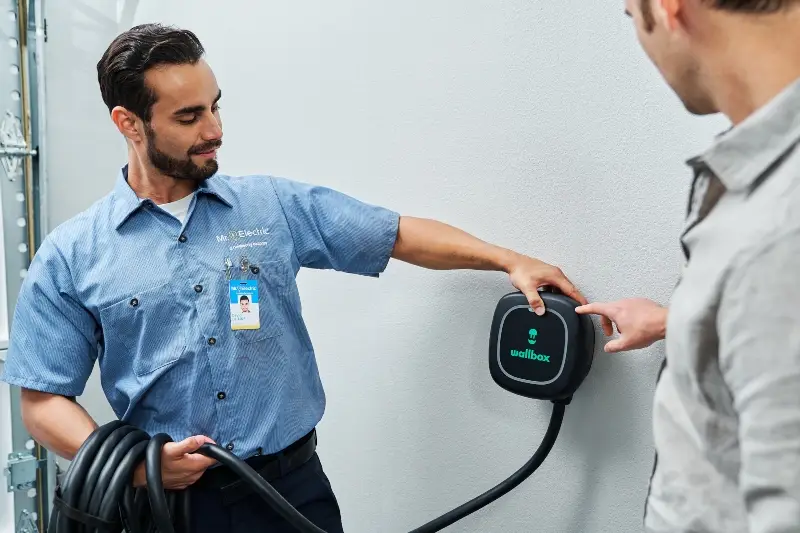
A Level 2 charger runs on a 240-volt outlet and delivers 12 to 32 miles of range per hour. That is a significant upgrade over a standard Level 1 charger, which uses a 120V outlet and adds only 2 to 4 miles per hour. For most drivers, a Level 2 unit fully charges an electric vehicle overnight. Our pros assess your home's existing electrical infrastructure and confirm the right amperage, typically 40 to 50 amps for residential installations, before any work begins.
-
Our electricians are local to the Greensboro area. They understand Duke Energy service requirements, North Carolina Utilities Commission standards, and the specific panel configurations common in homes across neighborhoods from Summerfield to Jamestown. When your installation requires a permit, our local electricians pull it. When your panel needs an upgrade to support a 240-volt circuit, we tell you upfront before we start. No surprises at the end of the job.
-
Every home is different. A newer build in Browns Summit may already have capacity for a Level 2 circuit. An older home in Pleasant Garden may need a panel upgrade or a load calculation first. Our team evaluates your specific setup, explains your options in plain language, and gives you a firm quote before touching a single wire. We install outdoor-rated chargers, Wi-Fi-enabled smart chargers, and units with J1772 or Tesla connectors, depending on your vehicle and preference.
Let us know how we can help you today.
EV Charger Installation Services in Greensboro, NC
Mr. Electric of Greensboro’s team handles the full scope of residential EV charger installation. Here is what that includes:
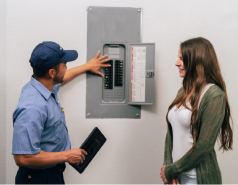
- Electrical Panel Evaluation and Upgrades: Before we install anything, we check your panel's available capacity. Many homes need a circuit breaker added or a panel upgrade to safely support a Level 2 charger. We size the breaker correctly for your charger's amperage rating and your home's total load.
- 240-Volt Circuit Installation: A Level 2 charger requires a dedicated 240-volt circuit run from your panel to the charging location, typically your garage or driveway. We run the wiring, install the outlet, or hardwire the unit, and test the circuit before we leave.
- Charger Mounting and Configuration: We mount your charger to the wall, configure any Wi-Fi connectivity, and walk you through how it works. If you have a SPAN smart panel or whole-home surge protection, we account for those in the installation plan.
- Permit Pulling and Code Compliance: Every EV charger installation in Greensboro, NC must meet NEC and local code requirements. We pull permits where required and schedule inspections so your installation is documented and fully legal.
- Panel Upgrades for EV Readiness: If your current panel cannot support the added load, we offer electrical panel installation and repair as part of the same project. You get one team, one visit, one upfront price.
Frequently Asked Questions About EV Charger Installation in Greensboro, NC
-
Our process is straightforward. We assess, quote, install, and test, with clear communication at every step.
We start with a site evaluation. Our pro inspects your panel, measures your available electrical load, and identifies the best location for your charger. We then provide a quote for the full scope of work, including any panel upgrades or circuit additions. Once you approve, we schedule the installation. Most residential EV charger installations are completed in a single day. We mount the unit, run the circuit, test the output, and confirm everything works before we leave your property. If a permit inspection is required, we coordinate the inspection and ensure your paperwork is complete.
-
Homeowners across Guilford County trust Mr. Electric of Greensboro because we prioritize safety and local expertise. Our licensed electricians handle every step of the process, from assessing your electrical panel’s capacity to navigating the specific permitting requirements of Greensboro and the surrounding areas. We specialize in dedicated 240-volt circuit installations for Level 2 chargers, ensuring your vehicle powers up quickly and reliably without risking your home’s electrical integrity.
- Local pros with 25 years of average experience: Our electricians are not generalists who dabble in EV work on the side. They are licensed professionals with an average of 25 years of experience in residential electrical services. They know how to size circuits correctly, identify overloaded panels, and install chargers that perform safely for the long term. Since opening in 2021, we’ve built a track record across the Triad area based on quality work and straight talk.
- Upfront pricing with no hourly surprises: We quote by the job, not by the hour. Before any work begins, you know exactly what your EV charger installation will cost. If we find something during the evaluation that changes the scope, we will inform you before proceeding. There are no hidden fees and no invoices that balloon after the fact. That is the Mr. Electric standard, backed by the Neighborly Done Right Promise®.
- Backed by a national brand, owned locally: Mr. Electric of Greensboro is locally owned and operated, which means you get a team that is accountable to this community. At the same time, we operate under the training standards and quality benchmarks of Mr. Electric, part of the Neighborly family of home services brands established in 1994. You get local accountability with national-level expertise on every job.
-
There are two types used in residential settings. Level 1 chargers use a standard 120V outlet and add about 2 to 4 miles of range per hour. They come with most new electric vehicles and require no special wiring. Level 2 chargers run on a 240-volt outlet and add 12 to 32 miles of range per hour, depending on the unit's amperage (typically 16 to 80 amps). For most drivers, a Level 2 unit is the practical choice for home use. Our pros will help you pick the right model for your vehicle and your home's electrical setup.
-
It depends on your current panel's capacity and age. Many homes in the Greensboro area have 100-amp or 150-amp panels that may already be near capacity. A Level 2 charger on a 40-amp dedicated circuit adds meaningful load. Our electrician will run a load calculation during the site visit and tell you exactly what your panel can handle. If an upgrade is needed, we provide a quote for that work at the same time so you can make an informed decision.
-
Most residential installations are completed in one day. If your home already has adequate panel capacity and the charger location is close to your panel, the job may take three to four hours. If we need to run a longer circuit, add a breaker, or upgrade your panel, the timeline extends accordingly. We provide a realistic timeframe in the estimate so you can plan your day.
-
Yes, in most cases. A new 240-volt circuit requires an electrical permit from the City of Greensboro or Guilford County, depending on your property's jurisdiction. Mr. Electric of Greensboro pulls the required permits and schedules inspections. This protects you when you sell your home and confirms the work was done to code.
-
A hardwired charger is wired directly into your electrical system with no outlet in between. A plug-in unit connects to a 240-volt outlet (NEMA 14-50 or similar) that we install. Both options are safe and code-compliant. Plug-in units are easier to take with you if you move. Hardwired units are often preferred for permanent installations and may support higher amperage. Our team will explain the trade-offs for your specific situation.
-
We install all major residential EV charger brands, including units with J1772 connectors (compatible with most non-Tesla EVs) and Tesla connectors, including the Tesla Wall Connector. If you drive a Tesla, your vehicle also accepts J1772 with an adapter. We do not sell chargers directly, but we can advise on UL-certified models that meet North Carolina installation standards and work well with your vehicle.
-
Yes. Many homeowners in Greensboro, Summerfield, and Oak Ridge prefer an outdoor-rated charger mounted on an exterior wall or near a detached garage. We install NEMA 4-rated, outdoor-rated chargers designed to handle North Carolina's humidity, heat, and occasional ice. We also ensure the wiring run is properly protected with conduit rated for outdoor use.
-
Yes. The federal Alternative Fuel Vehicle Refueling Property Credit covers 30% of your installation costs, up to $1,000, for qualifying home charging equipment. This is a dollar-for-dollar reduction on your federal tax bill, not a deduction. To claim it, your installation must be in a qualifying census tract or be related to a low-income community area. Confirm your eligibility with a tax professional before assuming you qualify. On the North Carolina side, Duke Energy Progress offers a rebate of up to $1,117 to help offset the cost of a Level 2 charger installed in your home, and the program requires a closed permit from your local authority before Duke Energy issues the credit. We pull the permit and coordinate the inspection, so you have everything you need to apply. Always verify current program availability directly with Duke Energy, since rebate programs are tied to annual NCUC-approved program years and amounts can change.
-
You can. Duke Energy Progress offers a time-of-use rate plan where you pay as little as $0.04 per kWh during discount hours, compared to $0.14 per kWh during peak hours. In summer, those discount hours run from 1 a.m. to 6 a.m. For most EV owners, that window lines up naturally with overnight charging. Set your car's built-in charge scheduler to start after midnight, and you capture those lower rates without thinking about it again. Most Wi-Fi-enabled Level 2 chargers let you set the same schedule from the app on your phone. If your current charger is a basic plug-in unit without smart scheduling, ask our team about upgrade options during your installation. This is a question worth asking your electrician during the site visit, because the wiring choice, hardwired versus outlet-based, can affect which charger models work in your home.
-
Two Level 2 chargers on a residential panel are manageable in many cases, but it does require careful load calculation. A single 40-amp EV circuit draws roughly 9,600 watts at full charge. Two running simultaneously could pull 19,200 watts, which is a significant portion of the capacity in a standard 200-amp residential panel. Our electricians run a full load calculation before recommending how to wire a second circuit. For newer homes in neighborhoods like Summerfield or Oak Ridge, spare capacity is often available. Older homes in areas like Lindley Park or Fisher Park frequently need a panel upgrade first. There are also load management devices that automatically reduce the charge rate on one vehicle when the other circuits hit a threshold, keeping your total draw within safe limits. We size and install those as part of the same project, so both chargers work without tripping breakers.
-
EV charger installations in North Carolina must comply with NEC Article 625, which governs electric vehicle charging system installations, as adopted through the NC Building Code Council, and with the 2023 edition of NFPA 70, which has been in effect since January 1, 2023. Article 625 covers branch circuit sizing, overcurrent protection, cable management, and equipment listing requirements. NEC Article 210.17 specifically addresses the outlet branch circuit requirements for EV charging. Our electricians follow both articles on every installation, and the permit inspection confirms the work meets current North Carolina code before the job is officially closed. This matters more than most people realize. An installation that skips the permit process leaves no record of code compliance, which can create real problems when you refinance or sell your home.
-
We serve Greensboro and the surrounding Triad area, including High Point, Jamestown, Browns Summit, Oak Ridge, Summerfield, Whitsett, Pleasant Garden, and Stokesdale. If you are unsure whether we cover your address, call us today, and we will confirm.
-
Duke Energy offers rebate programs for qualifying residential EV charger installations. The availability and amount of those rebates can change, so we recommend checking Duke Energy's current residential EV programs directly. Our team can advise on what documentation you may need from the installation to support a rebate application.
-
Yes. A Tesla Wall Connector is a Level 2 charger designed specifically for Tesla vehicles. It runs on a 240-volt circuit and delivers up to 44 miles of range per hour, depending on the vehicle model. It is not the same as a Tesla Supercharger, which is a commercial DC fast-charger. We install Tesla Wall Connectors and standard J1772 Level 2 units for all other EV brands.
-
Yes, with the right setup. If your home has a solar energy system and a battery like a Powerwall 3, you can route solar generation to charge your EV during daylight hours. The integration depends on your inverter, battery, and panel configuration. Our team can evaluate your existing solar setup and advise on how to connect your EV charger to maximize solar use. We do not handle solar installation, but we work alongside solar installers on the electrical side.
-
Call us today to schedule your site evaluation, or schedule an appointment with Mr. Electric of Greensboro online. We will send a licensed electrician to assess your panel, confirm your charger location, and provide a written upfront quote. There is no vague estimate, no hourly billing, and no pressure: just a clear plan and a firm price before any work begins. We also install whole-house generators, handle lighting upgrades, surge protector installation, and electrical panel installation, and perform a full range of electrical repairs and upgrades throughout the Triad area.
Residential & Commercial Services
Book Online
A representative from our office will get back to you shortly to schedule service.
Due to a system error, we did not get your request. Please call us for immediate assistance.
We don't currently provide service to this ZIP/postal code.
Yes! You can email me service reminders and other messages.
Mr. Electric, a Neighbourly Company on its own behalf and on behalf of and its affiliates and franchisees requests your consent to send promotional and other electronic messages to you concerning products and services they believe are of interest to you. By checking this box, you agree to receive these messages. You can unsubscribe at any time.
Text opt-in does not apply for Canadian residents.