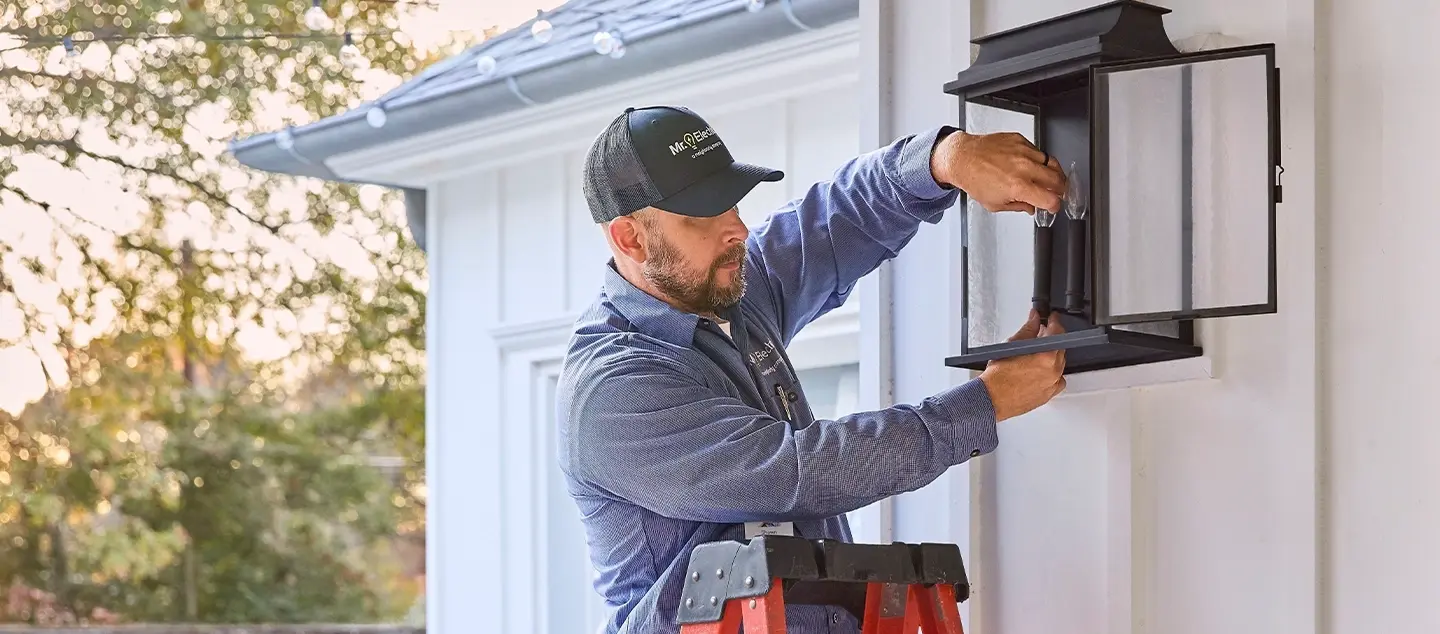
Licensed Electrician in Boulder, CO | Locally Owned and Operated
Your electrical system keeps your family safe and your home up to code. Mr. Electric® of Boulder is a locally owned and operated franchise serving Boulder, North Boulder, Table Mesa, Gunbarrel, and Boulder County. Our licensed electricians handle panel upgrades, wiring repairs, EV charger installations, and emergency service. You get upfront pricing, work backed by the Neighborly Done Right Promise®, and electricians who respect your home.

Book Online
A representative from our office will get back to you shortly to schedule service.
Due to a system error, we did not get your request. Please call us for immediate assistance.
We don't currently provide service to this ZIP/Postal code.
Yes! You can email me service reminders and other messages.
Mr. Electric, a Neighbourly Company on its own behalf and on behalf of and its affiliates and franchisees requests your consent to send promotional and other electronic messages to you concerning products and services they believe are of interest to you. By checking this box, you agree to receive these messages. You can unsubscribe at any time.
Text opt-in does not apply for Canadian residents.

Customer Reviews
View All Testimonials
The Neighborly Done Right Promise® delivered by Mr. Electric®, a proud Neighborly company.
Easy Online BookingResidential and Commercial Installation Services and Electrical Repair in Boulder and Surrounding Communities
Electrical issues do not wait for business hours. We provide on-site consultations and electrical repair in Boulder and Boulder County, including Broomfield, Lafayette, Louisville, and Superior. Our electricians explain what needs to happen before starting work. No surprises. No hidden fees. We handle electrical troubleshooting, panel repairs, and breaker replacements. We handle lighting upgrades, surge protection installations, generator installations, and code-compliance work. Every job starts with a complimentary safety check.
-
-
Installations
Mr. Electric installs top-of-the-line electrical equipment to help you save on energy costs.Learn more Installations
-
Lighting
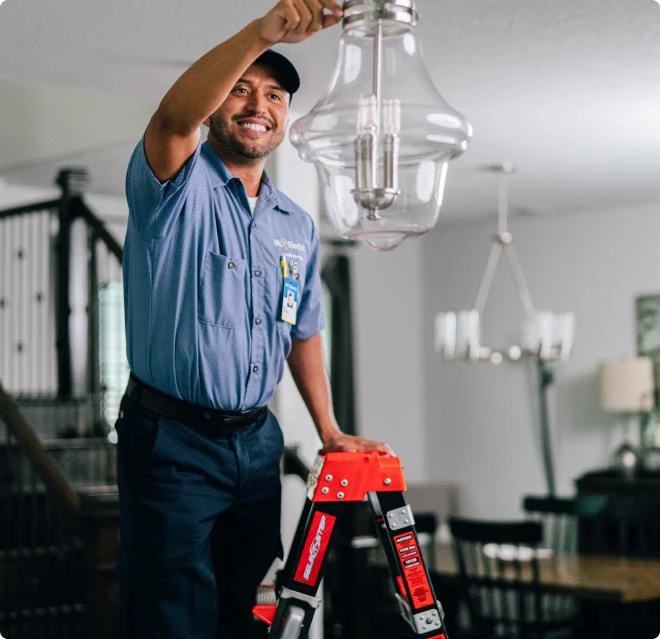
Our experts can handle any lighting fixture for a single-family home, apartment, condo, or business.Learn more Lighting
-
Electrical Safety
Let our expert electricians keep your home or business above building code standards.Learn more Electrical Safety
-
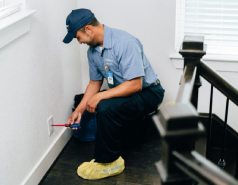
Repairs
Your courteous Mr. Electric electrician will arrive and finish on time, barring unforeseen issues.Learn more Repairs
Let us know how we can help you today.
Why Boulder Homeowners Choose Mr. Electric
-
Our Boulder electricians hold Colorado electrical licenses and carry full licensing and insurance on every job. We diagnose electrical issues that most homeowners miss. A flickering light often indicates a loose connection that generates heat behind your wall. A breaker that trips repeatedly signals an overloaded circuit. We explain what we find and your options. No jargon. Clear answers from electrical experts who know Boulder homes.
-
We provide a quote for your electrical job before we start. You see the full cost in writing. No hourly billing. No overtime charges. No surprise fees. You see the price, you approve the price, we do the work, and the final bill matches the quote. The Neighborly Done Right Promise® backs every installation and repair. If the job is not done right, we make it right.
-
Mr. Electric has served homeowners since 1994. We are part of Neighborly, the world's largest home services company, with more than 30 brands and 5,500 franchises. You get the accountability of a local business with the training and standards of a national brand. Our Boulder franchise is locally owned and operated. Contact us today to enjoy the expertise of electricians Boulder can trust.
Frequently Asked Questions About Electrical Services in Boulder
-
Electrical repair in Boulder covers everything from a single dead outlet to a full troubleshooting investigation of intermittent power loss. Our electrical troubleshooting process starts with the symptoms you describe, then moves to a systematic diagnosis of the circuit, connections, and panel. We carry common parts on our trucks, so most electrical repair services finish in a single visit. If a repair requires parts we do not stock, we schedule a return visit at no additional service charge. Common electrical issues we repair include:
- Tripped breakers that will not reset
- Outlets that spark or feel warm
- Lights that flicker on specific circuits
- Switches that do not control the right fixtures
- Wiring faults that cause nuisance AFCI or GFCI trips
-
The cost of your panel upgrade depends on the scope of work, your current panel size, and whether you need a service upgrade from your utility provider. Upgrading from a 100-amp to a 200-amp panel involves replacing the panel, upgrading the meter base, and adding circuit capacity for modern electrical loads. In Boulder, you also pay for the electrical permit and schedule a city inspection after installation. Costs increase if your home needs a main service line upgrade from the utility or if your panel location requires relocation to meet current code. We provide an upfront quote that covers the full scope before we start.
Most Boulder homes built before 2000 have 100-amp panels or older fuse panels that were never designed for today's electrical demand. Central air conditioning, home offices, EV chargers, and modern appliances push these systems past their limits. We replace outdated breaker boxes and fuse panels with 200-amp service, clearly label every circuit, and restore power the same day in most cases. Every panel upgrade includes a permit and city inspection. We coordinate both, so you do not have to.
-
The difference lies in the two panels' capacities. A 100-amp panel supplies up to 100 amps of electrical current to your home at any given time. A 200-amp panel doubles that capacity. Most homes built before 2000 have 100-amp service, which was sized for fewer appliances. A 100-amp panel handles basic lighting, a refrigerator, a range, and a window AC unit.
A 200-amp panel handles all of that plus central air conditioning, an electric water heater, home office equipment, and a Level 2 EV charger. If you add an EV charger to a home with a 100-amp panel, you often overload the system. Your breakers trip, your lights dim when the AC kicks on, and your panel works harder than it should. Upgrading to 200-amp service gives you the capacity to power your home safely.
-
A fuse panel is an older type of electrical panel that uses screw-in fuses instead of circuit breakers to protect circuits from overloads. Fuse panels were common in homes built before the 1960s. When a circuit overloads, the fuse burns out and must be replaced. The problem with fuse panels in modern Boulder homes is capacity. Most fuse panels provide 60-amp service, which cannot safely handle today's electrical demand. Fuse panels also present insurance challenges. Many home insurers in Colorado charge higher premiums or refuse coverage for homes with fuse panels. We replace fuse panels with modern 200-amp breaker boxes, pull the required permit, and schedule the City of Boulder inspection. The process typically takes one day.
-
Your panel shows warning signs when something is wrong. Breakers that trip frequently indicate a circuit is overloaded or that the breaker itself has failed. Flickering or dimming lights point to loose connections or an undersized panel struggling to meet demand. A warm panel or burning smell means dangerous heat buildup. Rust, corrosion, or scorch marks indicate moisture intrusion or arcing. Buzzing or crackling sounds from your breaker box are never normal.
If your panel is more than 30 years old, schedule an inspection to assess its condition and capacity. If you recognize the brand Federal Pacific or Zinsco, call us. Both brands have documented failure rates. Federal Pacific Stab-Lok breakers often fail to trip under fault conditions. Zinsco panels have bus-bar connection issues that pose a fire risk. We provide a complimentary safety inspection and tell you exactly what we find.
-
Your home likely needs rewiring if it has aluminum wiring installed between 1965 and 1973, knob-and-tube wiring from before 1950, or cloth-insulated wiring that has become brittle with age. Other signs include outlets that feel warm, a burning smell with no obvious source, lights that dim when you run an appliance, breakers that trip on circuits that should not be overloaded, and two-prong outlets throughout the house.
According to the U.S. Consumer Product Safety Commission, aluminum wiring is 55 times more likely to reach fire hazard conditions than copper wiring. Many Boulder homes in neighborhoods such as Table Mesa, Martin Acres, and Gunbarrel were built during the aluminum-wiring era between 1965 and 1973. Homes built before 1960 sometimes still have knob-and-tube wiring. Aluminum wiring loosens over time and generates heat at connection points. Knob-and-tube wiring has no ground conductor and cannot safely power modern appliances. We inspect your electrical wiring, identify outdated wiring that poses a risk, and provide a clear plan for home rewiring in phases or all at once.
-
A whole-home rewiring project replaces all branch circuit wiring from the panel to every outlet, switch, and fixture in your home. The scope includes removing old, outdated wiring, running new copper wiring through walls and ceilings, installing new outlet boxes, and connecting everything to the panel. In most cases, we work through existing access points and minimize drywall cuts. Larger projects require opening walls in specific locations. We pull all required permits through the City of Boulder and schedule inspections at each required phase. Most whole-home rewiring projects in Boulder take 3 to 5 days, depending on the home's size and access. We provide a detailed scope and timeline before work begins so you know exactly what to expect.
-
EV charger installation costs depend on your electrical panel capacity, the distance from your panel to your garage or charging location, and whether you need a panel upgrade. A Level 2 electric vehicle charger requires a dedicated 240-volt circuit with a 40-amp or 50-amp breaker. If your panel has available space and capacity, installation involves running a new circuit, installing the breaker, mounting the charger, and connecting the wiring. If your panel is either full or undersized, you need to upgrade it first.
Many Boulder homes built before 2000 have 100-amp panels without spare capacity. Boulder requires an electrical permit for EV charger installations. Boulder has one of the highest EV adoption rates in Colorado, and we install chargers for Tesla, Rivian, Ford, Chevy, and all electric vehicles. We assess your panel, provide a quote for the complete installation, and handle the permit and inspection.
-
We install Level 2 EV chargers for Tesla, Rivian, Ford, Chevy, and all electric vehicles. Most EV chargers require a dedicated 240-volt circuit and a 40-amp or 50-amp breaker. If your panel does not have space or capacity, we assess what upgrades you need and provide a quote for the full installation. Many Boulder homes built before 2000 have 100-amp panels. Adding an EV charger often means upgrading to a 200-amp panel to handle the additional load. We pull the required permits and schedule the city inspection. The City of Boulder inspects the work after we finish to verify everything meets the National Electrical Code and local amendments. We mount the charger where you want it, run the wiring, install the breaker, and test the system before we leave.
-
The costs depend on generator size, fuel type, installation complexity, and whether you need a new natural gas line or propane tank. Standby generators range from smaller units that power essential circuits to larger systems that handle your entire electrical load. Your electrician sizes the generator based on a load calculation of the circuits you want to power during an outage. Installation includes the generator, an automatic transfer switch, electrical connections, fuel connections, and a concrete pad.
In Boulder, you need an electrical permit and often a gas permit. Boulder and Boulder County experience power outages during severe weather, windstorms, and wildfire events. A standby backup generator keeps your heat, refrigeration, and critical systems running. We walk you through sizing options and provide a detailed quote before installation begins. We pull the required electrical and gas permits and schedule inspections. Most whole-house generator installations take one to two days. We also service and maintain existing generators to make sure they start when you need them.
-
Generator size depends on what you want to power during an outage. Start by listing essential systems: furnace or boiler, refrigerator, freezer, sump pump, well pump, and a few lights and outlets. A furnace blower draws 600-1,200 watts. A refrigerator uses 600 to 800 watts. A sump pump needs 1,000 to 2,000 watts at startup. For essential circuits only, a 10- to 14-kilowatt generator works for most homes. For whole-house coverage, including central AC, water heater, range, and all outlets, you need 18-22 kW.
A backup generator keeps your heat, refrigeration, medical equipment, and critical systems running when the grid goes down. Boulder and Boulder County experience power outages from windstorms, heavy snow, and wildfire-related utility shutoffs. Boulder winters require reliable heat, so most homeowners prioritize heating systems when sizing generators. We perform a load calculation based on your home's electrical panel and help you decide between essential circuit coverage and whole-house backup power.
-
Whole-house surge protection is a device installed at your main electrical panel that intercepts voltage spikes before they reach any circuit or appliance in your home. A single power surge can destroy your refrigerator, HVAC system, home office equipment, smart home devices, and any connected device in seconds. Standard power strips with built-in surge protectors cover only the outlets they plug into. They do nothing to protect hardwired appliances, your HVAC system, or your panel itself.
Boulder and Boulder County experience voltage fluctuations during windstorms, utility switching events, and wildfire-related power restoration. The National Electrical Manufacturers Association reports that 80 percent of power surges originate inside the home from motors cycling on and off in appliances. A panel-mounted surge protector addresses both internal and external surges. Installation takes about two hours and requires no panel replacement.
-
Smart home systems require more than a Wi-Fi connection. They require correctly wired circuits, properly grounded outlets, and, in many cases, dedicated circuits for high-draw, connected devices. We install the electrical infrastructure that smart home products and smart home integrations depend on. That includes smart lighting controls, smart dimmer switches, smart doorbell wiring, EV charger circuits, and the panel capacity needed to support everything running at once. If your smart systems keep losing power, tripping breakers, or failing to connect, the problem is often the electrical wiring behind the devices, not the devices themselves.
-
Boulder homeowners pay some of the highest electricity rates in Colorado. Energy management starts with understanding where your home uses power and reducing waste at the circuit level. Energy-efficient solutions at the electrical level start with your lighting and end at your panel. LED lighting upgrades reduce energy consumption by up to 75 percent compared to incandescent bulbs and last 25 times longer. We replace outdated lighting fixtures throughout your home with energy-efficient lighting, install dimmers to reduce consumption further, and add occupancy sensors in rooms that are frequently left on.
Programmable thermostats and smart thermostats cut HVAC energy use by adjusting temperatures when you are away or asleep. Whole-house surge protection extends the life of energy-efficient appliances by protecting them from damaging voltage spikes. Boulder's energy codes require Electric Ready provisions in new construction, which means pre-wiring for future upgrades. Energy management improvements pay for themselves in lower utility bills over time.
-
Lighting affects how your home looks, how much energy you use, and how safe your spaces are. Our lighting services cover every type of residential and commercial lighting installation in Boulder. We install recessed lighting, pendant fixtures, chandeliers, under-cabinet lighting, track lighting, and exterior security lighting. For interior lighting system upgrades, we design circuit layouts that eliminate dark spots, add dimmer controls, and improve the overall quality of light in your living spaces. We replace outdated lighting fixtures with LED lighting that reduces energy use and maintenance by up to 75 percent compared to incandescent bulbs.
For outdoor spaces, we install landscape lighting, deck lighting, and motion-activated security lighting. All lighting fixture installations include any new wiring or circuit work required. We also repair lighting fixtures that flicker, fail to dim properly, or stop working after a storm. If a fixture cannot be repaired safely, we replace it the same day in most cases. If your lighting fixtures are outdated, flickering, or simply not where you want them, we handle the full installation, including any new wiring or circuit work required. Energy-efficient lighting upgrades pay for themselves in lower utility bills.
-
Mr. Electric of Boulder serves local businesses, property managers, and commercial property owners throughout the Boulder service area. Our commercial electrician team handles tenant-improvement wiring, lighting upgrades, panel replacements, dedicated-circuit installations, and electrical code compliance for commercial spaces. We work with local Boulder businesses that need electrical contractors who understand commercial electrical codes, pull the right permits, and complete work on schedule. We scope each project to your building's layout, load requirements, and code obligations. Contact us for local estimates on commercial electrical work in Boulder and Boulder County.
-
An electrical safety inspection covers your panel, all branch circuits, outlets, switches, grounding system, smoke alarm installations, and visible wiring. We check for overloaded circuits, double-tapped breakers, missing GFCI and AFCI protection, aluminum wiring connections, outdated panels, improper DIY repairs, and code violations. In Boulder, electrical inspections are required after all permitted electrical work is completed.
We also recommend a standalone electrical inspection before purchasing an older home, after storm or flood damage, or if your home has never been inspected. Our inspection follows the National Electrical Code and Boulder's local amendments. You receive a written report that lists every issue found, explains their meaning, and provides a prioritized list of repairs. We do not pressure you to schedule repairs on the same visit. You decide what to fix and when to fix it.
-
The National Fire Protection Association recommends a professional electrical inspection every ten years for homes under 25 years old and every five years for older homes. Boulder homes built before 1980 benefit from more frequent inspections because of aluminum wiring, aging panels, and decades of accumulated DIY electrical work. You should also schedule an electrical inspection when you buy a home, after a major renovation, or after storm damage. Also, schedule one when you notice recurring electrical issues, such as tripped breakers, flickering lights, or warm outlets. A complimentary electrical safety inspection comes with every Mr. Electric of Boulder service visit. For a standalone inspection, we provide a full written report with findings and prioritized recommendations.
-
A hot tub requires a dedicated 240-volt circuit with a 50-amp or 60-amp breaker, a disconnect box mounted within sight of the tub, GFCI protection, and bonding of all metal components within five feet of the water. These are National Electrical Code requirements, not optional additions. Boulder County requires permits for all hot tub electrical installations. If you are adding a hot tub to an older Boulder home with a 100-amp panel, we assess your panel capacity first.
Many 100-amp panels do not have room for a 50-amp or 60-amp circuit without upgrading to a larger panel. We install hot tub circuits to code, pull the permit, coordinate the inspection, and verify the bonding system before the tub is filled. This is not a DIY project. Skipping the permit and inspection for a hot tub circuit is a serious safety risk and can create liability issues when you sell your home.
-
The National Electrical Code and Boulder building codes require hardwired, interconnected smoke alarms in new construction and during major renovations. Hardwired alarms connect to your home's electrical system and include a battery backup so they function during a power outage. Interconnected means that when one alarm detects smoke, every alarm in the house sounds. This gives you more time to respond, especially in larger homes or if a fire starts in a remote area. Battery-only alarms are permitted in existing homes but provide less protection.
The National Fire Protection Association reports that three out of five home fire deaths occur in homes with no smoke alarms or non-functioning alarms. Many Boulder homes built before 2000 have outdated smoke alarm systems that are battery-only, lack interconnection, or are past their ten-year replacement date. We install hardwired smoke alarms and combination smoke and carbon monoxide detectors throughout your home. If your smoke alarm chirps, fails to test, or is more than 10 years old (the manufacturer-recommended replacement interval), replace it.
-
Partial power loss in your home usually means a tripped breaker, a tripped GFCI outlet, or a problem with a specific circuit. Start at your breaker box. Look for a breaker that is in the middle position between ON and OFF. Push it fully to OFF, then back to ON. If it trips again immediately, do not reset it. A breaker that will not stay on indicates that something on that circuit is drawing too much current or that there is a wiring fault. Check GFCI outlets in the area that lost power.
A tripped GFCI outlet cuts power to all outlets on that circuit. Press the RESET button on the GFCI outlet to restore power. If neither of these steps restores power, the problem is inside the wall or at the panel and requires a licensed electrician. For power outage troubleshooting that goes beyond a simple reset, call us. We diagnose the root cause and fix it on the same visit in most cases.
-
Breakers trip when a circuit draws more current than the breaker is rated for, when a short circuit occurs, or when a ground fault is detected. If the same breaker keeps tripping, you have an overloaded circuit, a faulty breaker, or a wiring problem. Overloaded circuits happen when you plug too many devices into a single circuit, or when a high-draw appliance maxes out the circuit's capacity.
Short circuits occur when hot and neutral wires touch, creating a surge of current. Ground faults happen when current leaks to ground through damaged insulation or moisture. Many Boulder homes built in the 1960s and 1970s have undersized 100-amp panels and older wiring. Adding modern appliances overloads these systems. If your breakers trip more than occasionally, call us. We diagnose the root cause and fix it correctly the first time.
-
An electrical emergency is any situation where you see sparks, smell burning, lose power suddenly to part of your home, feel a shock from an outlet or switch, see smoke coming from an outlet or panel, or hear buzzing or crackling sounds from electrical equipment. These situations pose immediate fire or shock hazards. Sparks mean arcing, which generates intense heat. A burning smell means insulation is overheating or melting. Shocks mean the current is leaking where it should not. Buzzing or crackling sounds indicate loose connections or arcing inside the panel or outlet. If you see or experience any of these, turn off the power at the main breaker if you can do so safely, leave the area, and call an electrician immediately. For active fire or smoke, call 911 first, then call us. Do not attempt to investigate or repair electrical emergencies yourself.
-
Call us anytime you see sparks, smell burning, lose power to part of your home, or feel a shock from an outlet or switch. These are safety emergencies. You should also call for flickering lights, outlets that do not work, breakers that trip repeatedly, or any electrical work beyond replacing a light bulb. Electrical repairs require someone who understands wire sizing, circuit loads, grounding, and code compliance. DIY electrical work often creates bigger problems and puts your home at risk. Improper connections cause heat buildup, fire hazards, and code violations. Our electricians hold Colorado electrical licenses and diagnose the root cause, not only the symptom. We fix it correctly the first time. We handle panel upgrades, EV charger installations, generator installations, rewiring, outlet and switch replacements, lighting installations, and code compliance work.
-
Most electrical work in Boulder requires a permit. Panel upgrades, rewiring, new circuit installations, service upgrades, EV charger installations, generator installations, and hot tub circuits all need permits. The City of Boulder requires permits to ensure work meets the National Electrical Code and Boulder's local amendments. After we complete the work, a city inspector verifies everything is safe and up to code. The inspection protects you by confirming that the work was done correctly.
We handle the permit application, schedule the inspection, and make sure the work passes. Minor jobs, such as replacing an existing outlet or light fixture with the same type, usually do not require a permit, but we confirm any permit requirements before starting work. Boulder has adopted energy conservation codes that go beyond state requirements, and we stay current on all local amendments.
-
Boulder has adopted energy conservation codes that go beyond Colorado state requirements. New construction and major remodels must include Electric Ready provisions, which means pre-wiring for future electric appliances and EV chargers, even if you do not install them right away. Boulder emphasizes energy efficiency and has stricter standards for lighting, insulation, and HVAC systems. The City of Boulder follows its Climate Action Plan with building code updates that reduce carbon emissions and improve energy performance. If your home is in a wildfire hazard zone, particularly in unincorporated west Boulder County, you need to meet wildfire mitigation standards for electrical equipment placement and vegetation clearance. Our electricians stay current on Boulder's code amendments and make sure your work meets all local requirements.
-
Many Boulder homes were built between 1960 and 1980. These homes often have aluminum wiring, which expands and contracts with temperature changes and loosens connections over time. Loose connections create heat and fire risk. Homes from this era also have 100-amp panels that were sized for fewer appliances and lower electrical demand. Adding central air conditioning, a home office, or an EV charger overloads these panels.
You might also find missing GFCI protection in kitchens and bathrooms, two-prong outlets without grounding, and outdated breaker panels from brands like Federal Pacific or Zinsco. Federal Pacific and Zinsco panels have documented failure rates and should be replaced. According to the U.S. Consumer Product Safety Commission, aluminum wiring is 55 times more likely to reach fire hazard conditions than copper wiring. We inspect older homes for these issues and recommend upgrades that bring your electrical system up to current safety standards.
-
Homes built in the 1970s often require panel upgrades, aluminum-wiring remediation, GFCI outlet installation, and grounding improvements. Many 1970s Boulder homes have 100-amp panels that cannot handle modern electrical loads. These homes were built for window AC units, not central air conditioning and EV chargers. Aluminum wiring was common from 1965 to 1973. Aluminum expands and contracts with temperature changes, loosening connections over time. Loose connections create heat and fire risk.
We inspect aluminum wiring connections, install approved connectors, or replace circuits with copper wiring. GFCI protection is required in kitchens, bathrooms, garages, and outdoor areas. Older homes lack GFCI outlets in these locations. Two-prong outlets without grounding are common in 1970s homes. We inspect 1970s homes for these issues and recommend upgrades that bring your electrical system up to current safety standards.
-
The National Electrical Code requires GFCI protection in areas where water and electricity are present. GFCI outlets are required in kitchens, bathrooms, garages, unfinished basements, crawl spaces, and all outdoor outlets. GFCI stands for Ground Fault Circuit Interrupter. A GFCI outlet detects when current leaks to ground and shuts off power in milliseconds, preventing serious shocks. Older Boulder homes built before the 1980s often lack GFCI protection in these areas. When we inspect your home, we identify outlets that need GFCI protection and replace them or install GFCI breakers in your panel. GFCI outlets have TEST and RESET buttons on the face. Test them monthly by pressing the TEST button. The outlet should shut off. Press RESET to restore power. If the outlet does not trip when tested, replace it.
-
We serve local homes and businesses throughout Boulder County. Our primary service area includes Boulder, North Boulder, Table Mesa, Gunbarrel, University Hill, and Martin Acres. We also serve Broomfield, Lafayette, and Louisville. If you are outside these areas, call us, and we will let you know if we serve your location. We provide local estimates and on-site consultations for all residential and commercial electrical work. Our electricians know the local homes, the housing stock, the permit offices, and the inspection requirements. That local knowledge saves time on every job.
-
Homes in Boulder County wildfire zones must follow specific electrical installation standards. Outdoor electrical equipment, such as panels, disconnects, and junction boxes, must maintain proper clearance from vegetation and combustible materials. Some areas require conduit or have enhanced protection standards for outdoor wiring. If you apply for a building permit or operate a short-term rental in a designated wildfire zone, a Wildfire Partners assessment is required before approval. The Wildfire Partners program evaluates your property for fire risk, including electrical hazards. According to Boulder County, properties in wildfire hazard zones that complete the Wildfire Partners assessment receive discounts on homeowner's insurance and priority during wildfire evacuations. We install and upgrade electrical systems in wildfire zones and make sure everything meets Boulder County's mitigation standards.
-
A dedicated circuit serves a single appliance or outlet and shares no load with other devices. The National Electrical Code requires dedicated circuits for large appliances: refrigerators, dishwashers, microwaves, washing machines, electric ranges, dryers, HVAC equipment, and EV chargers. Each of these draws enough current that sharing a circuit with other devices can cause nuisance tripping or create a fire hazard.
Many Boulder homes built before 1990 were wired with shared circuits in the kitchen and laundry room. Adding a modern appliance to an undersized shared circuit overloads it. If your breaker trips when you run the microwave and the toaster at the same time, you need a dedicated circuit for one of them. We run new circuits from your panel to the appliance location, pull the required permit, and schedule the inspection.
-
A subpanel adds circuit capacity to a specific area of your home, such as a garage, workshop, or addition, without replacing your main panel. It draws power from your existing service and distributes it to new circuits. If your main panel is a 200-amp service with available capacity, a subpanel is a practical way to add circuits. If your main panel is a 100-amp service already near capacity, a subpanel does not solve the underlying problem. You still need to upgrade to a service first.
Boulder requires permits for subpanel installations. The work includes running a feeder circuit from the main panel, installing the subpanel enclosure, and wiring all new circuits to code. A load calculation before installation confirms you have the capacity to support it. We assess your main panel first and tell you whether a subpanel is the right approach or whether a full service upgrade makes more sense for your home.
-
AFCI stands for Arc-Fault Circuit Interrupter. An AFCI breaker or outlet detects the electrical signature of arcing, which occurs when current jumps a gap in damaged or loose wiring, and shuts the circuit off before a fire starts. The National Electrical Code has required AFCI protection in bedrooms since 2002 and expanded requirements to living rooms, kitchens, and most habitable spaces in homes built or renovated after 2014. Boulder follows the NEC with local amendments.
If your home was built or renovated before these requirements took effect, your circuits likely lack AFCI protection. AFCI protection is a significant upgrade for older Boulder homes where wiring has aged or where DIY modifications created loose connections. The National Fire Protection Association reports that home electrical fires cause approximately 440 deaths and $1.3 billion in property damage annually in the U.S. We install AFCI breakers at your panel to bring older circuits up to current protection standards.
-
The most reliable way to confirm aluminum wiring is to have a licensed electrician inspect your panel and outlets. Visual signs include silver-colored wire (copper is orange-red), wires labeled "AL" or "ALUM" on the insulation, and a home built between 1965 and 1973. You may also notice warm outlet covers, flickering lights, or a faint burning smell near outlets, all of which point to loose aluminum connections generating heat.
Boulder neighborhoods like Table Mesa, Martin Acres, and parts of Gunbarrel were heavily developed during this period. If your home dates to this era and you have not had an aluminum wiring inspection, schedule one. The U.S. Consumer Product Safety Commission has documented the fire risk and recommends either replacing aluminum branch circuits with copper or installing approved COPALUM crimp connectors or AlumiConn connectors at every connection point. We inspect your wiring, confirm the type, and provide repair options with upfront pricing.
-
A transfer switch is a dedicated panel that isolates your home's circuits from the utility grid when the generator is running, preventing backfeed that could injure utility workers. A manual transfer switch lets you choose which circuits run on generator power. An automatic transfer switch detects a power outage and switches your home to generator power without you having to do anything. An interlock kit is a less expensive alternative that mounts on your existing panel and mechanically prevents both the main breaker and the generator breaker from being on at the same time.
Both options meet National Electrical Code requirements when installed correctly. The National Electrical Code requires an approved transfer means for all standby generators connected to a home's wiring. Boulder requires a permit for all generator connections. Interlock kits work well for smaller portable generators used for essential circuits. Standby generators that run automatically require a proper transfer switch. We assess your needs and recommend the right option for your home and budget.
-
Switching to a heat pump or all-electric HVAC system requires an assessment of your panel's electrical load before installation. Most heat pumps for a standard Boulder home require a 240-volt dedicated circuit with a 30-amp to 60-amp breaker, depending on the system size. If your home has a 100-amp panel, adding an all-electric HVAC system often requires upgrading to a 200-amp panel to handle the increased load alongside your other appliances.
Boulder's Climate Action Plan encourages the electrification of home heating and cooling systems. The City of Boulder and Xcel Energy both offer rebates for switching from gas to electric HVAC equipment. Boulder's building codes include Electric Ready provisions for new construction that anticipate this shift. We assess your panel capacity, run a load calculation for the new system, and provide a complete quote that includes any needed panel upgrades before the HVAC contractor installs the equipment.
-
If your home is designated as a historic landmark or located in a conservation overlay district, you need additional permits for significant electrical work. The City of Boulder requires a landmark review for exterior changes and major interior renovations. This review process adds several weeks to your timeline. Even if your home is not officially designated, properties built before 1950 are evaluated for landmark eligibility when you apply for a permit. Boulder has more than 500 individually designated historic properties and several historic districts. Plan if you own an older home. We work with the city's Historic Preservation program regularly and know what documentation they require.
Contact us early so we can build extra time into your project schedule. We coordinate with the city to ensure your electrical upgrades meet both safety codes and historic preservation standards. You need an electrician who knows Boulder, understands local codes, and finishes the job right the first time. Our customer service team is available to answer questions and schedule service at a time that works for you. Contact us to schedule service or request a local estimate. Whether you need a panel upgrade, home rewiring, surge protection, a backup generator, or EV charger installation, we are here to help.
1495 Canyon Blvd Suite 226 Boulder, CO 80302, United States
Mr. Electric of Boulder
Our Partners & Achievements

Our Blog
View All Blog PostsDangers of an Overloaded Circuit
Overloading an electrical circuit can cause some serious problems. While that may seem obvious, chances are that you’ve caused a circuit overload at least once in your life.
Read More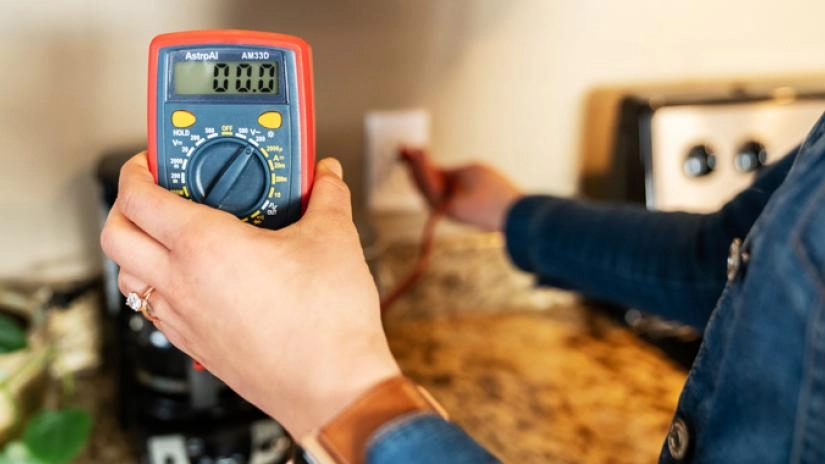
Is Your Electrical Outlet Not Working?
When the simple task of plugging your cell phone charger or hair dryer into the wall leaves you scratching your head and wondering why
Read MoreExpert Tips
View All Expert Tips
Top 8 Electrical Safety Essentials Your Home Needs
The cliche of "always be prepared" reigns true in most areas of life, but especially in homeownership. You never know when the next electrical storm will hit, when you'll suddenly notice mold and mildew in your basement, or when someone will attempt to break into your home. Even if you feel as though these things could never happen to you, it's better to be safe than sorry.
Read MoreSmart Devices: How Safe Are They?
The market for smart home products is worth an estimated $40 billion, with 65% of Americans already owning at least one device or system and a majority of those planning to purchase more in the future. People embrace this trend to increase security, improve energy efficiency, or gain more control over their home’s day-to-day functions.
Read More
Services We Provide
-
Large Appliance Outlets
Outdoor Outlets
USB Outlets
Tamper Resistant Outlets
Outlet Installation
Outlet Repair
Safety Outlets
Panel Installation
Panel Upgrades and Repair
Circuit Breakers
Surge Protectors
Power Conditioners
Light Switches
Wall Switches
Knob and Tube Wiring Upgrades
Wiring Upgrades
Electrical Code Updates
Electrical Safety Check
Generators


Join Our Team
“We have the power to make things better.” That’s our mantra, not only for our customers' electrical issues, but also you, a future team member!

Your Source for Local Home Service Experts
Neighborly brands repair, maintain, and enhance properties — to make life easier and more enjoyable for homeowners. Our consistency and quality work are the basis for everything we do, and are what make us a leader in the home services space, as we constantly strive to "be so remarkable, we become a beloved household name."
Book Online
A representative from our office will get back to you shortly to schedule service.
Due to a system error, we did not get your request. Please call us for immediate assistance.
We don't currently provide service to this ZIP/postal code.
Yes! You can email me service reminders and other messages.
Mr. Electric, a Neighbourly Company on its own behalf and on behalf of and its affiliates and franchisees requests your consent to send promotional and other electronic messages to you concerning products and services they believe are of interest to you. By checking this box, you agree to receive these messages. You can unsubscribe at any time.
Text opt-in does not apply for Canadian residents.