Millvale storms don't give much warning. One afternoon, the sky goes green, the wind picks up, and by dinner, half of the borough is sitting in the dark waiting for Duquesne Light to work through the queue. Some Millvale neighborhoods have to wait 12 to 24 hours or more after a major storm, and that's under normal circumstances. A whole-home standby generator changes that situation entirely. When the grid drops, the generator kicks in automatically; no extension cords, no scrambling for flashlights, and no frozen pipes in January when the furnace stops running. Mr. Electric of North Hills installs Generac standby generators and whole-home backup power systems for homeowners across Millvale and the surrounding Pittsburgh area. Our electricians have an average of 15 years of experience and handle every part of the job, from the transfer switch to electrical connections to fuel line coordination. Call a Millvale electrician to schedule a home assessment and get a written estimate.
Generator Installation in Millvale, PA
Book Online
Whole Home Generator Installation in Millvale
Many homeowners confuse portable and standby generators, and the difference matters more than most people realize. A portable unit runs on gasoline, needs to be started manually, and has to sit outside where it won't pump exhaust into the house. You're also limited to running a few appliances at a time off extension cords, which means making choices in the middle of a power outage about which appliances get power and which don't.
A standby generator installed by a local Pittsburgh electrician is a permanent installation outside your home, wired directly into your electrical system through an automatic transfer switch. When the grid goes down, the transfer switch detects the outage and starts the generator within seconds, without anyone having to do anything. Your lights come back on, the furnace keeps running, the sump pump stays active, and the refrigerator doesn't lose everything in it. When utility power comes back, the system switches over automatically, and the generator shuts itself down.
Most whole home generators run on natural gas or LP (propane). Natural gas is the more common choice here in the Pittsburgh area, since most homes in Millvale, Etna, Fox Chapel, and Allison Park already have a gas line. That removes the need to manage a fuel supply. The generator draws from the same line as your furnace and water heater, so it's ready any time it's needed.
What The Installation Process Involves
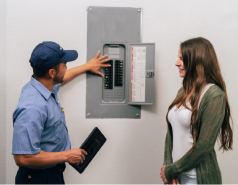
Every generator installation starts with a site assessment. We look at the home's electrical panel, the total load the homeowner wants to back up, and where the generator can be placed on the property. Clearance requirements, utility shutoffs, and local code all factor into placement, and we pull permits before any work begins. From there, the job typically involves:
- Installing the automatic transfer switch at the main panel
- Running the electrical connections from the transfer switch to the generator
- Coordinating the natural gas or LP fuel line connection (we work with licensed plumbers and gas line contractors as needed)
- Setting the generator on a concrete pad outside the home
- Commissioning and testing the system before we leave
Generac is the brand we install most often. They're the most widely used residential standby generators in the country; parts are easy to source, and warranty support is straightforward. We're familiar with the full Generac product line and can spec the right system based on your home size and the loads you need covered.
Generator Maintenance After Installation
A standby generator that sits unused for months and then fails during an outage isn't much of a backup system. Generac and most standby generator manufacturers recommend an annual maintenance visit: an oil change, filter replacement, spark plug replacement, battery check, and a load test to confirm everything's working as expected.
We offer generator maintenance services for systems we install and for existing units. If you've got a generator on the property that came with the house and you're not sure about its service history, it’s worth having it looked at before storm season.
Why Millvale Homeowners Choose Mr. Electric of North Hills
There are many electrical contractors in Allegheny County. Here's what sets our work apart, specifically in generator installation.
- Our electricians average 15 years of hands-on experience. That means the person showing up to your home has handled hundreds of panel connections, transfer switch installs, and whole-home generator commissions. We don't send apprentices out to figure it out on jobs of this size.
- We pull permits. Every generator installation involves permit work, and we handle that before any equipment goes in the ground. Some contractors skip this step. If a permit wasn't pulled, there's no inspection, and an uninspected electrical connection on a gas-powered generator isn't something you want to find out about after the fact.
- We give written estimates before work starts; no verbal approximations, no surprises at the end of the job. You'll see the line items before we schedule the install date.
- We serve Millvale and the surrounding communities, including Etna, Fox Chapel, Allison Park, Gibsonia, Wexford, Pine Richland, Murrysville, Monroeville, Irwin, North Huntington, and Pittsburgh proper. If you're in Allegheny County or the surrounding area and need a standby generator installed, we can get someone out to assess the property.
- Mr. Electric of North Hills also handles panel upgrades, EV charger installation, whole-home surge protection, and outlet installation. A generator installation often pairs well with a panel assessment, especially in older Pittsburgh-area homes where the existing panel wasn't sized for modern loads.
Call us or schedule online to get started.

Let us know how we can help you today.
Frequently Asked Questions About Generator Installation in Millvale, PA
Residential & Commercial Services